Serbian President Aleksandar Vučić has intensified his rhetoric over the situation in Kosovo, portraying the planned opening of the main bridge over the Ibar River in Mitrovica as a potential threat to Serbs and saying he would appeal to European leaders and Washington to intervene.
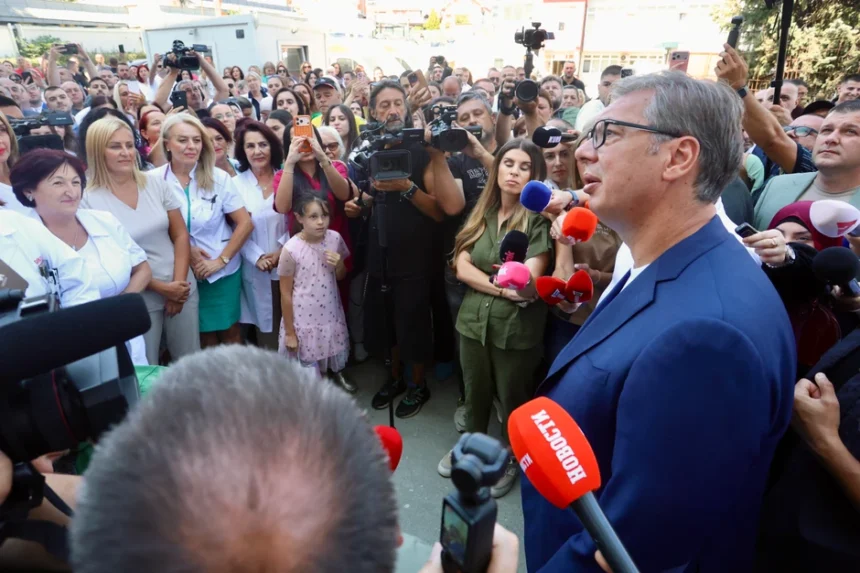
Speaking during a visit to Serbia’s Raška District on Sunday, Vučić said he was “afraid” of a possible escalation and claimed that Serbs in Kosovo were facing continued persecution.
“I am afraid, everyone is afraid,” Vučić said, adding that he would first seek help from European governments before turning to Washington.
“I will first ask people in Europe to help. If they want to help, I will call Washington and ask them as well to prevent this from happening,” he said.
Vučić said he had no guarantees that his appeals would succeed but insisted he would contact anyone necessary to defend what he described as the interests and freedom of the Serb population.
His statements come amid tensions over the planned opening of the main bridge over the Ibar in Mitrovica, a long-disputed issue that has been used repeatedly in political messaging by Belgrade and Prishtina.
While Kosovo authorities have presented the opening of the bridge as part of efforts to establish greater freedom of movement and equal access across the city, Serbian officials have portrayed the move as a threat to the Serb community.
Vučić’s latest remarks further reinforce a narrative in which Belgrade presents itself as the defender of Kosovo Serbs and portrays actions by Kosovo institutions as part of a broader campaign against the community.
Kosovo remains central to Vučić’s political messaging
The Serbian president has repeatedly invoked developments in Kosovo when addressing his domestic audience, often framing them as evidence of threats to Serbs and as a reason for Serbia to seek greater international involvement.
During Sunday’s visit, Vučić also rejected speculation that Serbia was preparing for war with Prishtina, dismissing claims that he could deliberately provoke a conflict for political purposes.
“What is the darkest scenario? That I will go to war with Prishtina to save myself here? That is wishful thinking. I have no such plans,” he said.
At the same time, he linked the Kosovo issue to Serbia’s wider political struggle, saying his objective was to secure victory in future elections.
The remarks came during a broader tour of the Raška region, where Vučić promoted infrastructure, healthcare and education projects while meeting residents and local officials.
His comments on Kosovo nevertheless stood out as part of a broader political narrative that portrays Serbia as under constant pressure and Vučić as the central figure capable of protecting the country and the Serb population.