As fears of another military mobilization grow in Russia, signs are emerging that some Russians are once again leaving the country to avoid being drawn into the war in Ukraine.
Among them is Sergei Rasokhin, who spent two years hiding from Russian authorities after discovering that a military contract he had voluntarily signed did not mean the job he had been promised.
Rasokhin says he was told he would work as an auto mechanic. Instead, he was warned by a sergeant that there was a very high chance he would be sent directly to the front.
“They lied to you. There’s a 95 percent chance you’ll be sent to the front.”
Rather than fight, Rasokhin deserted and spent two years moving between different locations in Russia to avoid being arrested. After eventually being detained by military police, he decided that fleeing the country was preferable to facing deployment or a lengthy prison sentence.
He ultimately escaped to Armenia, which has become one of the main destinations for Russians seeking to avoid military service since the full-scale invasion of Ukraine began.
Armenia is seeing another rise in Russian arrivals
Official figures suggest that the number of Russian citizens entering Armenia has increased again this year.
More than 500,000 Russians entered Armenia during the first six months of 2023, following Russia’s September 2022 mobilization. The figure later declined, reaching around 340,000 last year.
But between January and June 2026, approximately 417,000 Russian citizens entered Armenia.
More significantly, during the first five months of this year, around 7,000 more Russians entered Armenia than left it.
While these figures alone do not prove a mass exodus, they indicate a shift from previous years and coincide with growing concerns about another mobilization.
The increase is also being felt in Armenia’s housing market. Real-estate agents in Yerevan report renewed demand from Russian citizens, with some estimating substantial increases in both rents and property prices.
One agent told RFE/RL that local rents had risen by as much as 50 percent, describing the situation as resembling the wave of Russian arrivals seen in 2022.
Georgia sees conflicting reports
Georgia, another major destination for Russians after the 2022 mobilization, has also seen reports of increased arrivals.
Russian authorities recently claimed that more than 20,000 people crossed into Georgia through the main border checkpoint in a single day, describing the figure as significantly higher than in previous years.
Georgian authorities disputed those numbers, reporting roughly 7,900 arrivals during the same 24-hour period.
Journalists who visited the border the following day found no evidence of the enormous queues witnessed during the mass exodus of 2022.
Fear is spreading beyond Russia’s borders
Concerns about a new mobilization are also influencing Russian citizens living elsewhere.
In Central Asia, some people holding both Russian and local citizenships are reportedly returning to their countries of origin because they fear their Russian citizenship could eventually expose them to military service.
A Kyrgyz woman who had lived in Russia for more than two decades said she returned home after hearing reports of a possible autumn mobilization, particularly because her son is now of military age.
Others are selling their property in Russia and leaving permanently, despite warnings at the border that their homes or assets could potentially be affected if they do not return.
A growing dilemma for Russians
For people like Rasokhin, the choice is increasingly stark: remain in Russia and risk being drawn into the war, or leave before another mobilization closes the window of opportunity.
His experience also highlights a broader problem facing Russians who sign military contracts believing they are accepting ordinary military employment, only to discover that they may ultimately be sent to the battlefield.
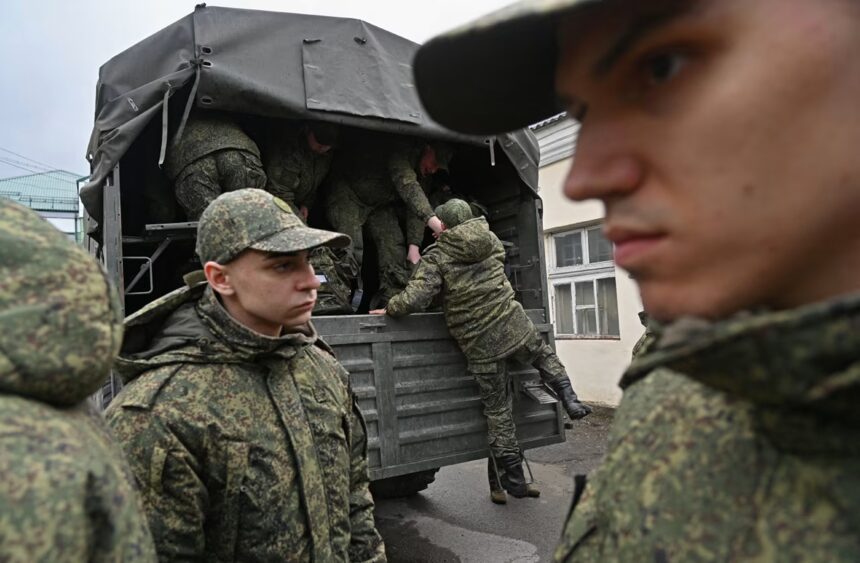
With the Kremlin still relying heavily on recruitment to replenish its military ranks, the fear of another mobilization is once again becoming a factor driving Russians out of the country.
For some, leaving is no longer simply about seeking a better life abroad. It is about avoiding a war they never intended to fight.