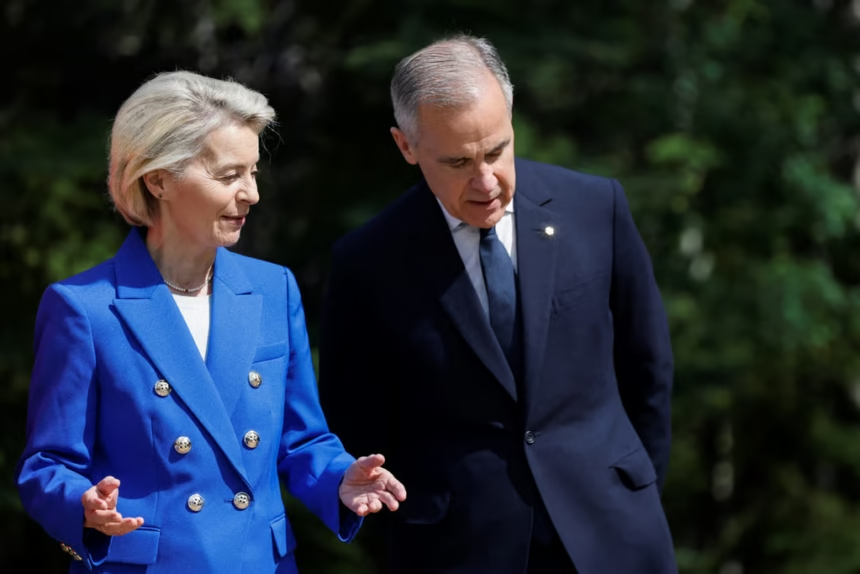
Canadian Prime Minister Mark Carney will attend the European Union’s State of the Union address in Strasbourg on September 16, joining European Commission President Ursula von der Leyen as Ottawa seeks closer ties with Brussels amid a worsening trade and political rift with Washington.
A European Commission official close to von der Leyen confirmed to POLITICO that Carney had accepted an invitation to attend the address, where the Commission president will outline her priorities for the bloc.
The official described Carney’s participation as a strong signal of the growing closeness between the EU and Canada and of their intention to strengthen their partnership.
“In these challenging times, strengthening our relationships across the world is vital,” the official said.
Carney is also expected to address the European Parliament on September 17, a day after von der Leyen’s State of the Union speech, according to an official familiar with the preparations.
The visit comes as relations between Canada and the United States have deteriorated over trade. Carney’s government walked away earlier this month from negotiations on a major trade agreement with U.S. President Donald Trump, with Ottawa and Washington accusing each other of imposing last-minute conditions.
The United States has imposed tariffs on Canadian exports, prompting Ottawa to respond with retaliatory measures targeting American steel and aluminum.
Against this backdrop, Carney has increasingly advocated closer cooperation among democratic countries in support of free trade, while seeking to strengthen Canada’s economic and political relationships with Europe.
Carney’s appearance alongside von der Leyen at one of the EU’s most prominent annual political events is expected to underline the growing strategic importance both sides attach to their relationship.
The September meetings will provide an opportunity for Canada and the EU to discuss trade, economic security and broader cooperation at a time when both are seeking to diversify partnerships and reduce their vulnerability to geopolitical and economic pressure.