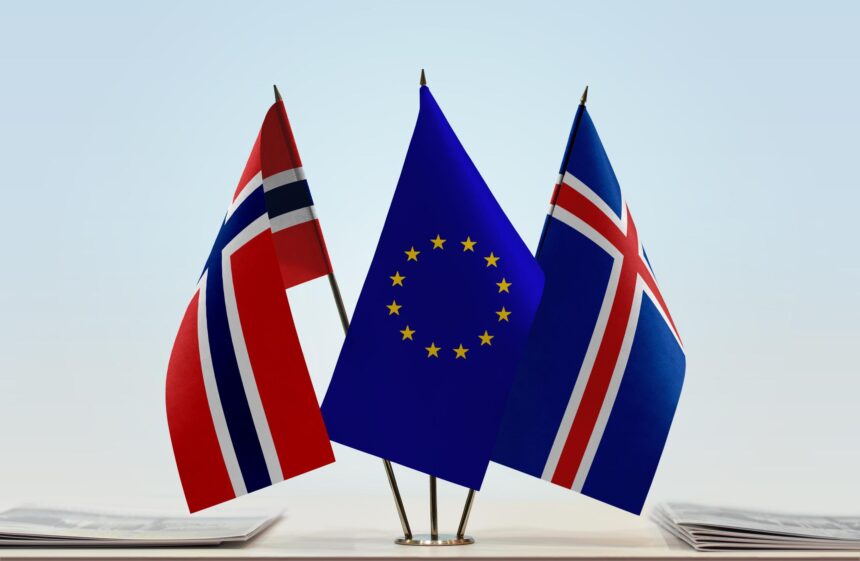
A possible Icelandic move toward European Union membership could have significant consequences for Norway, potentially reshaping Oslo’s long-standing relationship with Brussels.
Norway is part of the European Economic Area (EEA), which gives it access to the EU’s single market alongside Iceland and Liechtenstein, despite all three countries remaining outside the Union.
If Iceland eventually joins the EU, Norway and Liechtenstein would be the only remaining non-EU members of the EEA. Given Liechtenstein’s small population of around 40,000 and its close economic relationship with Switzerland, Norway would effectively become the only major country relying on the EEA framework while remaining outside the EU.
The EEA agreement would technically continue to operate, but its political significance could change considerably. With Iceland inside the EU, Norway could increasingly find itself in the position of following many European rules without having a seat at the table where those decisions are made.
Norwegian Foreign Minister Espen Barth Eide has already warned that Icelandic membership could create “particular challenges” for Norway. He noted that the balance within the EEA could shift dramatically, from the original relationship of 12 countries versus seven to 28 versus two.
Despite this possibility, Oslo continues to regard the EEA as the cornerstone of Norway’s relationship with the EU. Eide has nevertheless stressed that Norway should strengthen its cooperation with Brussels regardless of which path Iceland ultimately chooses.
Norway has twice rejected EU membership in national referendums, in 1972 and 1994, with voters choosing to remain outside the bloc on both occasions.
A successful Icelandic bid could, however, reignite Norway’s own long-running EU debate. Issues such as fisheries and national control over resources would likely play a major role in any renewed discussion.
For now, there is little political momentum in Norway for reopening the membership question. But if Iceland says “Yes” to the EU, the decision could force Norway to reconsider what its place in Europe should look like—and whether remaining outside the Union is still the most sustainable option.