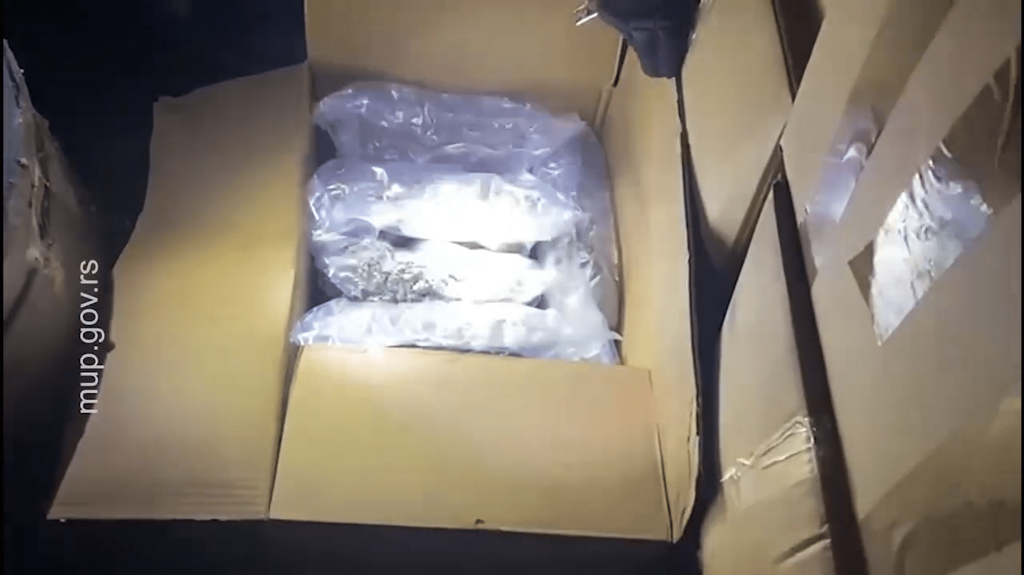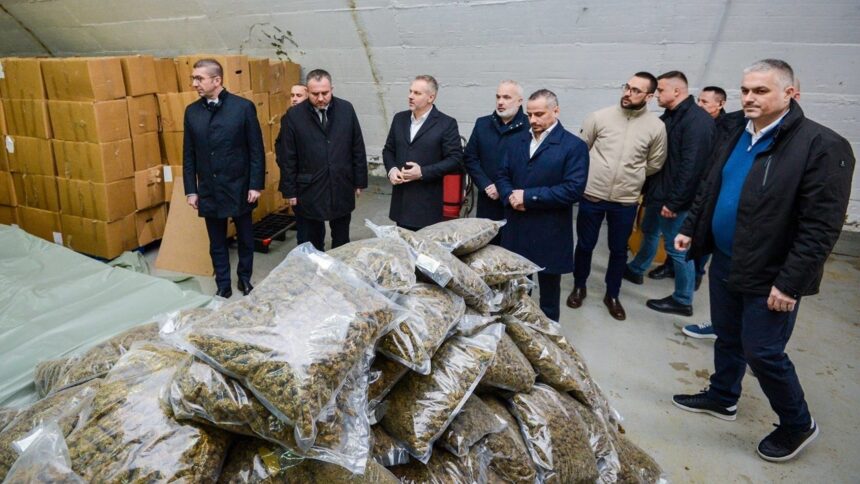
Court documents are exposing a disturbing cross-border drug operation stretching from North Macedonia into Serbia, with tonnes of marijuana allegedly moving through the two countries under the cover of completely ordinary cargo.
The shipments were reportedly declared as textiles, cakes, pastries, pillows and duvets while enormous quantities of cannabis were allegedly being transported across the border.
The scale of the operation raises serious questions about how such shipments could repeatedly cross customs and reach their destinations without triggering effective scrutiny.
According to the court documents, the January 2026 shipment alone involved more than five tonnes of marijuana. Other shipments allegedly followed the same pattern, with significant discrepancies between the declared and actual weight of the trucks.
And yet, despite those discrepancies, the vehicles apparently continued their journeys.
The investigation is now reaching deeper into the alleged network, including companies connected to North Macedonia’s legal medicinal-cannabis industry and individuals on both sides of the border.
On the Serbian side, the case becomes even more politically sensitive. Marijuana was allegedly discovered on property belonging to a local official of Serbia’s ruling SNS party. Although party officials have denied any connection between the political organisation and the alleged criminal activity, the involvement of a politically connected individual inevitably raises questions that authorities must answer.
This is no longer simply a story about two smugglers moving drugs across a border.
It raises much bigger questions about customs controls, organised crime, political connections, corruption and the ability of criminal networks to exploit legal businesses and international trade routes.
If tonnes of narcotics can allegedly cross from North Macedonia into Serbia disguised as household goods and food products, the obvious question is: who was looking the other way—and how many people benefited from it?
The investigation must follow the money, the companies, the officials, the border crossings and every individual involved. If wider networks existed, they should be exposed regardless of political connections or institutional protection.
The public deserves to know how a criminal operation of this scale was able to function across North Macedonia and Serbia for months.