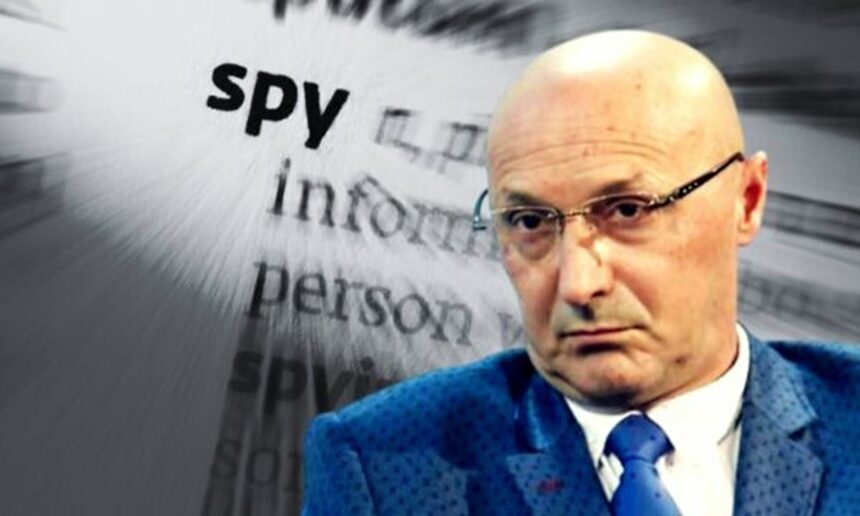
Newly revealed intercepted communications between Fatmir Sheholli and Bojan Dimiq, whom Kosovo prosecutors identify as a senior official of Serbia’s Security Intelligence Agency (BIA), have raised fresh questions about the alleged interest of Serbian intelligence structures in Kosovo’s economy.

The communication, obtained and reported by Gazeta Insajderi, reportedly focuses on companies in Kosovo that expanded their imports from the European Union and other countries after Kosovo restricted imports from central Serbia.
Dimiq allegedly sought detailed information about which Kosovo companies had benefited from the restrictions and which had gained a dominant position in the market particularly companies importing food products.
In the conversation, Dimiq asks Sheholli to identify businesses that could be negatively affected if imports from central Serbia were restored. Sheholli reportedly responds that he would seek the information through the Kosovo Chamber of Commerce.
The exchange is significant because the alleged request goes beyond political or media developments. It concerns the structure of Kosovo’s market, individual companies, import flows and the economic consequences of Kosovo’s trade policies.
If authenticated and placed in its full context, the communication could indicate that the alleged intelligence interest extended into sensitive economic information inside Kosovo, including identifying businesses that benefited from reducing dependence on Serbian imports.
From political influence to economic intelligence?
The newly reported communication comes amid an existing criminal case against Sheholli, who has been charged by Kosovo’s Special Prosecution with espionage and blackmail.
According to the indictment, prosecutors allege that Sheholli maintained contact with Dimiq and acted in coordination with him. The prosecution describes Dimiq as a senior BIA official and alleges that Sheholli was involved in activities intended to collect and transmit sensitive information.
The newly reported interception was not included in the indictment, meaning it should not be treated as a proven criminal act. Nevertheless, it adds another potentially important dimension to the investigation: whether Serbian intelligence structures were interested not only in Kosovo’s political environment, but also in understanding and potentially influencing its economic landscape.
Alleged attempts to influence Kosovo’s political environment
The indictment contains other allegations concerning communications between Sheholli and Dimiq.
Prosecutors allege that Sheholli received compromising audio material and documents and was instructed regarding their potential publication ahead of Kosovo’s 2025 local elections. The prosecution argues that the alleged objective was to influence public opinion and damage the political standing of certain officials.
One communication cited in reporting on the indictment reportedly includes Dimiq asking whether journalist Milaim Zeka had published the material.
The prosecution interprets such exchanges as evidence of coordination between Sheholli and Dimiq. Sheholli, however, remains presumed innocent, and the allegations must be established through judicial proceedings.
The “Top Secret 2” document
The case also includes allegations concerning a document titled “Top Secret 2,” reportedly found during the examination of Sheholli’s seized phone.
According to the prosecution’s interpretation, the document described alleged plans aimed at portraying Kosovo as a radicalised and extremist society and damaging its international image. The document reportedly referred to the use of operatives, religious institutions and influential figures in public life.
Prosecutors have presented the document as another element relevant to their allegations concerning Sheholli’s contacts with Serbian intelligence structures.
The economic question
The intercepted communication concerning Kosovo’s importers could prove particularly significant if investigators establish why the information was allegedly being requested and how it was intended to be used.
The central question is straightforward: Why would a senior Serbian intelligence official allegedly seek detailed information about Kosovo companies that benefited from replacing Serbian imports with goods from the EU and other markets?
If the communication forms part of a broader pattern, it could suggest an interest in mapping Kosovo’s economic vulnerabilities, identifying businesses that benefited from reducing trade dependence on Serbia and understanding which actors could resist a return of Serbian goods to the Kosovo market.
That does not, by itself, prove an intelligence operation or criminal responsibility. Those conclusions belong to the competent authorities and ultimately the courts.
Sheholli also faces a separate blackmail charge
The case against Sheholli is not limited to the allegations concerning BIA.
The Special Prosecution also accuses him of blackmailing businessman Arben Jetullahu. According to the indictment, Sheholli allegedly demanded money while threatening to publish videos or information that could damage the businessman’s reputation.
The prosecution alleges that the activity continued over a period of years and that money was allegedly requested even while Sheholli was in detention.
Sheholli has disputed the prosecution’s account and provided a different explanation for his relationship with the businessman and the payments.
What the new communication adds
The newly reported interception does not establish guilt. But it potentially broadens the picture surrounding the case.
What began as allegations involving espionage, political influence and compromising material now also includes an alleged request for information about Kosovo’s companies, importers and changing trade patterns.
If investigators establish that the communication was authentic and part of a wider coordinated effort, it could raise serious questions about whether Serbian security structures sought to understand or potentially exploit—economic vulnerabilities inside Kosovo.
For now, however, these remain allegations and investigative leads. Fatmir Sheholli has not been convicted, and any criminal responsibility must ultimately be determined by an independent court.