Kosovo institutions will visit the site of a mass grave in Kalludër, Zubin Potok, on August 28 as part of activities marking the International Day of the Victims of Enforced Disappearances.
The visit will be organized by the Kosovo Police, through its Directorate for the Investigation of War Crimes, together with the Government Commission on Missing Persons and the Institute of Forensic Medicine, in cooperation with associations representing families of missing persons.
The activity is intended to honor the victims of enforced disappearance and reaffirm support for families who have spent more than two decades seeking information about the fate and whereabouts of their loved ones.
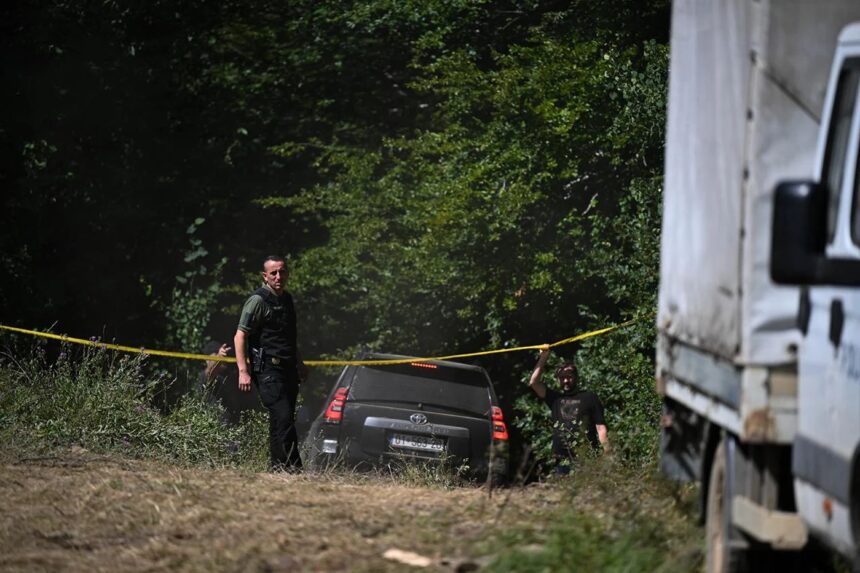
The Kalludër site has gained particular significance following recent excavations in Zubin Potok. Kosovo authorities announced that remains believed to belong to at least 23 people were recovered from three suspected mass graves in Kalludër and nearby Jabukë. The remains are now undergoing forensic examination and identification, including DNA analysis.
According to Kosovo authorities, one of the graves in Kalludër contained remains believed to belong to at least 13 people, while another Kalludër site contained remains believed to belong to six people. Four additional sets of remains were recovered at a site in Jabukë.
The discoveries have renewed attention on the fate of people who disappeared during the 1998–99 Kosovo war and on the continuing demands of families for identification, accountability and access to information about missing persons.
The Kalludër site had reportedly been linked for years to allegations concerning the disappearance and killing of Albanian civilians during the war. Humanitarian Law Center research has documented information concerning the alleged killing of 23 Albanian civilians in April 1999 and their burial in the Kalludër area.
More than 1,500 people remain missing from the Kosovo war, according to international officials, making the search for mass graves and the identification of remains an ongoing humanitarian and justice issue.
The August 28 visit is expected to serve both as a commemoration of the victims and as a reminder of the continuing responsibility of Kosovo institutions and families to establish the fate of those who disappeared.