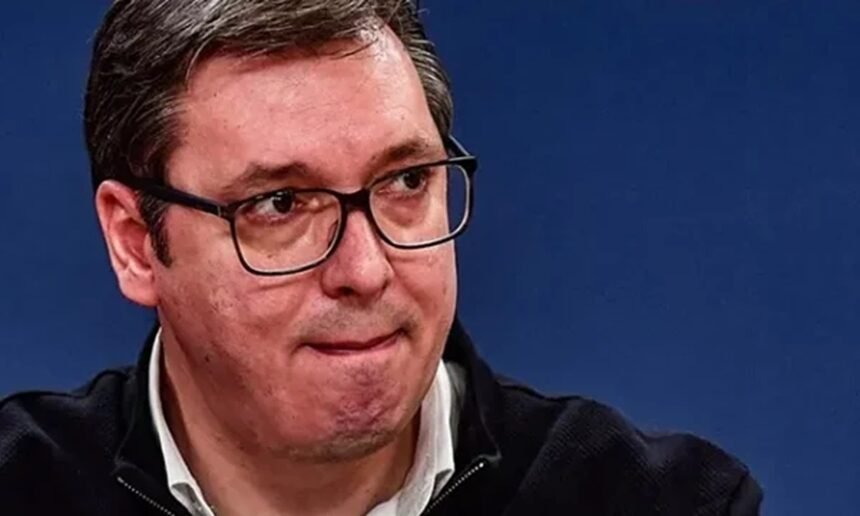
Serbian President Aleksandar Vučić has described Croatia’s military cooperation with Prishtina and Tirana as a serious threat to Serbia, while insisting that Belgrade does not seek war but will continue strengthening its military capabilities to deter any potential attack.
Speaking during a visit to the Innovation and Education Park of Serbia’s Mine Clearance Center in Velika Moštanica, Vučić said Serbia’s objective was deterrence and that the country would continue pursuing diplomatic and political measures alongside the rapid modernization of its armed forces.
“Our goal is deterrence. We do not want wars, we do not want conflicts, but we will not allow anyone to destroy and devastate our country,” Vučić said.
Vučić invokes Operation Storm
Addressing recent statements from Croatian officials, including Economy Minister Ante Šušnjar, Vučić criticized what he described as attempts to portray Croatia’s conduct during the 1995 Operation Storm as evidence of Croatian bravery and Serbian weakness.
He argued that Croatia had received political, military and logistical support from the United States, European countries and the wider West during the operation.
“If they believe that is proof of their heroism and Serbian cowardice, then that is a very specific kind of black humor in which I would not want to participate,” Vučić said.
Vučić also disputed recent Croatian references to historical events and military capabilities, urging Croatian officials to consider the broader circumstances surrounding Operation Storm.
Serbia to showcase new military capabilities
Vučić announced that Serbia would present part of its new military capabilities during an event in the Pešter region on September 13 or 14.
However, he stressed that the equipment displayed would represent only part of Serbia’s current military capabilities, saying additional systems were still being delivered or were expected to arrive.
He said Serbia would continue strengthening its armed forces in response to what he described as regional security challenges.
“Serbia is already today, and tomorrow will be much more, a much tougher nut to crack for all their coalitions and alliances created only against Serbia,” Vučić said.
He added that Belgrade viewed the military cooperation between Croatia, Prishtina and Tirana as a serious threat and would respond through diplomacy, political engagement and continued military development.
Expected meeting with EU Enlargement Commissioner
Asked about European Commissioner for Enlargement Marta Kos’s warning that the European Union does not want “Trojan horses” among its members, Vučić said he expected to meet with her in September.
“I believe the meeting will be good and productive. Whether they open [the negotiating cluster] or not is their decision,” he said, referring to Serbia’s EU accession negotiations.
Vučić rejects election concerns raised by CRTA
Vučić also rejected allegations by Serbian election watchdog CRTA that the ruling Serbian Progressive Party’s contacts with supporters holding dual citizenship could be linked to preparations for electoral manipulation.
He said the government was contacting people who hold Serbian citizenship, have registered residence and possess voting rights, claiming the number involved was slightly more than 80,000.
According to Vučić, between 30,000 and 40,000 of those voters typically participate in elections.
He dismissed concerns about the creation of a duplicate voter list and said the opposition should not expect the issue to determine the outcome of future elections.
Vučić also said the Serbian Progressive Party commissions weekly opinion polls and plans to begin conducting them daily in the coming weeks using a “rolling sample” methodology.
State support for Serbian Orthodox Church university
Vučić said the planned university of the Serbian Orthodox Church would receive full state support, rejecting criticism that its establishment would bring religious symbolism into Serbia’s higher education system.
He argued that the Serbian Orthodox Church has a significant educational and cultural tradition and said the new university could contribute to improving knowledge and education in the country.
Vučić also criticized opponents who, he said, had turned universities and faculties into centers of political organization during recent blockades.
Vučić defends Jelena Janković over Expo 2027 criticism
The Serbian president also condemned criticism directed at former world No. 1 tennis player Jelena Janković after she agreed to serve as an ambassador for Expo 2027.
Vučić said Janković was promoting Serbia rather than himself or the Serbian Progressive Party.
“She is promoting Expo. She is not promoting Aleksandar Vučić, she is not promoting the SNS, she is promoting nothing other than her country,” he said.
He accused Nova.rs of engaging in unacceptable attacks against the former tennis star and argued that criticism of her decision to support a state-backed project should not be used to personally insult her.
Vučić highlights Serbia’s debt and investment figures
On the economy, Vučić rejected criticism that Serbia was heading toward an historically large budget deficit, arguing that such assessments failed to account for the growth of the country’s economy.
He said Serbia’s public debt-to-GDP ratio had fallen from 79 percent when he became prime minister to around 43 percent today.
According to Vučić, the budget deficit is expected to remain between 1 and 3 percent of GDP in the coming years, which he said was within agreed fiscal limits.
He also highlighted public investment, claiming it currently amounts to around 7 percent of GDP and is being directed toward railways, roads, industrial zones and other infrastructure projects.
Vučić said Serbia’s economy had expanded significantly, with GDP rising from around €32 billion when the current ruling structure came to power to approximately €100 billion today.
He also pointed to increased defense spending and major purchases of military equipment from countries including Israel and China.
“People should not worry at all. This is just another attempt to deny good results,” Vučić said, urging citizens to examine reports from the International Monetary Fund, World Bank and European Union on Serbia’s economic performance.