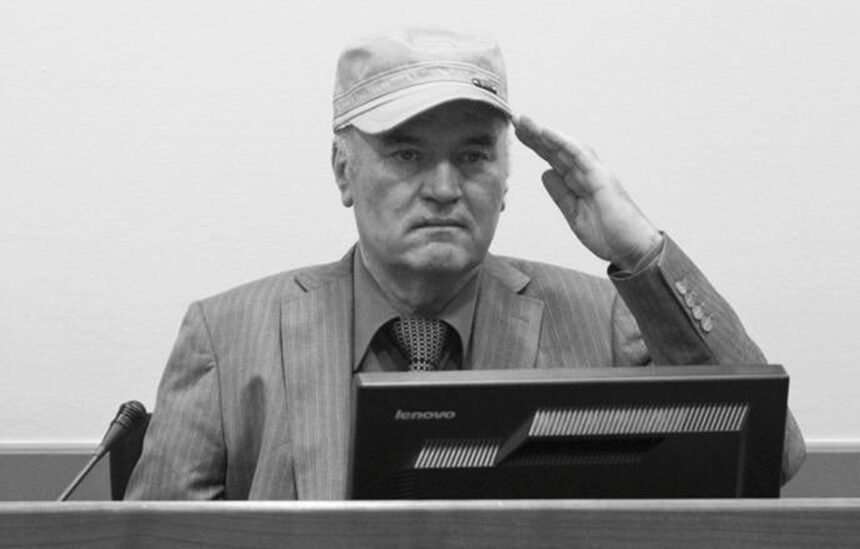
The Russian Embassy in Serbia has publicly expressed condolences over the death of Ratko Mladić, the former Bosnian Serb military commander convicted of genocide, war crimes and crimes against humanity.
In a statement posted on social media, the Russian Embassy in Belgrade referred to Mladić as “General Ratko Mladić” and offered its “sincere condolences” to his family and friends.
The gesture comes as Serbia itself considers honoring Mladić following his death. Serbian President Aleksandar Vučić has said that authorities would assist if Mladić’s family chooses to bury him in Serbia, while Justice Minister Nenad Vujić has indicated that state and military honors could be granted.
For the victims of Srebrenica, the symbolism is difficult to ignore.
Mladić was not simply a former military commander. In 2017, the Hague Tribunal sentenced him to life imprisonment, finding him guilty on 10 of 11 charges, including genocide in Srebrenica, persecution, extermination, murder, deportation, terror against civilians in Sarajevo and the taking of UN personnel hostage. His conviction was upheld on appeal in 2021.
The Srebrenica genocide, in which more than 8,000 Bosniak men and boys were murdered in July 1995, remains one of the gravest atrocities committed in Europe since the Second World War.
Yet even after an international court established his criminal responsibility, Mladić continues to be presented by Serbian and Russian nationalist circles as a military hero rather than a convicted perpetrator of genocide.
The Russian Embassy’s decision to publicly mourn him and to emphasize his military title adds another layer to the controversy.
Russia has repeatedly criticized the Hague proceedings against Mladić and the Russian Foreign Ministry has also questioned the tribunal’s handling of his case.
Mladić died in The Hague while serving his life sentence. He spent years evading justice before being arrested in Serbia in 2011.
His death does not change the verdict.
The court record remains: Ratko Mladić was convicted of genocide and other grave international crimes. No diplomatic condolence, state ceremony or nationalist glorification can erase what happened at Srebrenica or the judgment delivered in The Hague.
Below is the original post of the Russian Embassy: