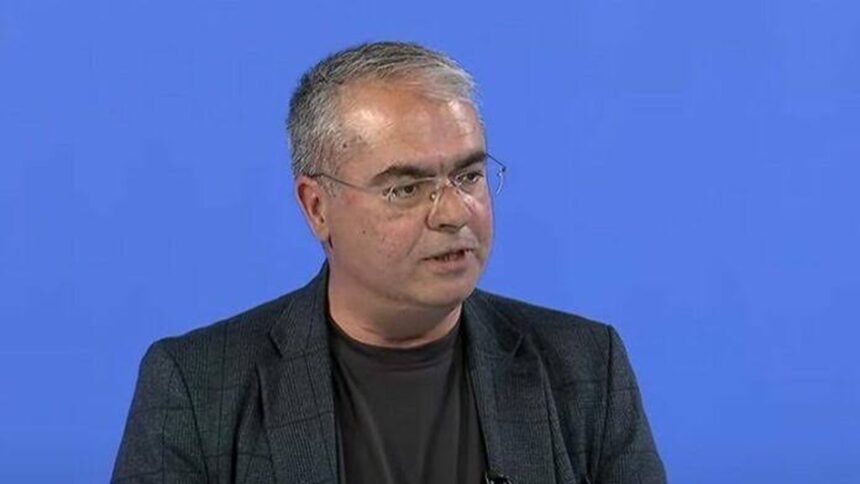
Arben Fetoshi, director of the Octopus Institute, has warned that Kosovo’s continued political deadlock is becoming a growing security concern, particularly amid what he describes as ongoing hybrid threats from Serbia.
Speaking on KTV’s 60 Minutes, Fetoshi said Serbia’s strategy toward Kosovo fundamentally revolves around destabilisation, arguing that the absence of fully functioning institutions leaves the country more vulnerable.
He also linked the situation to the approaching September 16 ruling by the Kosovo Specialist Chambers in the case involving four former Kosovo Liberation Army leaders.
“The situation surrounding the deadlock over the formation of new institutions after the June 7 elections is worrying, particularly from a security perspective,” Fetoshi said.
He argued that Kosovo needs to establish its institutions as quickly as possible in order to strengthen national security and ensure that the country is prepared for potential attempts to exploit its political vulnerabilities.
According to Fetoshi, Serbia’s strategic communication toward Kosovo consistently reflects a policy aimed at creating instability.
“At the core of Serbia’s strategy is destabilisation,” he said, adding that a Kosovo with unconsolidated institutions is “more fragmented and somewhat more fragile.”
At the same time, Fetoshi said Kosovo’s security institutions have demonstrated increasing professional capacity to counter threats originating from Serbia.
He warned, however, that the current political climate remains concerning and that the rapid consolidation of Kosovo’s institutions would send an important message of stability at a time when, he said, the possibility of operations targeting Kosovo’s stability cannot be ruled out.
Kosovo has yet to constitute its Assembly following the June 7 elections. Vetëvendosje, which emerged as the largest party, has sought more time to negotiate over the election of a president, arguing that failure to secure a president could ultimately lead to another election cycle.
The party is negotiating with the Democratic League of Kosovo, while the Democratic Party of Kosovo and the Alliance have rejected the proposed meetings.
Kosovo has already held three elections amid the continuing political crisis since the beginning of 2025, with another election potentially looming if the institutional deadlock remains unresolved.