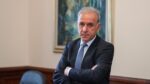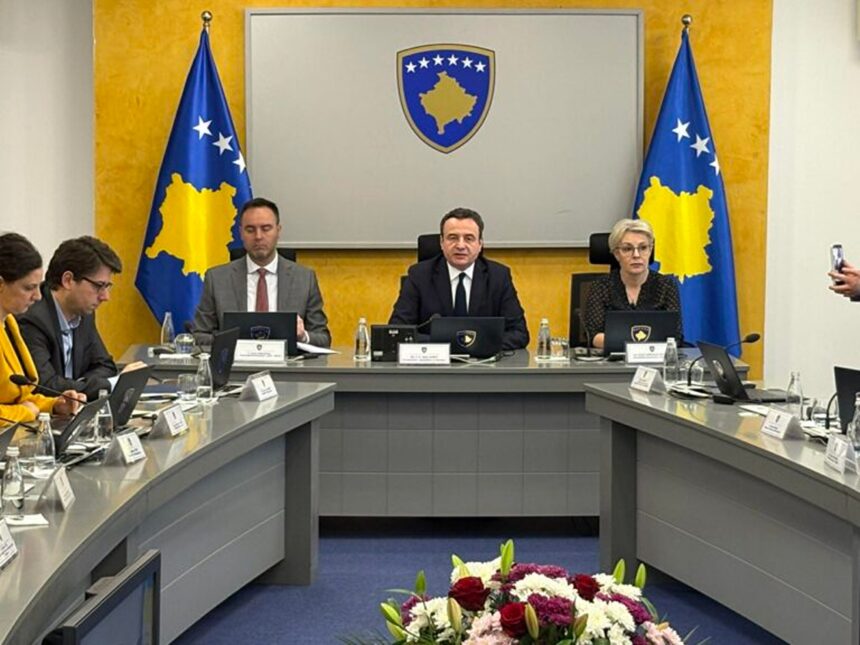
Kosovo’s caretaker Prime Minister Albin Kurti has announced plans to establish an energy research institute that would provide research, cost assessments and expert analysis for major future energy projects.
Kurti said discussions on the establishment of the institute were held at the Office of the Prime Minister, arguing that the energy sector had become an increasingly important global challenge and that Kosovo would face a series of major decisions in the coming years.
Those decisions, he said, would include determining which energy projects should be developed, assessing their costs and identifying how they should be financed.
“These decisions require research, calculations and, above all, human resources with expertise in this field,” Kurti said.
He noted that Kosovo had so far relied on support from international partners and on domestic and foreign experts working on individual projects. What Kosovo now needs, he argued, is institutional continuity capable of preserving the experience and knowledge gained from completed and ongoing energy projects.
Prizren Proposed as Institute’s Location
Kurti said the proposed institute could also provide an opportunity for Kosovo to engage engineers and researchers from both within the country and the diaspora.
He specifically mentioned professionals based in Germany, Switzerland, Austria and other countries who may be interested in contributing their expertise to Kosovo.
The proposed location for the institute is Prizren, at the Innovation and Training Park.
“Prizren has students, it has space and an environment that is already operational,” Kurti said.
According to the caretaker prime minister, professors, researchers, industry representatives and international partners participated in discussions on the institute’s concept.
He also thanked relevant government ministries and Germany’s partners for their work on the initiative.
Energy Plans Amid Debate Over US LNG Project
The announcement comes as Kosovo continues to face major decisions over its long-term energy strategy and the diversification of its energy sources.
It also follows calls from the United States for Kosovo to participate in a project involving American liquefied natural gas, or LNG, aimed at diversifying energy supplies.
The Kurti government, however, has not accepted participation in the proposed project.
The LNG initiative was presented as a potential opportunity to diversify Kosovo’s energy sources, while Kurti’s latest announcement suggests that the proposed research institute could play a role in strengthening domestic expertise and institutional capacity for evaluating future energy investments.
The proposed institute would therefore be expected to examine the technical and financial dimensions of major energy projects, including their costs and possible financing models, as Kosovo prepares to make long-term decisions about its energy security and infrastructure.