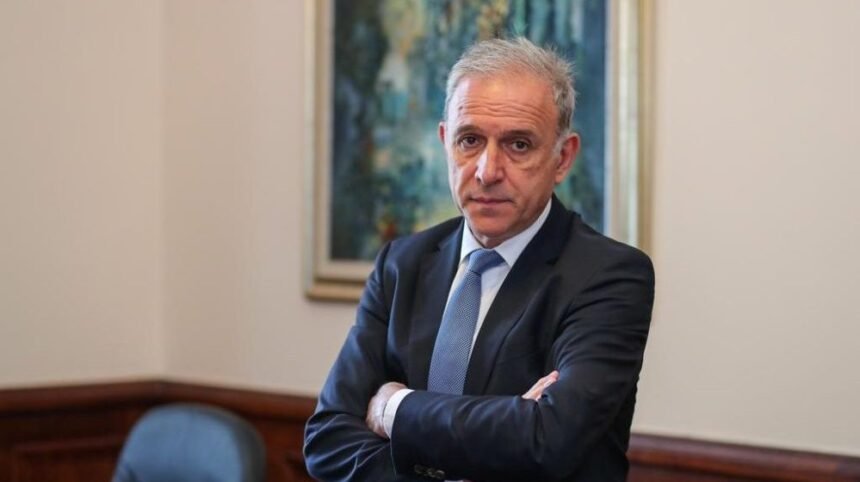
Zdravko Ponoš, leader of the Serbia Centre (SRCE) party and one of the leading figures on the European Serbia electoral list, has called for Serbia’s Security Intelligence Agency (BIA) to be dismantled and rebuilt, arguing that the agency serves the interests of one man and one political party rather than the state.
Speaking on the Slavija Info podcast on the occasion of BIA Day, Ponoš warned that documents could be destroyed as pressure mounts on the agency. He suggested that some records might already be being burned, although he provided no evidence to substantiate the allegation.
“BIA is now like a car that has reached the point where maintenance costs are so high that it makes more sense to scrap it,” Ponoš said, adding that he remembered agency director Vladimir Orlić primarily for disrupting television appearances.
Ponoš argued that rebuilding the agency would be more effective than attempting to reform its existing structure. He said the priority should be the people working inside the institution, rather than its buildings and facilities.
“What matters is who is in the building,” he said, adding that the agency’s complex was better than its current leadership deserved. He said certain elements, including a memorial plaque bearing the names of people who had died serving the country, should be preserved.
Ponoš called for the current personnel to be sent home and for those needed by a restructured agency to be selected later. He warned that a gradual departure of employees could create opportunities for the destruction of documents.
“If they leave one by one, there will be document burning,” he said. “Some documents are probably already being burned now. It wouldn’t surprise me, given how tight things are getting.”
The opposition politician stressed that Serbia still needs a security intelligence agency, but argued that any service feared by ordinary, law-abiding citizens should be abolished.
He accused the current agency of helping preserve the existing political system and the ruling authorities, rather than protecting the public.
“In my generation, children were taught that if something happened to you in the street, you should run to the nearest police officer because you would be safe there,” Ponoš said. “Now the situation is such that, when you see a police officer, even if you have done nothing wrong, you should run away.”
His remarks included allegations about the agency’s political role and the possible destruction of records; the claims about documents being burned were not independently substantiated in the report.