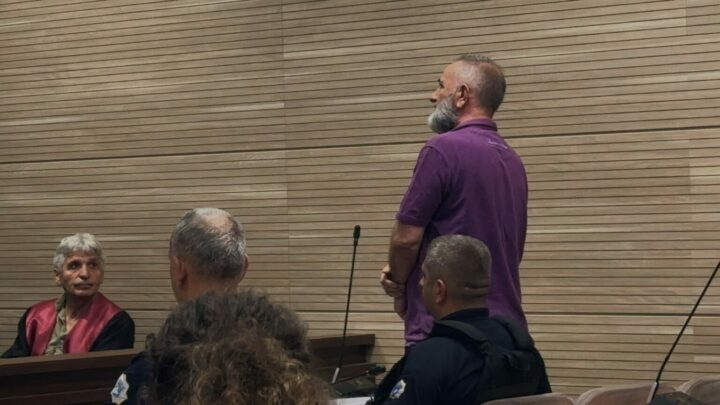
The Basic Court in Prishtina has sentenced Hysri Selimi to six years in prison for espionage after finding that he had cooperated with Serbia’s Security Intelligence Agency (BIA) for more than 15 years and provided information concerning former Kosovo Liberation Army (KLA) members, wartime killings and religious radicalization in Kosovo.
The court’s written judgment, made public in July 2026, provides extensive details about the evidence and reasoning behind the conviction.
According to the judgment, Selimi was recruited by the Serbian BIA in November 2009 and continued cooperating with the agency until his arrest on May 6, 2025, with only a brief interruption in 2012.
The court said evidence obtained from examinations of three mobile phones used by Selimi demonstrated that he collected information and transmitted it to BIA officials.
The information allegedly concerned the activities of former KLA members, killings committed during the Kosovo war, individuals who had participated in the war in Syria, people who had returned from Syria and their family members, as well as religious radicalization and the organization and financing of radical groups in Kosovo.
According to the judgment, Selimi gathered information both from people on the ground and from publicly available sources on the internet before transmitting it to Serbian intelligence officials.
Information on the KLA and wartime killings
The court said its finding that Selimi provided BIA with information about the KLA was also supported by a statement he gave to prosecutors.
According to the judgment, Selimi told prosecutors that Serbian BIA officials had asked him to become a witness against the KLA, which he refused. He nevertheless acknowledged that he had collected information about KLA members for the interests of the Serbian intelligence service.
The court also considered his alleged involvement in Syria a significant factor in determining the level of intent behind his espionage activities.
According to the judgment, Selimi agreed, at the direction of the Serbian BIA, to travel to Syria and join the terrorist organization ISIS in order to gather information about Kosovo Albanians who had joined the group, including where they operated, who commanded them and other details about their activities.
The court said this was confirmed by a separate 2022 judgment in which Selimi was convicted of organizing and participating in a terrorist group and sentenced to four years and eight months in prison. The sentence was later upheld by the Court of Appeals.
According to the court, after returning from Syria, Selimi continued meeting BIA officials and providing information about radicalized individuals, the spread of Wahhabi ideology in Kosovo and the organization and activities of religious groups.
Alleged payments and meetings with BIA officials
The prosecution alleged that Selimi was paid approximately €700 per month for his cooperation with Serbian intelligence.
According to the indictment, he was also provided with three smartphones and financial support, while he was allegedly promised that a house would be purchased for him.
The Special Prosecution said it obtained confirmation from Kosovo’s Intelligence Agency (KIA) that the Serbian official Selimi was meeting was the head of the BIA’s counterterrorism division.
Investigators also presented records documenting Selimi’s movements between Kosovo and Serbia, as well as evidence obtained through covert surveillance showing meetings between Selimi and suspected BIA officials.
According to the prosecution, Selimi frequently traveled to Serbia by bus and returned to Kosovo by different routes, including on foot, by bus or in vehicles driven by other individuals. Some trips were completed within the same day.
The indictment also cited communications between Selimi and BIA officials allegedly discussing his activities and future meetings.
Information found on seized phones
Following Selimi’s arrest, authorities seized several items, including the phones he had used.
According to the prosecution, examinations of one of the devices uncovered photographs and videos including images related to the seizure of weapons following the Banjska attack, footage showing people attending Friday prayers at a mosque in Prishtina and photographs of individuals whom Selimi allegedly identified as senior officials connected to the Kosovo Specialist Chambers.
Other communications allegedly showed that Selimi had been tasked with collecting information about people attending mosques, imams and family members who had traveled to Syria.
The prosecution also alleged that Selimi provided BIA officials with the names of individuals arrested in connection with the killing of police sergeant Muhamed Lika.
The court said that during his questioning by prosecutors, Selimi acknowledged the relevant factual allegations presented by the prosecution.
Selimi said he acted for financial reasons
According to the judgment, Selimi admitted to conducting espionage activities but said his motivation was financial and that he had not intended to harm Kosovo’s interests.
He told prosecutors that when he began providing information to the Serbian BIA in 2009, he received around €100 for information he obtained from publicly available sources concerning former KLA leaders.
The court nevertheless concluded that the evidence presented during the trial, together with Selimi’s own statements, established beyond reasonable doubt that he had committed the offense of espionage.
Selimi was sentenced to six years in prison on June 15, 2026, by a panel chaired by Judge Leon Përlaska, with judges Medie Bytyqi and Kushtrim Shyti as members.
The written judgment was finalized on July 15, 2026.
Selimi had been arrested on May 6, 2025, and the Special Prosecution filed an indictment against him on September 11, 2025. At his initial hearing on September 23, 2025, he pleaded not guilty, telling the court: “I am completely innocent.”
The conviction now provides the court’s detailed assessment of the evidence that led it to conclude that Selimi had maintained a long-term relationship with Serbian intelligence and supplied information to the BIA.