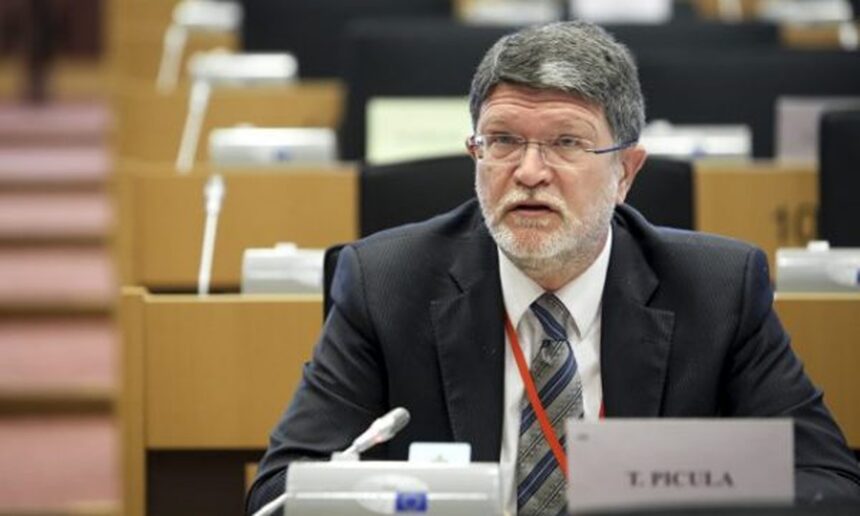
Serbian President Aleksandar Vučić honored convicted war criminal Ratko Mladić at his funeral, while reaching a pre-election alliance agreement with another convicted war criminal, Vojislav Šešelj, according to Croatian MEP and European Parliament rapporteur for Serbia Tonino Picula.
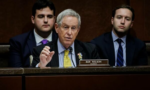
“Mladić’s funeral is another event that has revealed the policies of official Belgrade. Honoring a war criminal does not only demonstrate a completely unacceptable attitude toward the tragic recent past, but also the direction in which this government is leading Serbia today,” Picula said during a European Parliament debate on the glorification of Ratko Mladić.
“Vučić honored one war criminal with state honors, while with another, Šešelj, he reached an agreement for a pre-election alliance.”
Ratko Mladić was convicted by the International Residual Mechanism for Criminal Tribunals of genocide and war crimes and sentenced to life imprisonment. Picula said the manner in which Mladić was honored could not simply be ignored and called on the European Union to oppose historical revisionism and the relativization of war crimes.
“If the Serbian authorities are deliberately going in this direction, the EU must stop looking the other way when dealing with such a government,” Picula said. “It must not close its eyes to the fact that Vučić’s Serbia does not belong in the European Union.”
Picula added that although Mladić had been buried, the ideas associated with a Greater Serbia and the so-called “Serbian world” had not been buried with him.
The MEP also questioned whether Serbia should continue its EU accession negotiations while such political developments persist.
Ahead of the debate, the European People’s Party (EPP), of which Vučić’s Serbian Progressive Party is an associate member, also condemned the participation of senior Serbian officials in Mladić’s funeral.
The discussion is not expected to be the last Serbia-related debate in the European Parliament. Two further sessions are planned for October, with attention expected to remain focused on the Mladić funeral, the state of democracy in Serbia and developments surrounding the elections scheduled for October 25.
These issues are also expected to feature in the European Commission’s Serbia report, scheduled for publication at the end of October.
Ratko Mladić, the former commander of the Army of Republika Srpska, died in The Hague while serving a life sentence for genocide and war crimes. He was buried on September 7 at Topčider Cemetery in Belgrade in a ceremony led by Serbian Patriarch Porfirije and bishops of the Serbian Orthodox Church.
Among those who attended the funeral to pay their respects were Serbian ministers, Republika Srpska political leader Milorad Dodik, Serbian President’s son Danilo Vučić, and Russian Ambassador to Serbia Alexander Botsan-Kharchenko.