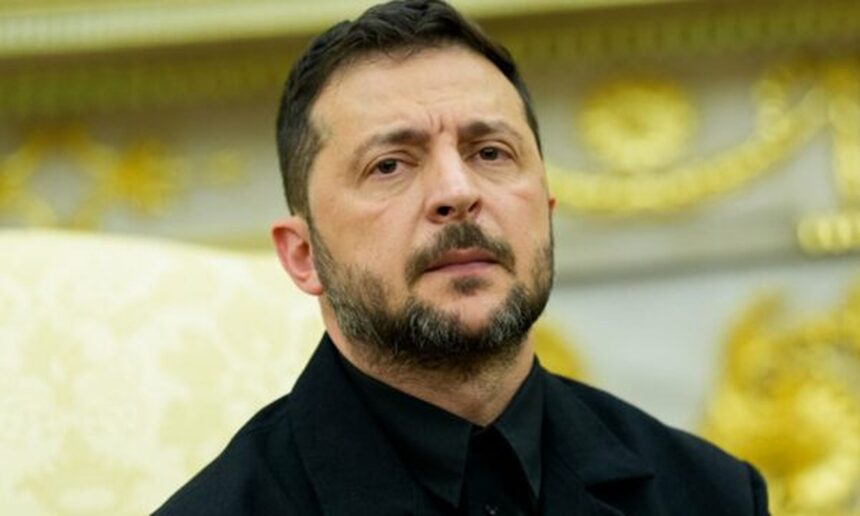
The European Commission is increasing pressure on Ukraine to accelerate reforms required under its agreements with the European Union, warning that delays could affect the release of billions of euros in financial assistance as Kyiv faces mounting budgetary pressures and the ongoing war with Russia.
The Commission has stressed that Ukraine must continue meeting the reforms and political conditions agreed with the EU for relevant payments to proceed. The warning comes as Brussels and Kyiv intensify discussions over Ukraine’s financing needs.
“It is essential that Ukraine continues to fulfil the reforms and political conditions jointly agreed with the European Union,” a European Commission spokesperson said, according to Euronews.
The EU’s financial support is linked to conditions including reforms, the rule of law and measures addressing corruption and conflicts of interest. Under the Ukraine Facility, payments are made periodically when the agreed conditions are considered to have been met.
€20 billion in assistance at stake
According to Euronews, roughly €20 billion in financial assistance could be affected by delays in implementing the required reforms.
The issue comes as the European Commission and Ukrainian authorities work to establish the precise scale of the country’s financing gap, with the International Monetary Fund also involved in assessing Ukraine’s financial needs.
Ukraine is facing substantial additional funding requirements as the war continues to put pressure on government finances and defence spending.
President Volodymyr Zelenskyy had previously cited a $27 billion shortfall in Ukraine’s defence financing. Kyiv has subsequently sought ways to bring forward part of the EU financing originally planned for 2027.
Kyiv seeks earlier access to EU funds
The EU has established a €90 billion Ukraine Support Loan covering 2026 and 2027. The package is designed to provide both budgetary and defence-related assistance. Approximately €60 billion is allocated to military support, while €30 billion is intended for general budgetary assistance.
The EU framework provides for up to €45 billion of assistance in 2026, with a further €45 billion available for 2027.
Kyiv has sought to accelerate access to part of the funding originally expected in 2027 to help address immediate financing and defence needs. Ukrainian officials have argued that bringing forward part of the allocation could help cover the country’s growing funding gap.
The European Commission has already begun disbursing funds under the programme. In June, it announced the first €3.2 billion instalment of the new macro-financial assistance component.
Russian assets remain part of the debate
Kyiv has also advocated greater use of Russian assets immobilised in the European Union to support Ukraine.
The EU has already established mechanisms that use extraordinary revenues generated from immobilised Russian Central Bank assets to provide support to Ukraine. The bloc has also reserved the possibility of using the immobilised assets themselves in connection with repayment of the €90 billion Ukraine Support Loan, in accordance with EU and international law.
The question of how far the EU should go in using frozen Russian assets remains politically and legally sensitive within the bloc.
For Kyiv, meanwhile, the combination of wartime expenditure, a widening financing gap and the need to meet EU reform conditions is putting additional pressure on the government to deliver reforms while securing sufficient external financial support.