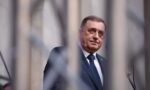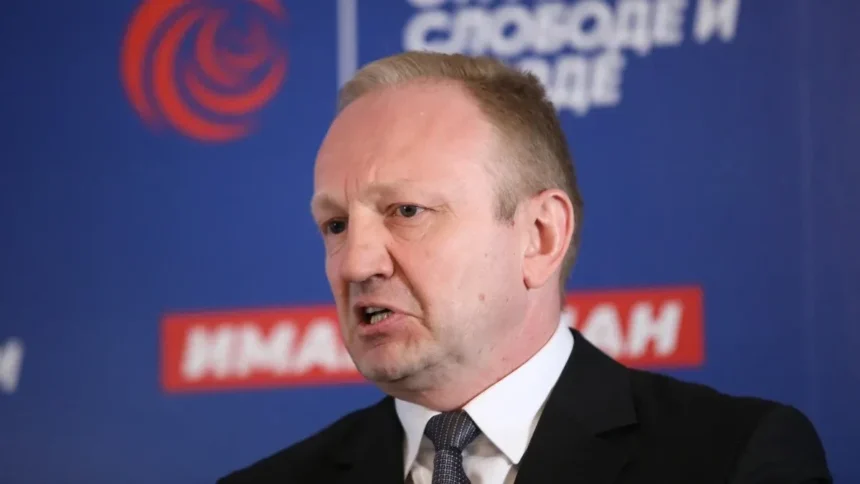
Dragan Đilas, leader of the European Serbia electoral list and the Freedom and Justice Party (SSP), has argued that Serbia has gone from being among the leaders of the European Union accession process to what he described as the bottom of the candidate countries after 14 years.
In a statement reported by FoNet and Danas, Đilas said Serbia had been pushed out of the group of countries for which Brussels is considering faster progress toward EU membership.
According to Đilas, Serbia has moved from what he described as a “second league,” alongside Bosnia and Herzegovina and North Macedonia, into a group he associated with Georgia and Türkiye.
His characterization comes as the EU continues to assess enlargement candidates according to their progress in reforms. The European Commission currently lists Serbia as an EU candidate country and says accession negotiations formally began in January 2014. Serbia has opened 22 of the 35 negotiating chapters, with two provisionally closed; the Commission’s current country profile records no further chapter openings since December 2021.
Đilas criticizes Serbia’s approach to the EU
Đilas blamed what he described as years of anti-European political messaging in Serbia, including what he called the glorification of Russia and China and narratives portraying EU membership as incompatible with Serbia’s national identity.
He also criticized claims that EU membership would necessarily require Serbia to recognize Kosovo or give up its natural resources, saying such arguments had contributed to declining public support for European integration.
“Serbia cannot have a better life until it returns to the first league,” Đilas said.
He added that the Oct. 25 parliamentary election would be important in determining the country’s future political direction.
“Only from the first league can you enter the Champions League,” he said, arguing that the election result would determine the political “league” in which Serbia would live for decades to come.
Serbia’s position in the accession process
The European Commission describes EU enlargement as a merit-based process, with progress dependent on reforms and alignment with EU values and legislation.
Serbia is not the only candidate whose accession process is advancing at a different pace from some other enlargement countries. Montenegro has opened all 33 negotiating chapters and, following developments in June and July 2026, has provisionally closed 18.
Albania has also advanced through the negotiating framework, opening all 33 chapters by December 2025, while Ukraine and Moldova opened their first negotiating cluster in June 2026 and subsequently advanced to negotiations on external relations.
Đilas’s comments therefore come amid a broader debate over the differing pace of EU accession among candidate countries and Serbia’s political and reform trajectory.