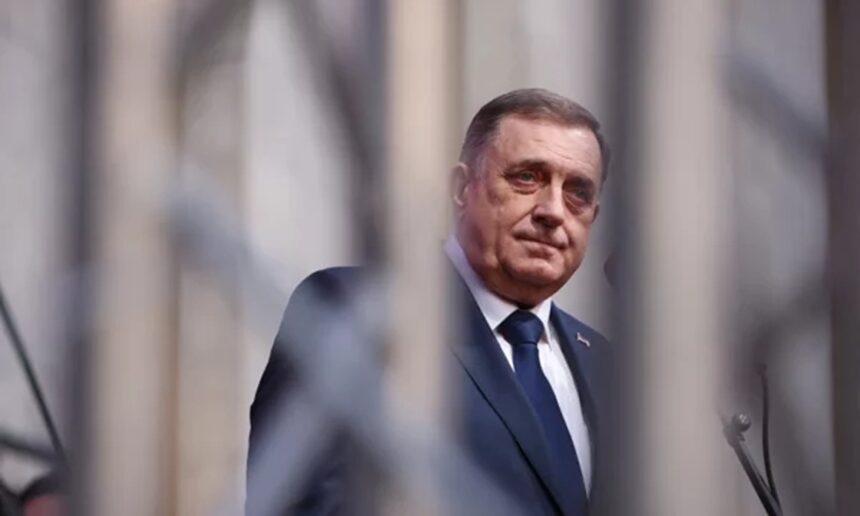
Republika Srpska political leader Milorad Dodik and entity Prime Minister Savo Minić have arrived in Moscow, where they are scheduled to meet Russian President Vladimir Putin on Tuesday.
The visit comes ahead of Bosnia and Herzegovina’s Oct. 4 general election and amid continued political engagement between the leadership of Republika Srpska and Moscow. The delegation’s program includes meetings with Russian institutions and a planned discussion with Putin on future cooperation.
Dodik has presented the visit as evidence of what he describes as the close and “brotherly” relationship between Republika Srpska and Russia. He has also said that discussions with Putin will address future areas of cooperation.
Meeting with Putin and Russian institutions
During the visit, Dodik is scheduled to lecture students at the Moscow State Institute of International Relations (MGIMO) on the future of cooperation between Russia and Republika Srpska in what he describes as a “new system of international relations.”
The delegation is also expected to meet representatives of the Russian Academy of Sciences. The meeting with Putin is scheduled for Tuesday, according to reports from Serbian media.
The visit continues a pattern of engagement between Dodik and Russian officials. Dodik has repeatedly expressed support for maintaining close relations with Moscow and has opposed calls for Republika Srpska to align with Western sanctions against Russia.
Broader European context
The visit takes place as the European Union continues to maintain extensive sanctions against Russia over its war against Ukraine. On Sept. 22, the EU Council extended for three years, until Sept. 22, 2029, restrictive measures targeting more than 3,000 individuals and entities linked to actions undermining Ukraine’s territorial integrity. The measures include asset freezes and travel restrictions.
The EU has also continued adding sanctions related to Russia’s military-industrial complex, hybrid activities and information manipulation. On Sept. 24, the Council imposed restrictive measures on Russian media figure Xenia Fedorova over what it described as foreign information manipulation and interference.
Against this backdrop, Dodik’s continued engagement with Moscow remains a notable element of Republika Srpska’s foreign-policy positioning.
The Moscow visit is also taking place shortly before Bosnia and Herzegovina’s general election, adding a regional political dimension to the delegation’s meetings in Russia.