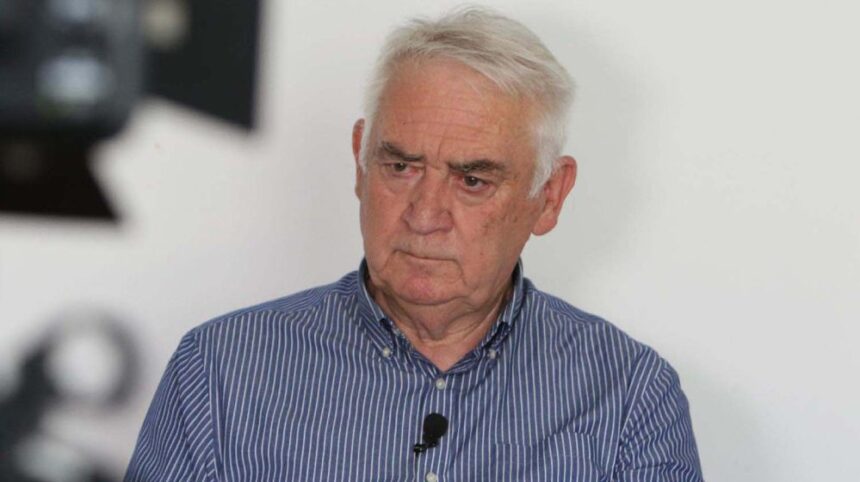
Momčilo Trajković, president of the Serbian National Forum in Gračanica, has accused Serbia’s ruling authorities of preparing to manipulate votes cast by Kosovo Serbs in Serbia’s snap parliamentary elections scheduled for October 25. He claimed that the maximum number of eligible voters from Kosovo should be around 70,000, warning that any figure significantly above that could indicate irregularities.
Speaking to N1, Trajković said the authorities had not provided sufficient transparency regarding the number of Kosovo Serbs registered to vote, raising concerns about potential falsifications involving voter lists.
“Those who manipulate voters know how many people are on the electoral register, but it does not suit them to disclose that information,” Trajković said. He argued that people who have left Kosovo may remain on its voter register while also being registered at their current places of residence elsewhere in Serbia.
“Preparations are being made for this theft. This time, it will be particularly pronounced because the regime is under pressure and is not certain it can win,” he said. His allegations have not been independently substantiated in the report.
Trajković Calls for Support for Student Electoral List
Trajković urged Kosovo Serbs to vote for the student electoral list, arguing that a change in government could improve their social and economic circumstances and create greater political pluralism within the Serbian community.
He said he had held discussions with people he described as qualified to become part of a future government and expressed hope that the student movement’s programme would lead to increased social assistance and economic development for Serbs living in Kosovo.
“We do not expect the student electoral list to solve everything, but we expect the situation to calm down,” Trajković said, referring to a strategy developed by his organization and other groups under the title “A New Beginning.” He said the strategy had been submitted to Serbia’s current government but had received no response.
Trajković also called on Kosovo Serbs to reject what he described as political manipulation and pressure, criticizing the policies pursued by President Aleksandar Vučić and the ruling Serbian Progressive Party (SNS).
Criticism of Serbia’s Kosovo Policy
Trajković argued that the position of Serbs in Kosovo had deteriorated during the 14 years of rule by Vučić and his political allies. He cited concerns about healthcare, education, local institutions, telecommunications and other public services, and said the situation had contributed to the departure of members of the Serbian community.
He also criticized what he described as the practice of collective voting under the direction of the Serbian List, the main Kosovo Serb political party, saying it reflected pressure on voters.
Trajković said his organization had proposed establishing a fund for Kosovo and Metohija with both social welfare and economic development functions to support families facing financial hardship.
Where Kosovo Serbs Will Vote
Serbia’s Republic Electoral Commission (RIK) has designated polling locations in four Serbian municipalities for voters whose polling stations would otherwise be located in Kosovo and who cannot vote there because, according to the commission, Kosovo institutions are preventing the elections from being held on the territory.
Under the arrangement announced by RIK:
- Voters from the Kosovsko-Pomoravlje administrative district will vote in Vranje.
- Voters from the Kosovska Mitrovica district, except those from Zubin Potok and Vučitrn, will vote in Raška.
- Voters from the Kosovo administrative district, along with those from Vučitrn, will vote in Kuršumlija.
- Voters from the Peć and Prizren districts, as well as those from Zubin Potok, will vote in Tutin.
The October 25 election has become the focus of renewed debate over voter registration, electoral conditions and the political representation of Kosovo Serbs. Trajković’s claims about the number of eligible voters and possible manipulation remain allegations rather than established findings.