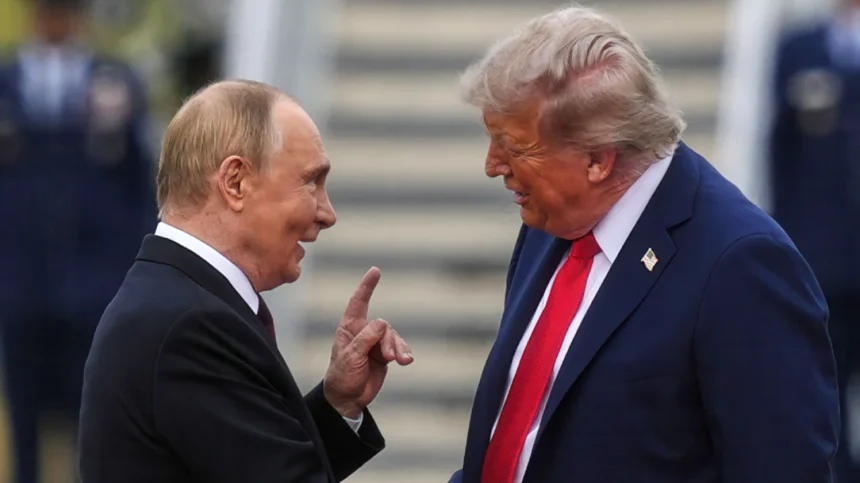
The administration of US President Donald Trump is using eased restrictions on Russian oil exports as a diplomatic incentive to persuade Russian President Vladimir Putin to return to negotiations aimed at ending the war in Ukraine, Reuters reported, citing people familiar with the discussions.
The proposal was presented to Ukrainian officials during a meeting in Miami on Friday. Trump’s special envoy for the Middle East, Steve Witkoff, and his son-in-law, Jared Kushner, reportedly explained that the oil arrangement formed part of Washington’s broader efforts to revive peace negotiations after previous diplomatic initiatives failed to produce an agreement.
According to three people familiar with the discussions, US representatives acknowledged that Putin was not currently prepared to negotiate an end to the war but argued that an economic agreement could help create conditions for renewed trilateral talks involving the United States, Russia and Ukraine.
Washington Urges Kyiv to Halt Attacks on Russian Oil Refineries
Another key issue discussed in Miami was Washington’s request that Ukraine stop attacking Russian oil refineries.
Kushner reportedly reiterated that the United States had repeatedly urged Kyiv to halt the strikes. The White House argues that attacks on Russian energy infrastructure contribute to higher international fuel prices.
The administration’s approach is based on the expectation that easing restrictions on Russian oil exports, combined with a Ukrainian halt to refinery attacks, could create diplomatic pressure on Moscow to make concessions.
However, the proposal has raised concerns in Kyiv and among members of the US Congress. Critics warn that additional revenue from energy exports could strengthen Russia’s economy and help finance its war effort without guaranteeing any concessions from the Kremlin.
Russian Deputy Prime Minister Alexander Novak, who oversees energy policy, said Moscow could increase supplies of petroleum products to international markets to as much as 3.5 million tonnes per month by the end of the year.
According to Novak, the increase would be gradual, with an additional 300,000 tonnes in October, 500,000 tonnes in November and one million tonnes in December before reaching the targeted capacity.
The Trump administration has defended the temporary easing of restrictions, arguing that increased supplies could help lower energy prices in the United States. Fuel costs remain a politically sensitive issue for Republicans ahead of the November 3 midterm elections.
The expected impact on international markets remains uncertain, particularly as developments in the Middle East and the war in Iran continue to put pressure on global energy supplies.
Putin Seeks Territorial Gains as Ukraine Rejects Further Concessions
Washington’s efforts to bring Moscow back to the negotiating table face significant obstacles, including Ukrainian and European concerns about the Kremlin’s intentions.
According to a person close to the Kremlin cited in the report, Putin could consider returning to negotiations if Russia secured the remaining 11% of the Donbas region that Moscow has yet to control fully. Such an outcome could be presented to the Russian public as a victory.
Kyiv has repeatedly said it will not surrender additional territory to Russia, although it has left open the possibility of an agreement that would freeze the conflict along the current front lines.
Trump has also spoken about the possibility of an energy ceasefire between Russia and Ukraine. However, no such agreement has been confirmed by the parties. Russia has continued attacking Ukrainian energy infrastructure, while the Kremlin has rejected Ukrainian President Volodymyr Zelensky’s proposal for a full 60-day ceasefire.
During the Miami meeting, US representatives reportedly did not threaten to suspend military assistance or intelligence sharing if Ukraine refused to halt its attacks on Russian refineries.
Zelensky Calls Oil Decision a “Gift to Putin”
The proposed oil arrangement has further strained relations between Washington and Kyiv.
Zelensky has described the US decision as a “gift to Putin,” arguing that easing restrictions would strengthen Russia economically while its military campaign against Ukraine continues.
Trump, meanwhile, has publicly criticized Zelensky, claiming that the Ukrainian leader has had numerous opportunities to end the war.
Despite their disagreements, US, Ukrainian and European representatives continued discussions on security guarantees for Ukraine and financing for the country’s reconstruction. European officials also participated in the Miami meeting, while World Bank representatives joined remotely, according to the report.
Ukrainian officials left the meeting without formally committing to any proposal. However, people familiar with the discussions said they indicated that Kyiv might consider an energy ceasefire if Russia agreed to reciprocal measures.
The central question remains whether easing restrictions on Russian oil can generate meaningful diplomatic concessions from Moscow or instead provide the Kremlin with additional resources while the war continues.