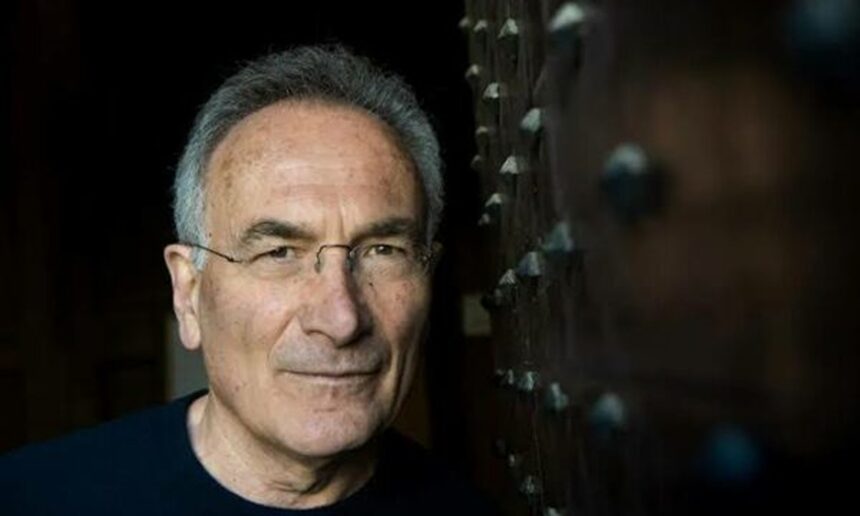
French researcher Serge Métais has suggested that the “Medicus” clinic case in Prishtina may have been part of a provocation by Russian intelligence services, allegedly intended to reinforce claims that human organ trafficking continued in Kosovo after the war.
In an interview with the newspaper Epoka e Re, Métais said the criminal organisation behind the “Medicus” case was run by surgeon Yusuf Sönmez and Moshe Harel. According to the indictment by EULEX special prosecutor Jonathan Ratel, the organisation operated primarily outside Kosovo, in the area between Istanbul and Tel Aviv.
“Quite simply, I rely on the indictment of Jonathan Ratel, the EULEX special prosecutor who led the investigation into the Medicus case. He established that the criminal organisation behind the case was run by two Turkish-Israeli nationals, surgeon Yusuf Sönmez and Moshe Harel, and that its centre of operations was outside Kosovo, somewhere between Istanbul and Tel Aviv, from where everything was organised. The investigation showed that the identified victims whose kidneys were removed at the Medicus clinic, as well as the people who received those kidneys through transplantation, were all foreigners with no connection to Kosovo,” Métais said.
According to Métais, investigations established that kidney removals and transplants were carried out at the Medicus clinic between March and early November 2008. Both organ donors and recipients had travelled from abroad specifically to undergo the surgical procedures.
He stressed that the Pristina clinic was only one of several platforms used by the criminal network, referring to statements by prosecutor Ratel about the existence of other clinics in Azerbaijan and elsewhere.
Métais has alleged that there are grounds to suspect links between the network and Russian intelligence services. As one possible indication, he cited the fact that most of the identified victims whose kidneys were removed at the Medicus clinic came from countries of the former Soviet Union.
“This suggests that Russian intelligence services could hardly have been unaware of the network’s branches in their traditional sphere of influence. There are strong reasons to believe that they had links to this network. Naturally, unlike most of the countries from which the identified witnesses came — victims of kidney removal or recipients of transplants — Russia did not cooperate with prosecutor Ratel’s investigation to facilitate their questioning,” he said.
However, Métais’s allegations of links between the criminal network and Russian intelligence services were not accompanied in the published interview by concrete evidence establishing such connections.
The French researcher also stressed that the criminal activity at the Medicus clinic began after Kosovo declared independence in 2008 and, in his view, there was no evidence linking it to allegations of human organ trafficking after the war, in 1999–2000.
“In the end, it turns out that the criminal activity at the Medicus clinic was a relatively recent phenomenon. It began only after Kosovo declared independence. There is no evidence of continuity between this activity and the alleged human organ trafficking after the war, in 1999–2000. Dick Marty ignored these findings from the investigation conducted by Jonathan Ratel, the EULEX special prosecutor.
“The reasons for such disregard are understandable: the Medicus case lent extraordinary credibility to accounts of ‘human organ trafficking in Kosovo’ in late 1999 and 2000. Moreover, it suggested continuity. The KLA leaders who were alleged to have organised organ trafficking after the war were then in power in Pristina. According to these allegations, they were also behind the criminal activity at the Medicus clinic,” Métais said.
He thus criticised Dick Marty, the Council of Europe rapporteur, accusing him of disregarding the findings of the EULEX investigation and arguing that the Medicus case had been used to create the impression of continuity between the criminal activity uncovered in 2008 and allegations of post-war organ trafficking.