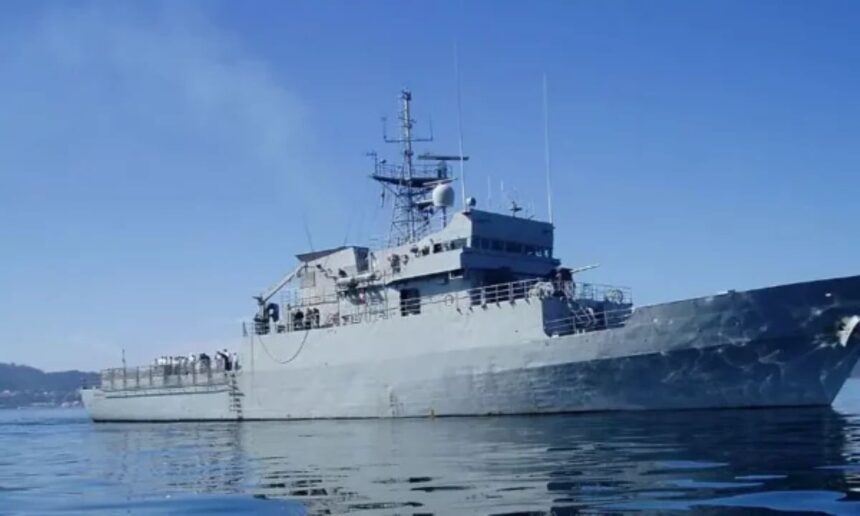
Spain’s Navy has revised its procedures for responding to Moroccan vessels sailing in territorial waters near the Spanish enclaves of Ceuta and Melilla, adopting a more active approach that allows naval forces to intervene without waiting for prior authorization from senior commanders.
According to Spanish newspaper El Mundo, which cited a military source, Moroccan vessels were previously monitored primarily by the Maritime Operations and Surveillance Centre (COVAM), with Spanish forces generally avoiding direct intervention, Euronews reported.
The approach reportedly changed in the final days of July. Spanish Navy vessels now go out to sea to meet and observe Moroccan vessels at closer range, in addition to monitoring their movements.
“We are more vigilant; we no longer wait for them to enter before taking action,” the military source was quoted as saying by El Mundo.
The change concerns maritime movements near Ceuta and Melilla, two Spanish-administered enclaves on Morocco’s northern coast that have long been the focus of territorial sensitivities between Madrid and Rabat.
Under the international law principle of “innocent passage,” foreign vessels may pass through a coastal state’s territorial waters provided their passage does not threaten the state’s peace, order or security. The principle is established under the United Nations Convention on the Law of the Sea and has been cited by Morocco to justify the movement of its vessels near the two enclaves.
According to the report, Spanish authorities had largely relied on monitoring Moroccan naval movements until July 30, without directly intercepting the vessels. The revised procedures reportedly follow recent incidents, including maritime activity during a period when Ceuta experienced a significant surge in migrant arrivals at its border.
The new approach signals increased vigilance by Spain’s Navy in a sensitive maritime area, although the report does not specify whether the revised protocol has changed the legal rules governing passage through Spanish territorial waters.