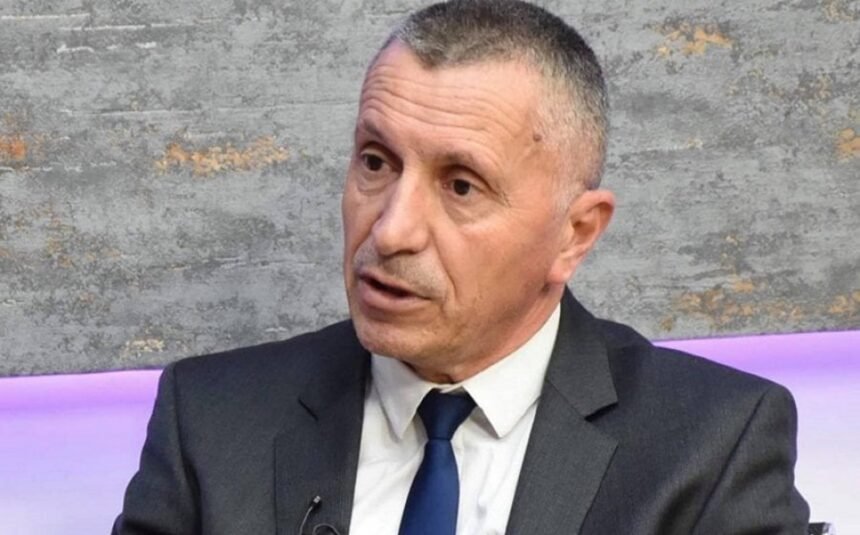
Shaip Kamberi, an ethnic Albanian lawmaker elected to Serbia’s parliament, has said the student-backed movement that defeated Aleksandar Vučić must demonstrate whether it is prepared to change its position on Kosovo and acknowledge its independence.
Kamberi said the approach adopted by the new government in Belgrade toward Kosovo would be an important test of its political direction after the Students’ List won the October 25 parliamentary elections, ending the Serbian Progressive Party’s 14-year rule.
Speaking Monday evening on TV Dukagjini’s Debat Plus program, Kamberi argued that nationalist voters remain an important constituency in Serbian politics and that Kosovo continues to be a central issue in political campaigning.
“In Serbia, you cannot win elections without the support of part of the nationalist electorate, and the issue of Kosovo is one of their favorite topics,” Kamberi said.
He added that it remains to be seen whether the new government will maintain the previous administration’s position or adopt a different approach once it takes office.
Kamberi said the Students’ List includes academics and professors who understand that Vučić’s claims regarding Kosovo cannot be realized, suggesting that the movement should reconsider its political position.
“Kosovo is an independent state,” Kamberi said, arguing that any relationship Belgrade establishes with Prishtina should begin by acknowledging that reality.
Students’ List maintains Serbia’s claim over Kosovo
So far, the Students’ List has given no clear indication that it intends to change its position on Kosovo’s status.
During the election campaign, representatives of the movement described Kosovo as an integral part of Serbia, in line with the Serbian Constitution.
The movement has also called for agreements reached through the Kosovo-Serbia dialogue to be reviewed by Serbia’s parliament and Constitutional Court, leaving open the possibility of revising them. It has additionally advocated returning the question of Kosovo’s status to the United Nations.
In its memorandum on Kosovo, the movement described the territory as an inseparable part of Serbia.
These positions suggest that a change of government in Belgrade would not necessarily bring an immediate shift in Serbia’s policy toward Kosovo.
Kamberi’s remarks highlight the question of whether the new leadership will maintain the established national position or seek a different framework for relations with Prishtina.
Albanian coalition secures two parliamentary seats
The parliamentary elections also marked a significant result for ethnic Albanian parties from Serbia’s Preševo Valley.
Eight Albanian parties from Preševo, Bujanovac and Medveđa united for the first time under the Albanian Coalition, securing approximately 27,000 votes and two parliamentary mandates. The coalition is still competing for a possible third seat.
Kamberi, who led the joint list, described the result as a historic achievement made possible by political unity. In the previous parliamentary term, Albanians had only one representative.
Kosovo Prime Minister Albin Kurti congratulated the coalition, describing its performance as an “extraordinary achievement.” Kurti had supported efforts to unite the Albanian parties ahead of the election.
Lumir Abdixhiku, leader of Kosovo’s Democratic League of Kosovo, also welcomed the result, saying the unity of Albanians had made the achievement possible.
New government faces questions over Kosovo policy
According to preliminary results, the Students’ List received approximately 52.5 percent of the vote, potentially securing around 140 of the Serbian parliament’s 250 seats and an absolute majority. The United Serbia list, led by Vučić’s Serbian Progressive Party, received approximately 39 percent, and Vučić acknowledged defeat.
The Students’ List has not yet announced its candidate for prime minister. Serbia’s new parliament must be constituted within 30 days of the announcement of the final election results.
For Kamberi, the key question is whether the movement will translate its electoral victory into a new approach toward Kosovo or continue to follow the positions maintained by previous Serbian governments.
The new administration’s policy toward Prishtina will therefore be closely watched as Belgrade begins the process of forming a government.