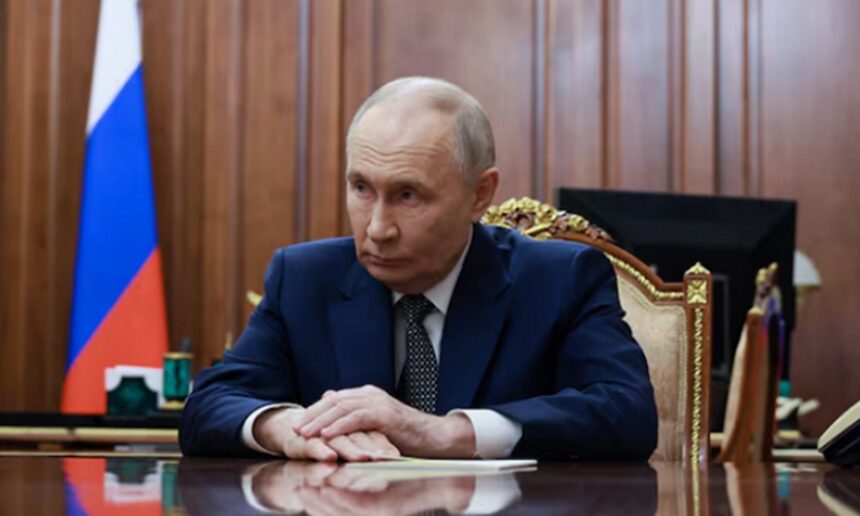
Russian President Vladimir Putin has declared that Russia is prepared for a potential war with Europe.
At the same time, he said his country supports any steps towards restoring relations with European nations. Putin made the remarks following a phone conversation on Tuesday with the leaders of Norway and Finland, The Independent reports.
However, he warned that if tensions escalate, “there will be no winners”. He added that Moscow does not want a situation similar to the one in the Strait of Hormuz to be repeated in the Baltic Sea.
The phone call involved Finnish President Alexander Stubb and Norwegian Prime Minister Jonas Gahr Støre. Their aim was to influence the Kremlin’s position on the war in Ukraine. They described their discussions with the Russian president as “open and substantial”.
Støre said that he and Stubb had “emphasised the importance of reducing tensions” and expressed strong support for Ukraine. However, the move drew criticism from other Nordic leaders. Danish Prime Minister Mette Frederiksen called for European unity on Ukraine, while Swedish Prime Minister Ulf Kristersson pointed out that other European leaders had not been informed about the discussions.
Earlier this week, British Defence Secretary Wes Streeting said the United Kingdom must be prepared for war within 1,000 days. Meanwhile, the government has urged citizens to stockpile canned food and bottled water. In an article for The Telegraph, Streeting warned that the United Kingdom’s adversaries could be ready to launch an attack by 2030, Index.hr reports.
Meanwhile, on Thursday, a Russian jet-powered drone struck two trains at a railway station in central Ukraine. According to officials, at least 13 people were killed and 10 others injured. Ukrainian President Volodymyr Zelenskyy described the attack on passenger trains in Dnipro as “horrific”.
The attack took place despite Moscow and Kyiv having observed a ceasefire since Tuesday in and around a devastated town in southern Ukraine. The war has continued for more than four years, while previous attempts to establish a ceasefire have largely failed or agreements have been rapidly violated.