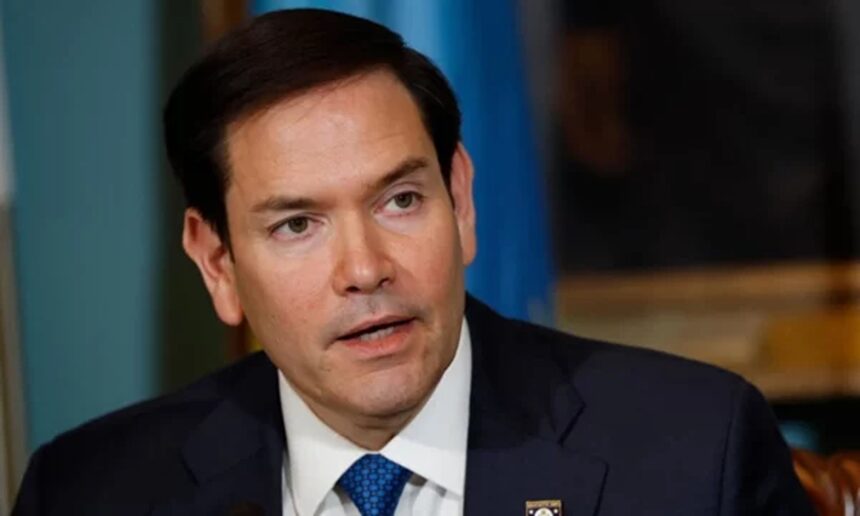
A letter sent by two Republican members of the U.S. House of Representatives to Secretary of State Marco Rubio has renewed scrutiny of corruption, democratic governance and the rule of law in Albania, raising questions about whether Washington could take a tougher approach toward officials accused of serious misconduct.
Congressmen Joe Wilson of South Carolina and Keith Self of Texas, who chairs the House Subcommittee on Europe, have asked the U.S. administration to consider imposing visa restrictions on Albanian officials involved in significant corruption.
The lawmakers also expressed concern about the future of Albania’s justice reform, warning that progress achieved through substantial American investment remains fragile and could be reversed.
They specifically called for consideration of Section 7031(c) of U.S. legislation, which allows Washington to restrict entry into the United States for foreign officials when credible information indicates their involvement in significant corruption. Under certain circumstances, the restrictions can also extend to their immediate family members.
Belinda Balluku case draws attention
The letter places particular emphasis on the case of former Deputy Prime Minister Belinda Balluku, who has faced investigations over suspicions of interference in public procurement procedures.
Prosecutors’ request to lift her parliamentary immunity to allow her arrest did not receive the necessary approval in Parliament. Prime Minister Edi Rama had opposed the request, describing it as unconstitutional.
The congressmen have also requested information about U.S. support for Albania’s justice reform and cooperation between the U.S. Embassy in Tirana and Albanian authorities to protect protesters and journalists.
They have asked the administration to provide answers by November 5.
The initiative has raised questions about whether the letter could lead to concrete measures against Albanian officials and whether potential visa restrictions could have broader political consequences for the government of Prime Minister Edi Rama.
However, no decision to impose new restrictions has been announced in the material cited, and it remains unclear whether the administration will act on the lawmakers’ requests.
Çumani: U.S. visas are not a privilege for corrupt officials
Commenting on the letter, Albanian publicist Ilir Çumani told Bota Sot that the initiative should not be viewed merely as a diplomatic development, but as an important message about public accountability and respect for the rule of law.
He argued that corruption at the highest levels of government poses a serious threat to democracy, the public interest and citizens’ trust in state institutions.
The article also includes comments from publicist Llesh Ndoj, who said signals from Washington should be taken seriously while emphasizing that relations between Albania and the United States remain strategic.
The potential use of visa restrictions could therefore become an important test of how the U.S. administration intends to address concerns about corruption and the rule of law in Albania.
For now, the next steps depend on the response from the State Department and whether the concerns raised by Wilson and Self translate into specific policy measures.