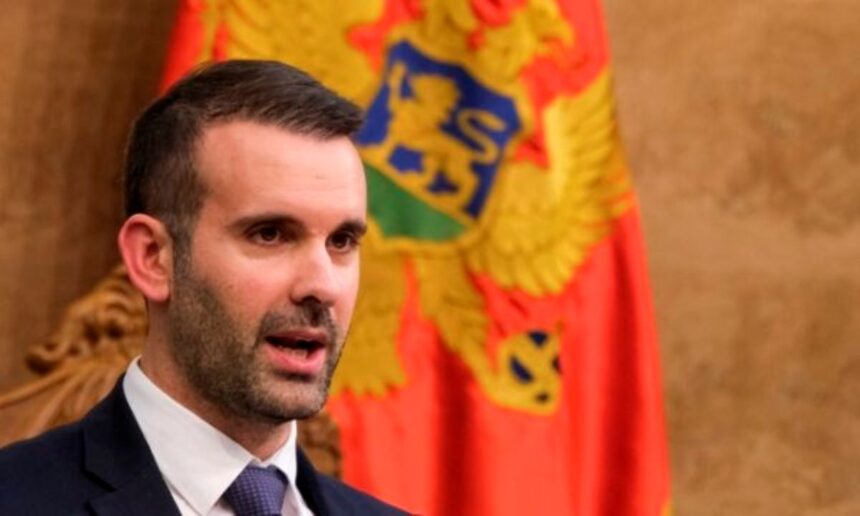
Montenegrin Prime Minister Milojko Spajić has called for an investigation into possible foreign influence in the country’s media and political environment, following concerns raised by his Europe Now Movement (PES) about potential links between national television broadcasters and several companies with Serbian connections.
Spajić said on Saturday that recent developments in Montenegro and the wider region had reinforced the seriousness of information held by domestic and partner security services regarding possible hybrid activities.
His comments followed an initiative by PES asking parliament to examine the relationships between national television broadcasters and M-tel, which is majority-owned by Serbian telecommunications group Telekom Srbija, as well as Alta Bank and Alta Pay Group, businesses linked to Serbian entrepreneur Davor Macura.
In a post on the social media platform X, Spajić said recent developments had confirmed the reliability of information available to Montenegrin and partner security agencies, which he had warned about in late August.
He said he expected the relevant institutions to establish, on the basis of evidence, who had genuinely defended Montenegro’s national interests and who may have attempted to undermine the country’s stability and European Union accession process by relying on informal power centers in other countries and unauthorized mechanisms.
Concerns over possible hybrid activities
On August 27, Spajić announced that the government possessed what he described as serious operational security information indicating that the closure of additional EU accession negotiating chapters could be accompanied by a coordinated hybrid operation.
He said the alleged operation could involve officials from at least two countries in the region, although he did not identify them at the time.
Spajić also warned that certain political actors and sections of Montenegro’s media environment could support such activities.
The PES parliamentary group has now submitted an initiative requesting a parliamentary oversight hearing before the Assembly’s Committee on Security and Defense to examine possible foreign hybrid influence in Montenegro’s media and political sphere.
The proposed review would cover financial, ownership and business relationships between national television broadcasters and M-tel, Alta Bank, Alta Pay Group and other related entities.
According to the initiative, lawmakers want to establish whether financial, telecommunications and media channels have been used to influence public opinion, editorial policies or democratic processes, and whether such relationships pose any security risks to Montenegro.
PES is proposing that the committee hear from representatives of relevant security and state institutions, obtain information about the business connections in question and seek assessments of any potential elements of foreign hybrid influence.
The initiative does not establish that foreign interference has taken place. Instead, it calls on the competent institutions to examine the allegations and determine whether there is evidence of organized activity.
Companies named in the initiative
M-tel has operated in Montenegro since 2007 and is one of the country’s major telecommunications providers, offering mobile and fixed-line services, internet access and television.
The company is majority-linked to Telekom Srbija, a telecommunications group controlled by the Serbian state.
Alta Bank and Alta Pay Group are part of the business network associated with Serbian entrepreneur Davor Macura.
The issue has also attracted attention following a separate decision by Serbia’s National Bank, which revoked Alta Bank’s operating license on October 30.
The Serbian central bank said supervisory inspections had revealed a significant deterioration in the bank’s financial position and the risk of further liquidity problems, threatening depositors’ interests.
The Deposit Insurance Agency took over the bank’s administration, while legal proceedings were initiated against the institution, its shareholders, management and other responsible individuals.
The proposed parliamentary inquiry in Montenegro comes as the government continues to emphasize the importance of protecting the country’s institutions and advancing its EU membership ambitions.