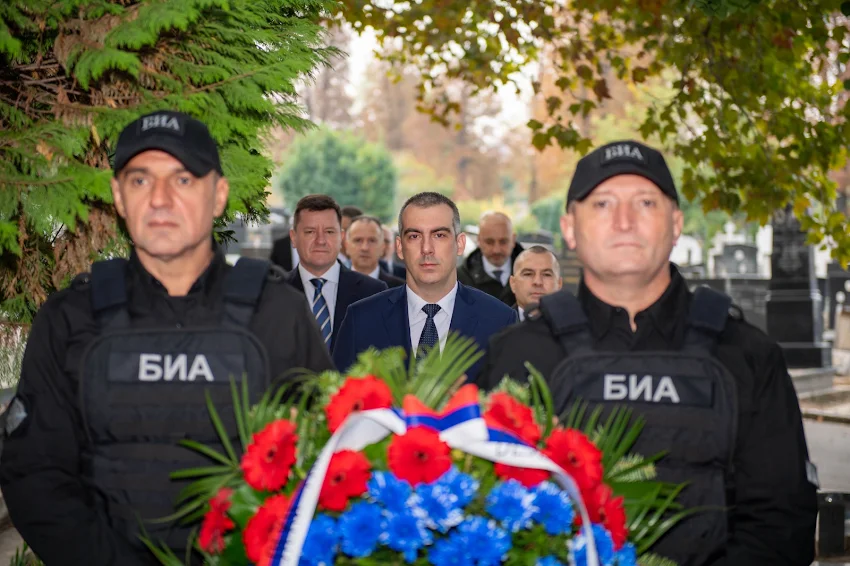
Serbia’s Security Intelligence Agency (BIA) allegedly placed several prosecutors from the country’s Organized Crime Prosecutor’s Office under secret surveillance, including monitoring their phone conversations and email communications, according to an investigation published by the weekly magazine Radar.
Citing an unnamed source who reportedly spoke for security reasons, the magazine said the surveillance was primarily intended to obtain information about the ongoing investigation into the so-called “Canopy Case,” involving alleged corruption in the reconstruction of the railway line between Belgrade and the Hungarian border and the renovation of Novi Sad’s railway station.
The station’s concrete canopy collapsed two years ago, killing 16 people.
According to Radar’s source, the BIA used the surveillance measures to gather information about the prosecutors’ work on the case, as well as their investigations into other matters.
The source claimed that the monitoring also captured conversations involving prosecutors who shared offices with those directly targeted.
“The head of the Organized Crime Prosecutor’s Office, Mladen Nenadić, was also monitored, because he is in daily contact with all the prosecutors in the office. They knew every step the prosecutors were taking and what they were planning in all their cases,” the source told the magazine.
Surveillance measures reportedly continued until October 29
According to Radar, the surveillance measures were formally introduced on grounds of alleged espionage and were authorized or renewed on several occasions: April 9, April 30, May 29, June 19 and, most recently, October 7, 2026.
The magazine reported that BIA Director Vladimir Orlić initiated the complete termination of the measures on October 29, four days after Serbia’s parliamentary elections.
However, Radar said the measures were subsequently reinstated in a more limited form, reportedly covering activities within the agency’s jurisdiction, such as monitoring criminal groups.
The publication claims that surveillance of the prosecutors continued until October 29.
The allegations have not been independently verified, and the report does not include a public response from the BIA or the Organized Crime Prosecutor’s Office.
If confirmed, the reported surveillance would raise serious questions about the independence of prosecutors and the use of intelligence powers in investigations involving alleged corruption at the highest levels of public administration.