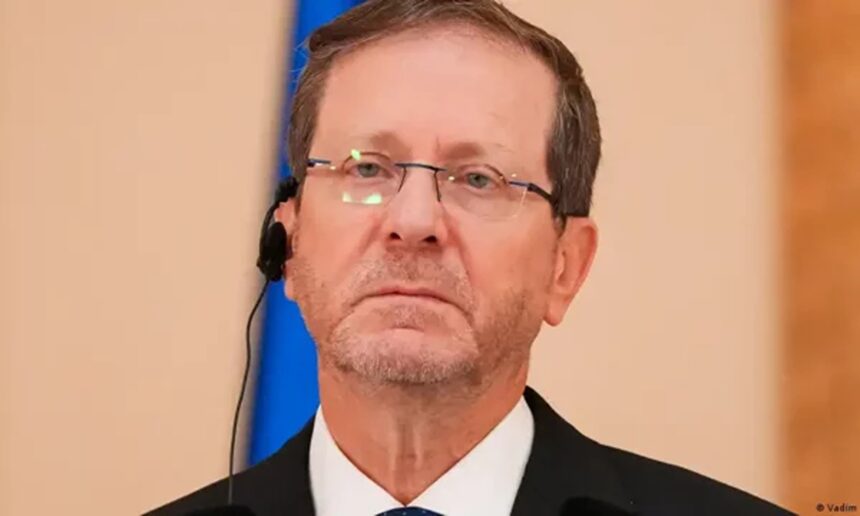
Israel began crucial consultations on Wednesday to form a new government. Following the parliamentary elections, the country is facing a political deadlock. President Isaac Herzog has called for historic compromises.
These are critical days for Israeli democracy. Official consultations on forming a government began on Wednesday at the Presidential Residence in Jerusalem. President Isaac Herzog met individually with the leaders of all parliamentary groups elected to the Knesset.
The consultations are expected to continue until Thursday evening. These discussions mark the beginning of a complex and potentially prolonged process, at the end of which a candidate for prime minister will be appointed. However, the political situation following these elections is rarely, if ever, been this complicated.
Israel remains deeply divided politically, and the election results have produced both a mathematical and ideological deadlock. Neither the nationalist, right-wing and religious bloc led by veteran Prime Minister Benjamin Netanyahu nor the broad opposition coalition centred around former military chief Gadi Eisenkot can secure a stable governing majority of at least 61 of the Knesset’s 120 seats.
Arab Parties Emerge as Unexpected Kingmakers
The biggest surprise of these elections has shaken the traditional structure of Israeli politics: Arab parties now hold the key to power. With a combined total of 19 seats, they have become the decisive factor in determining the balance.
Throughout Israel’s history, Arab parliamentary groups have rarely participated directly in governing coalitions or served as active partners in supporting a government.
Now, both Netanyahu and Eisenkot face the challenge of building bridges that would have seemed unimaginable just weeks ago. The central question is whether Arab lawmakers are willing to recommend either of the two candidates for prime minister — and, if so, under what conditions.
Herzog Calls for an “Open Heart”
Faced with the deadlock, President Herzog chose to speak with unusual emotion and a profound sense of national responsibility even before the consultations began. He urged leaders of the various factions to “seek creative solutions with an open heart” and listen to one another despite their deep political differences.
At this critical moment, Israel cannot afford a prolonged political stalemate — let alone another round of elections.
In an effort to restore public confidence in a political process that has been tested by successive crises and wars, Herzog has taken an important step: the consultations at the Presidential Residence will be broadcast in full, both on television and through digital channels.
This will allow the Israeli public to follow, in real time, the arguments presented by each parliamentary group and the candidate they ultimately recommend for prime minister. Such an unprecedented level of transparency places considerable pressure on lawmakers to reach an agreement.
Hostage Families Make Dramatic Appeal to Eisenkot
While political manoeuvring continues in Jerusalem, pressure from civil society outside the negotiating rooms is intensifying, particularly on opposition leader Eisenkot.
The leader of the Yashar party is facing urgent demands from a civil society deeply traumatised by the events of recent years. Before the consultations began, families of victims and hostages of the October 7 terrorist attack issued an emotional appeal to Eisenkot.
Representing more than 700 people directly affected including released hostages, survivors of the massacres and residents of communities along the Gaza border they urged Eisenkot to use his electoral mandate without exception to form a “government for change”.
The signatories’ message is clear: under no circumstances should Eisenkot accept half-measures or join a coalition that legitimises the forces they hold responsible for the state’s catastrophic failure surrounding October 7.
For Eisenkot, who lost family members in the war, the appeal carries enormous political and personal weight. Every decision he makes in Jerusalem in the coming days will be judged against the moral standard set by the victims’ organisations.
Weeks of Difficult Negotiations Ahead
The consultations in Jerusalem are initially scheduled to last two days. Once the meetings conclude, President Herzog will select the member of parliament he considers most likely to form a stable coalition.
The candidate will then have an initial 28-day period, as provided by law, to form a government.
However, given the seemingly irreconcilable positions of the various blocs and the entirely new role played by Arab parties, observers in Tel Aviv and Jerusalem expect weeks of difficult negotiations.