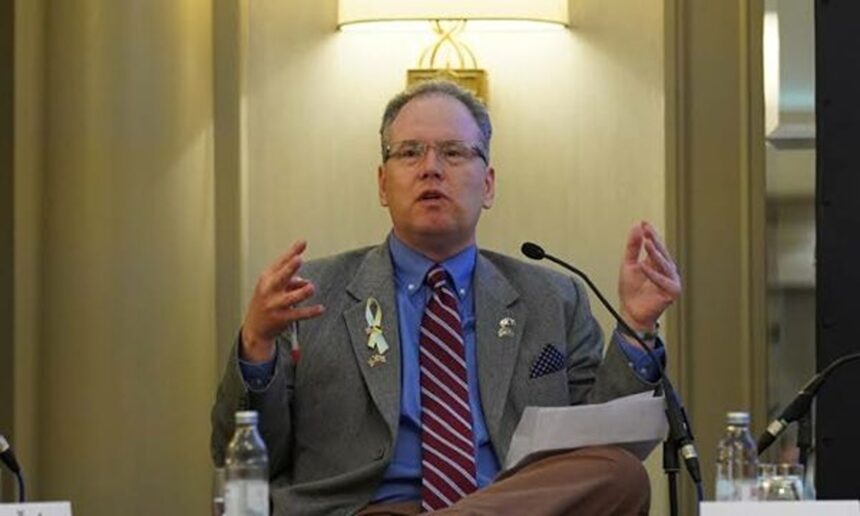
German analyst Kurt W. Bassuener has criticised Western governments for their approach towards Serbia over Kosovo, arguing that they missed an opportunity to use political and EU integration leverage to hold Belgrade accountable for its policies towards Kosovo’s independence.
In an interview with Telegrafi, the co-founder of the Democratization Policy Council (DPC) said Serbia’s 2006 Constitution, commonly known as the Koštunica Constitution, was deliberately designed to delegitimise Kosovo’s independence before it was even declared.
According to Bassuener, the constitution was adopted while the Ahtisaari Plan was being drafted, with the latter intended to establish mechanisms for protecting the rights of Kosovo’s Serb community.
He argued that Western governments failed to respond adequately to Belgrade’s approach and did not use Serbia’s EU integration process as an effective instrument of political pressure.
“The West allowed this to pass without a response, instead of making it clear that such an approach would constitute an obstacle to Serbia’s aspirations for EU membership,” Bassuener said.
The analyst also stressed that opportunities for a more realistic political approach towards Kosovo in Serbia were greater in the past than they are today, largely because of the growing influence of nationalist rhetoric over the years.
He pointed to 2001 and the period between 2006 and 2008, arguing that there was considerably more room for political pragmatism on the Kosovo issue at the time.
“Unfortunately, it cannot be denied that there was more room and greater potential for political realism in Serbia in 2001, and even during 2006–2008, than there is today, due to the increasingly intensified nationalist discourse surrounding Kosovo,” Bassuener said.
He added that the geopolitical environment was also far more favourable during that period, whereas today Kosovo has become one of the most difficult challenges for any potential shift in Belgrade’s policy.
Commenting on Serbia’s political future after Aleksandar Vučić, Bassuener warned that the current president’s departure from power would not necessarily bring about a fundamental change in Serbia’s approach towards Kosovo.