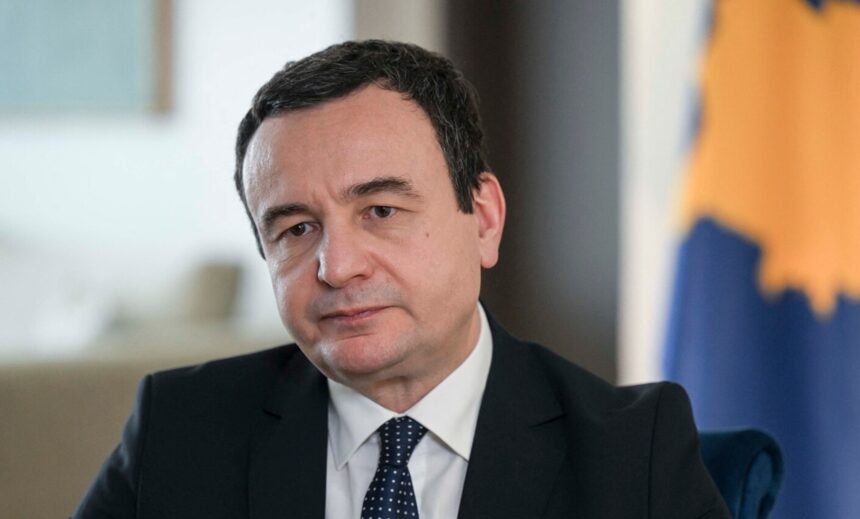
Acting Prime Minister of Kosovo, Albin Kurti, recalled the poisoning of students in 1989 and 1990, perpetrated by the Serbian occupier, describing it as one of the most sinister crimes committed against Kosovo Albanians.
In a post on his official Facebook page, Kurti stated:
“Among all the crimes carried out by the occupying Serbian state against Albanians in Kosovo, one of the most macabre and diabolical was the poisoning of students.”
Kurti detailed the timeline and scope of these attacks:
“Poisonings began on 21 March 1989 in Klina and on 6 December 1989 in Prizren. Starting 15 March 1990, poisoning cases were recorded in 20 cities and 11 villages across Kosovo. Beyond schools, poisonings affected workers in factories such as ‘Emin Duraku’ in Gjakova, ‘Balkan’ in Suhareka, and ‘Polet’ in Vushtrri, as well as sporadic cases among passersby. Seven children in the ‘Emin Duraku’ daycare were also poisoned. On 19 March 1990, mass poisonings occurred in Podujevo, followed by another wave on 22 March. The peak was on 20 March 1990, with numerous students affected across Kosovo. Ferizaj municipality reported the highest number of poisoned students. In total, 7,421 students were poisoned over these years.”
He further noted that Serbian authorities attempted to cover up these incidents, obstructing investigations and medical analyses:
“Those who provided aid were persecuted. For example, 48 students from the Faculty of Medicine were imprisoned for allegedly providing unauthorized medical assistance. Despite these efforts, these state crimes left a significant body of evidence.”
Kurti emphasized the importance of documenting these crimes for historical accountability:
“Alongside testimonies from victims and witnesses, medical reports, international organizations, and contemporary politicians, Kosovo’s institutions have documented the crimes committed by Serbia. To collect all materials and evidence of crimes committed in any period, the Institute for the Research of Crimes Committed during the War in Kosovo was established, creating an archival, library, and audiovisual center to serve researchers, journalists, legal experts, and policymakers. Its purpose is to ensure the truth of Kosovo’s history is known and that the crimes of Serbia against our people are never forgotten.”