European leaders and Ukraine sharply criticised Russian President Vladimir Putin on Wednesday, accusing him of simulating interest in peace negotiations after five hours of talks with U.S. envoys in Moscow produced no progress, no compromise, and no signs of de-escalation.
Ukrainian Foreign Minister Andrii Sybiha urged Putin to “stop wasting the world’s time,” while UK Foreign Secretary Yvette Cooper called on the Kremlin to “end the bluster and the bloodshed” and finally engage in talks aimed at a just and lasting peace, not merely performative diplomacy.
European Ministers: Putin Has Zero Intention of Ending the War
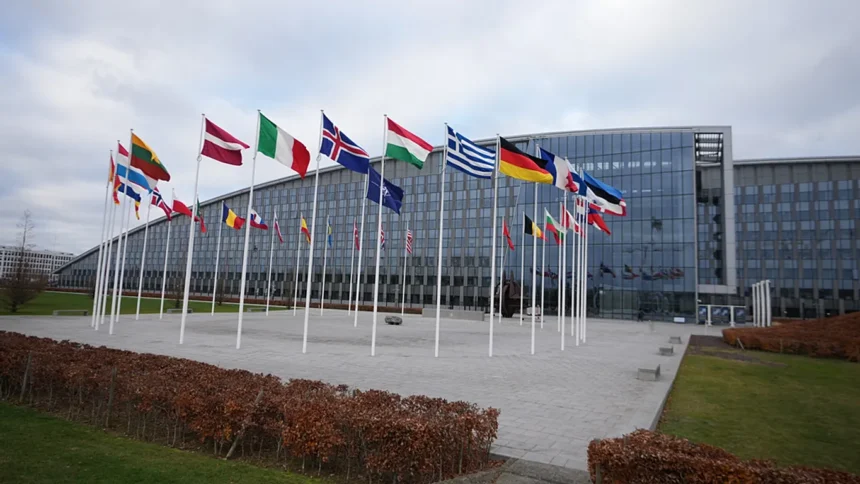
During a tense NATO foreign ministers’ meeting in Brussels, officials expressed open frustration:
- Estonian FM Margus Tsahkna said Putin “has not changed course” and is pushing “more aggressively on the battlefield,” proving he has no interest in genuine peace.
- Finland’s Elina Valtonen stressed that Russia — the aggressor — has not offered a single concession, arguing that a full ceasefire would be the only meaningful confidence-building measure.
These blunt remarks came after Putin accused Europe of sabotaging U.S.-led peace efforts, even threatening that Russia would be “ready for war with Europe” if provoked — rhetoric that European ministers dismissed as dangerous posturing.
Putin’s adviser Yuri Ushakov described the talks with Trump envoys Steve Witkoff and Jared Kushner as “positive,” but provided no details, fueling scepticism across European capitals.
Zelenskyy: Ending the War Is Possible — With Real Pressure on Russia
President Volodymyr Zelenskyy, in his evening address, said the global community “clearly feels” that ending the war is possible, but only through “constructive diplomacy plus pressure on the aggressor.”
Trump’s envoys will meet Ukrainian negotiator Rustem Umerov in Miami on Thursday. Trump claimed Witkoff and Kushner left Moscow convinced that Putin “would like to make a deal” — a view not shared by European leaders who see no evidence of sincerity from the Kremlin.
Europe Steps Up Military and Financial Support
NATO Secretary-General Mark Rutte underscored that peace talks will not reduce the military support Ukraine receives:
“We must ensure Ukraine is in the strongest possible position to fight back against the Russians,” Rutte said.
Meanwhile, Canada, Germany, Poland and the Netherlands announced hundreds of millions of dollars in additional spending to purchase U.S. weapons for Ukraine — a move meant to keep pressure high on Moscow as negotiations continue.
Since Russia’s 2022 invasion, Europe and the U.S. have invested billions in financial and military assistance to Kyiv.
Trump’s Policy Shift: No More Weapon Donations
Under President Donald Trump, the U.S. has scaled back direct military donations to Ukraine. Unlike the Biden administration, the Trump administration has:
- Stopped approving direct U.S. weapons donations,
- Chosen instead to sell weapons to Kyiv,
- Or sell them to NATO allies who then donate them to Ukraine.
This shift has prompted concern in Europe, where many fear that Putin is trying to exploit divisions and present himself as willing to negotiate — while in reality intensifying military pressure.