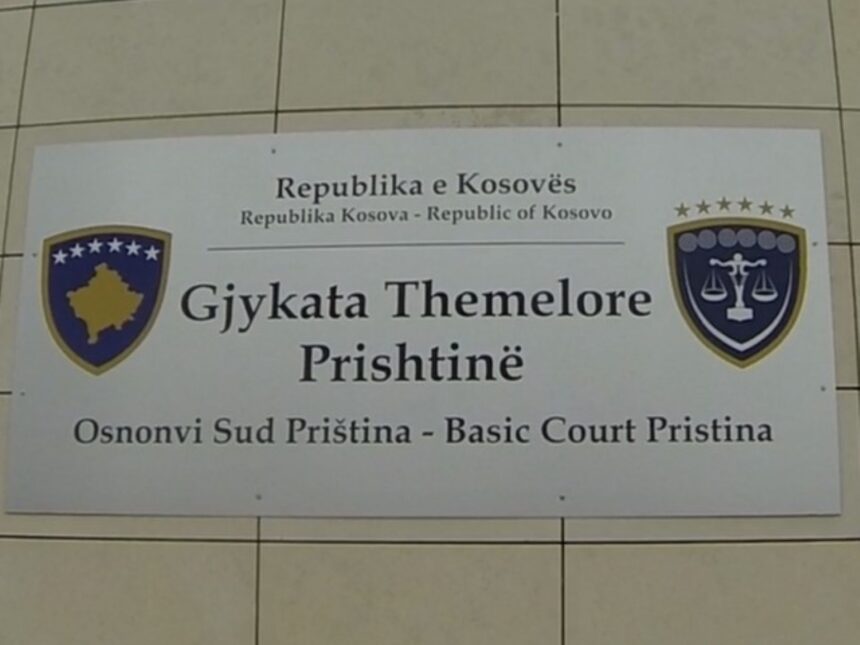
The Special Department of the Basic Court in Prishtina has held an initial hearing in absentia against three Serbian nationals accused of war crimes committed during the 1998–1999 Kosovo war.
The defendants are Ljubomir Čimburović, a former director of the Prishtina District Prison, and Predrag Bradić and Milivoje Ivić, both former prison guards at detention facilities in Prishtina and Lipjan. The trial is proceeding in absentia as the accused remain unreachable by Kosovo’s justice institutions.
Prosecutor Atdhe Dema confirmed that the Special Prosecution of the Republic of Kosovo had undertaken all necessary legal steps, stating that the legal conditions for a trial in absentia have been fully met.
Charges of Systematic Abuse and Torture
The indictment, filed on May 13, 2024, alleges that during the war period, the accused systematically violated international humanitarian law by allowing and participating in the inhumane treatment and torture of Albanian detainees.
According to the prosecution, Čimburović was fully aware of the crimes committed under his authority but failed to prevent them or report them through the chain of command, thereby bearing command responsibility.
The indictment details that detainees were beaten with rubber batons, metal rods, electric cables, water pipes, fists, and kicks, often until they lost consciousness. Victims also endured psychological violence, death threats, prolonged starvation, and severe physical injuries, leading to long-term trauma, anxiety, and fear.
These acts constitute serious violations of the Geneva Conventions and their Additional Protocols, as well as Kosovo’s domestic criminal law.
Victims Present in Court
Several victims, including Agron Ramadani, Ali Xhyliqi, Ramadan Nishori, and Ylber Topalli, were present during the hearing.
Presiding Judge Leon Përlaska clarified that, due to the nature of the trial in absentia, no plea of guilt will be entered at this stage. The defense has 30 days to challenge evidence or request the dismissal of the indictment.
A Test for Justice and Accountability
This case marks another critical step in Kosovo’s ongoing efforts to address wartime atrocities and ensure accountability, despite continued non-cooperation from Serbia and the absence of many suspects from Kosovo’s jurisdiction.
Human rights advocates stress that trials in absentia remain essential to preventing impunity for war crimes and to delivering a measure of justice for victims who have waited more than two decades.