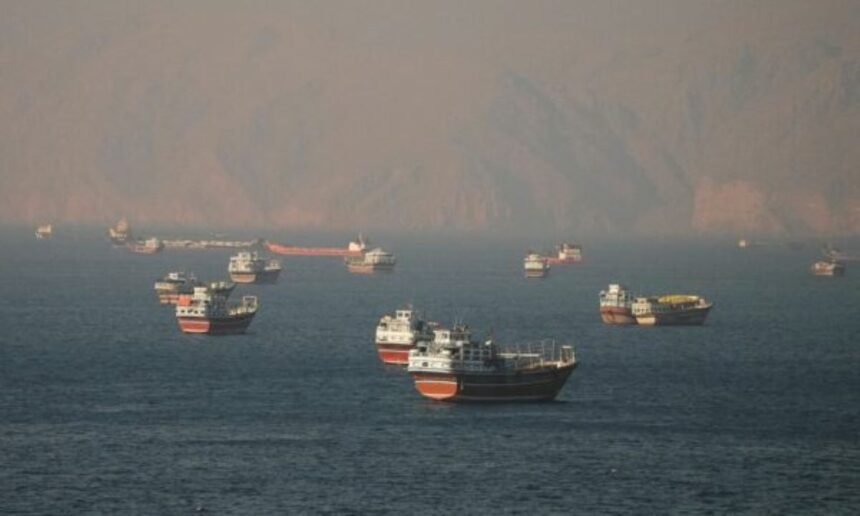
A sobering, newly compiled assessment by United States intelligence agencies has concluded that Iran now possesses the tactical capability to effectively shut down the Strait of Hormuz at will.
According to an exclusive report by CNN, citing three high-level sources familiar with the classified findings, the monthslong war in Western Asia has allowed Tehran to field-test and secure a highly dangerous level of leverage over global maritime choke points—giving the Islamic Republic unprecedented power to paralyze the global economy whenever it chooses.
1. The Flaw in Friday’s Peace Deal: De Facto Control
The intelligence leak comes at a highly sensitive diplomatic juncture, arriving just days before the United States and Iran are scheduled to sign a highly anticipated interim framework agreement at the Bürgenstock Resort in Switzerland to lift naval blockades and restore shipping lanes.
The New Strategic Paradigm in the Persian Gulf

 [ DE FACTO HEGEMONY ] ──► LEVERAGE OVER SHIPPING
 • US intelligence warns that regardless of what is signed on paper this Friday,
   Tehran has functionally demonstrated the ability to completely choke off the waterway.

 [ BEYOND THE NUCLEAR THREAT ] ──► CHOKING GLOBAL TRADE
 • A senior source emphasized the severity of the situation to CNN: "We have now given
   Iran de facto control over the strait—a weapon more powerful than any nuclear weapon."

 [ INFRASTRUCTURE TARGETING ] ──► ARAB GULF VULNERABILITIES
 • The assessments confirm Iran successfully proved it can blackmail global markets by
   launching highly concentrated strikes against the critical energy infrastructure of neighboring Arab Gulf states.
2. The Arsenal Keeping the Strait Weaponized
Despite months of heavy engagement and containment efforts by Western naval coalitions, the United States line agencies—including the Office of the Director of National Intelligence (ODNI)—admit that Iran’s primary maritime denial assets remain overwhelmingly intact.
Iran's Rapidly Rebuilt Military Production Pipeline
┌────────────────────────────────────────────────────────────────────────┐
│                                                                        │
│  [ THE LETHAL LOW-COST MIX ] ──────────────────────────────────────┐   │
│  • The core threat stems from thousands of anti-ship ballistic and     │   │
│    cruise missiles, coordinated drone swarms, and mobile launchers.    │   │
│                                                                        │   │
│  [ ASYMMETRIC SWARM TACTICS ] ─────────────────────────────────────┤   │
│  • Hundreds of fast, small attack craft continue to actively harass    │   │
│    commercial shipping lanes and retain the capacity to saturate the   │   │
│    shallow, narrow waters with thousands of naval mines.               │   │
│                                                                        │   │
│  [ RAPID INDUSTRIAL RECOVERY ] ────────────────────────────────────┘   │
│  • Defying initial Pentagon projections, Iran's domestic military      │
│    industrial base has bounced back at an accelerated rate, already   │
│    spinning up new mass-production assembly lines for advanced UAVs.   │
└────────────────────────────────────────────────────────────────────────┘
3. The Fragile 60-Day Clock and Global Energy Vulnerability
The Strait of Hormuz is the world’s most critical energy artery, serving as the transit route for roughly one-fifth of the world’s total petroleum consumption.
| Threat Vector | Operational Status | Strategic Global Risk |
| Maritime Mine Warfare | Fast attack craft are fully equipped with advanced sea-mining equipment. | Cleaving open a mined strait takes weeks; the resulting delays could instantly trigger historic shocks to global oil and gas prices. |
| Surveillance Swarms | Newly manufactured tracking drones are blanketing the Persian Gulf daily. | Iranian forces can pinpoint, intercept, or seize specific commercial tankers without needing to engage major Western warships directly. |
| The Diplomatic Catch-22 | The White House has declined to comment publicly on the leaked CNN report. | The upcoming 60-day nuclear verification window could be disrupted if Tehran uses its newly certified veto power over international shipping to force concessions. |
“Iran has learned that concentrated energy infrastructure strikes are the ultimate leverage tool. They have emerged from this conflict with an asymmetric capability that the international community cannot easily deter.”
— U.S. Intelligence Source to CNN
While international mediators from Pakistan and Qatar remain hopeful that Friday’s Swiss signing ceremony will temporarily defuse regional hostilities, Washington is now forced to confront a harsh new geopolitical reality: the balance of power in the world’s most vital energy corridor has fundamentally shifted into the hands of Tehran.