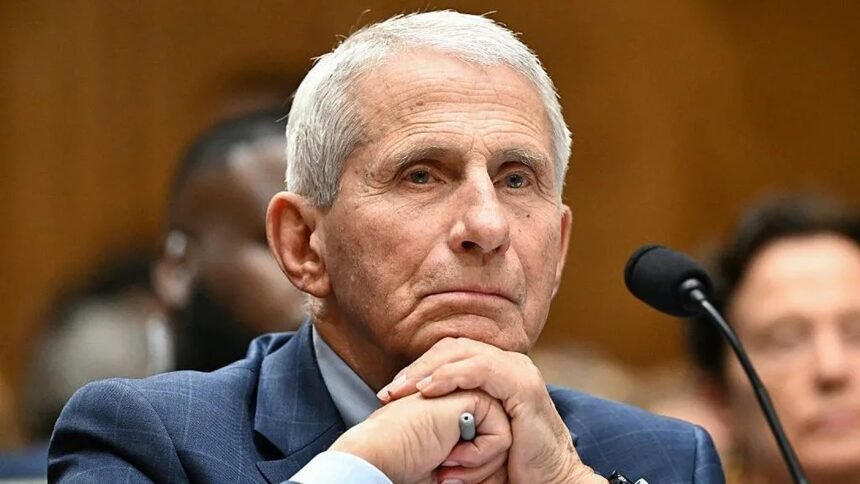
Former top U.S. public health official Dr. Anthony Fauci declined to answer questions during a U.S. Senate hearing on the origins of the COVID-19 pandemic, saying he feared Republican lawmakers could use his testimony to pursue criminal charges for alleged false statements.
Fauci invoked the Fifth Amendment to the U.S. Constitution, which protects individuals from being compelled to testify against themselves in criminal proceedings.
Days before the hearing, Republican Senator Rand Paul released excerpts from Fauci’s pandemic-era diary, in which he reflected on his public profile and the origins of COVID-19, according to the BBC.
Fauci argued that providing testimony under oath could expose him to legal risks, noting that he has already testified multiple times before Congress regarding the pandemic and its origins.
“Although it pains me to do this out of respect for the legislative branch of government, on the advice of my attorneys, I am invoking my Fifth Amendment right and respectfully decline to answer your questions,” said Fauci, 85, the former director of the U.S. National Institute of Allergy and Infectious Diseases (NIAID).
Invoking the Fifth Amendment is not an admission of guilt. The constitutional protection is intended to safeguard individuals from self-incrimination, coercion, and unfair legal exposure.
In his statement, Fauci said Senator Paul’s “apparent obsession” with prosecuting him was the primary reason for his decision.
“The only conclusion I can reach is that the sole reason he has called me before this committee is to get me to say something—anything—that could justify his repeated public promises that I would end up, in his words, ‘behind bars,’” Fauci said.