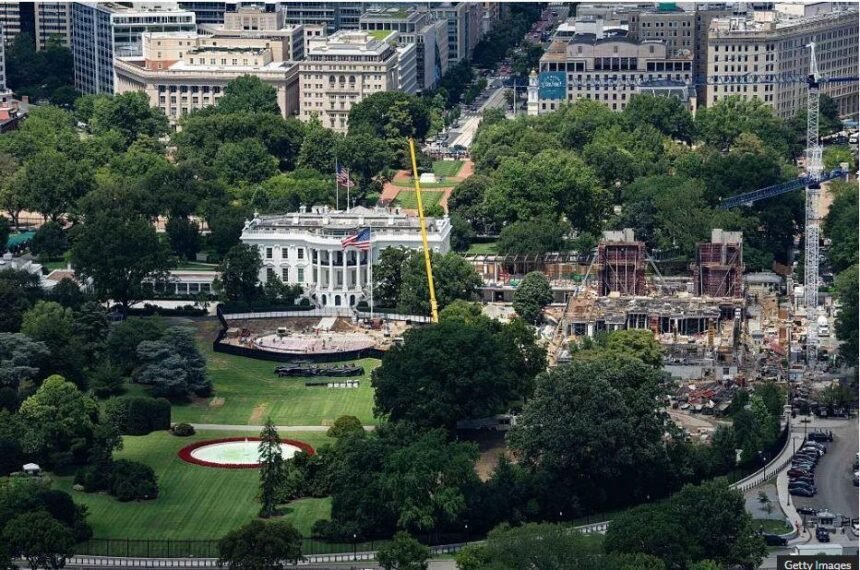
A U.S. federal appeals court has temporarily blocked the Trump administration from proceeding with above-ground construction of a proposed $400 million ballroom at the White House, delivering a significant setback to the president’s ambitious renovation project.
The ruling upholds a preliminary injunction issued by a lower federal court, which barred the administration from continuing above-ground work without congressional authorization. A majority of the appeals panel found that a project of such scale cannot be undertaken solely at the president’s discretion and falls within Congress’ authority.
The lawsuit was filed by the National Trust for Historic Preservation after the administration demolished the White House’s East Wing to make way for the new ballroom. The organization argues that major changes to the historic White House complex require authorization from Congress.
The appeals court said Congress has not granted the executive branch unlimited authority to redesign, reshape or rebuild the White House according to the wishes of an incumbent president. The court emphasized that the White House is a national symbol and that major structural changes require legal and institutional approval.
The Trump administration had appealed earlier rulings by a federal judge who twice blocked above-ground construction while allowing some underground work to continue. The latest decision maintains those restrictions, preventing new above-ground construction unless Congress authorizes the project or a final court ruling permits it.
The appeals court has suspended enforcement of its decision for 14 days, giving the administration time to seek intervention from the U.S. Supreme Court. The nation’s highest court could ultimately be asked to determine whether Trump has the authority to undertake such a major project without congressional approval.
The White House has not yet issued an official response to the ruling.
Trump has repeatedly defended the proposed ballroom, arguing that it is necessary for hosting state receptions, foreign leaders and major official ceremonies. He has also cited national security concerns, saying the new facility would provide safer conditions for high-level events.
The president reiterated those arguments following an April attack during the White House Correspondents’ Association dinner, saying improved facilities would provide greater security for major events.
The legal battle could now become a broader test of presidential authority over historically significant federal property, with the Supreme Court potentially deciding how far a president can go in making major changes to the White House without congressional approval.