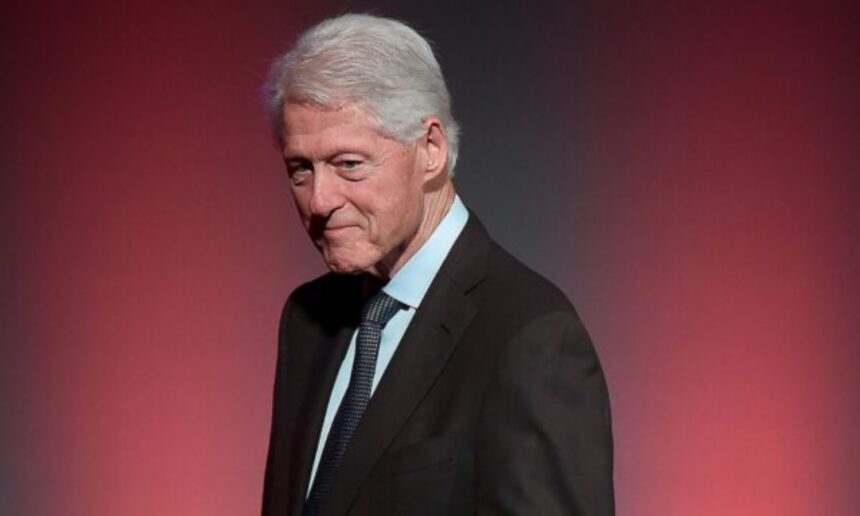
Former U.S. President Bill Clinton turns 80 today, August 19.
William Jefferson Clinton was born on August 19, 1946, in Hope, Arkansas. He served as the 42nd President of the United States from 1993 to 2001.
Clinton’s childhood was marked by hardship. His biological father, William Jefferson Blythe Jr., died in a car accident three months before Bill was born. Clinton never knew his father and later learned that Blythe had been married to several other women and that he had half-siblings whom Clinton never met.
As a young child, Bill lived with his mother, Virginia Cassidy Blythe, and her parents in Hope. When he was one year old, his mother moved to New Orleans to train as a nurse anesthetist, while Bill remained with his grandparents for the next two years.
When Bill was four, his mother married Roger Clinton, an automobile salesman. Bill subsequently took the Clinton surname. The family later moved to Hot Springs, Arkansas.
Life at home was difficult. Roger Clinton struggled with alcoholism and gambling and frequently lost money through gambling. He physically abused Bill’s mother and was verbally abusive toward Bill and his younger half-brother, Roger Jr.
Bill was very close to his mother and sometimes attempted to protect her from his stepfather, which led to serious conflicts between the two. During high school, however, Bill eventually reconciled with Roger Clinton, who died of cancer in 1967.
Clinton attended Catholic school for two years before transferring to a public high school in Hot Springs, where he became a successful and well-liked student.
In 1963, he was selected as one of two Arkansas representatives to Boys Nation, a government-sponsored student program focused on civic engagement and political debate. During the program, Clinton met President John F. Kennedy at the White House—a moment that became one of the defining experiences of his youth.
He graduated from high school in 1964 and enrolled at Georgetown University in Washington, D.C., where he developed a strong interest in international relations. He also worked with the Senate Foreign Relations Committee under Senator J. William Fulbright of Arkansas.
Clinton admired Fulbright for his strong criticism of U.S. involvement in the Vietnam War. He also sympathized with the civil rights movement of the 1960s.
Following the assassination of Martin Luther King Jr. in 1968, Clinton volunteered to help provide food and clothing to people who had been left homeless amid the unrest that followed in several American cities.
During his second year at Georgetown, Clinton won a Rhodes Scholarship and studied at the University of Oxford in England for two years. In 1970, he enrolled at Yale Law School, supporting himself through various jobs.
It was at Yale that he met Hillary Rodham, who would later become Hillary Clinton. Clinton graduated from Yale Law School in 1973 and returned to Arkansas, where he taught law at the University of Arkansas. He and Hillary married on November 19, 1975, and they have one daughter, Chelsea Clinton.
Clinton entered politics soon afterward. He served as Attorney General of Arkansas from 1977 to 1979 and as Governor of Arkansas from 1979 to 1981 and again from 1983 to 1992.
A member of the Democratic Party, Clinton became associated with the New Democrats and pursued a centrist, “Third Way” political approach that combined traditionally Democratic social policies with market-oriented economic ideas.
As president, Clinton played a major role in U.S. policy toward the Balkans. During the 1998–1999 Kosovo War, his administration strongly supported NATO intervention against the Federal Republic of Yugoslavia. The United States under Clinton was a key force behind NATO’s 1999 military campaign and the international effort that followed to end the conflict and establish an international presence in Kosovo.
From a difficult childhood in Arkansas to the presidency of the United States, Bill Clinton’s life became one of the most consequential political journeys in modern American history.