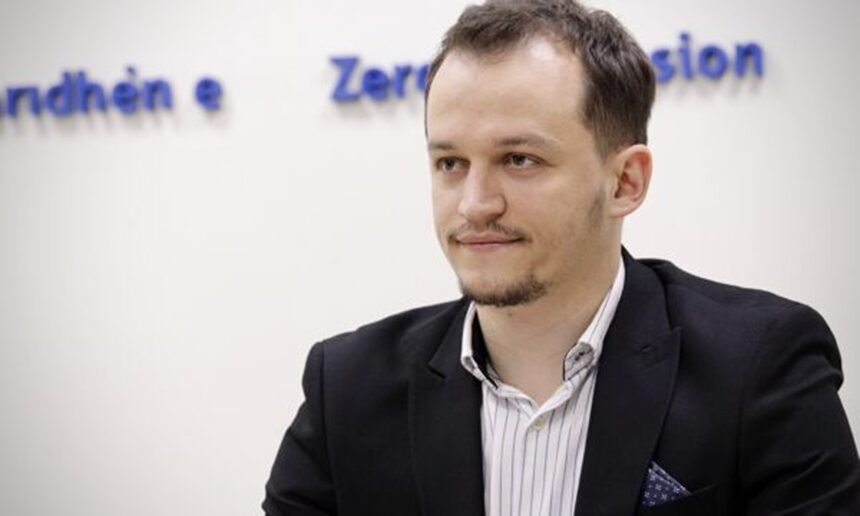
Eugen Cakolli from the Kosovo Democratic Institute (KDI) said that following the certification of the election results, the constitutional deadlines for establishing new institutions begin. He explained the procedures for convening the constitutive session of the Assembly and who is responsible for leading it.
Cakolli further stated that after the Kosovo Assembly is constituted, procedures can move forward for the election of a new government or the President, as, according to him, neither the Constitution nor any decision of the Constitutional Court determines which one must be elected first.
Full statement:
“With the certification of the results by the CEC, constitutional deadlines for the creation of new institutions begin tomorrow.
The 30-day deadline for holding and successfully completing the constitutive session of the Assembly begins tomorrow, July 9, and ends on August 7, 2026. The session must be called by Albulena Haxhiu, in her capacity as Acting President. If this does not happen within the deadline, the Assembly convenes automatically on the thirtieth day.
Before the session, Albulena Haxhiu, in her capacity as Speaker of the previous legislature, must call a preparatory meeting with the leaders of the 15 political entities that have won seats in the Assembly. This meeting must take place no later than five days before the constitutive session and serves to prepare the agenda and determine the seating arrangements for MPs according to political entities.
Until the election of the Speaker of the Assembly, the constitutive session will be chaired by the oldest MP, Avni Dehari from Vetëvendosje, assisted by the youngest MP, Fatma Taçi from KDTP.
The agenda is already predetermined. First, the Temporary Commission for Verification of the Quorum and Mandates is established, whose report is approved by a majority vote; then MPs take their oath; afterward, the Speaker of the Assembly is elected, followed by the election of deputy speakers.
The Speaker of the Assembly is proposed by Vetëvendosje, as the largest parliamentary entity, and is elected with at least 61 votes. If the same candidate fails to receive the required votes after three attempts, another candidate must be proposed. Voting for the Speaker must be open unless there is consensus to change the voting method.
After the election of the Speaker, the Assembly proceeds with the election of five deputy speakers. Three are proposed by the three largest parliamentary entities — Vetëvendosje, PDK, and LDK. One is proposed by representatives of the Serbian community, specifically the Serb List, and one by MPs from other non-majority communities. All must receive at least 61 votes. In principle, deputy speakers should be voted on as a package.
The Assembly is considered constituted only after the Speaker and all five deputy speakers have been elected.
Only after the full constitution of the Assembly do two separate constitutional procedures begin: one for the formation of the Government and one for the election of the President. These procedures do not exclude each other, and neither the Constitution nor the rulings of the Constitutional Court make the formation of the Government conditional on the prior election of the President.”