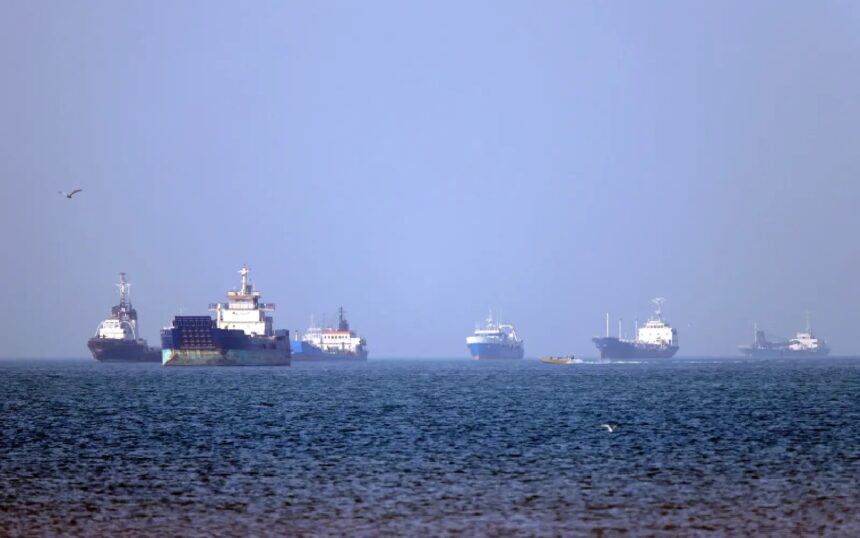
The United States and Iran are intensifying their competing claims over control of the Strait of Hormuz as President Donald Trump increases pressure on Iran’s oil industry, but the reality on the strategically vital waterway remains more complicated, CNN reports.
Maritime traffic through the strait remains significantly below pre-war levels, suggesting that many shipowners are still unwilling to risk a potential Iranian attack. The reduced traffic also highlights Tehran’s continuing ability to influence shipping through one of the world’s most important energy corridors.
According to Kpler, which tracks vessels using transponders and satellite data, an average of only two to three very large crude carriers (VLCCs) have crossed the strait each day since July 7, even when so-called “dark” voyages designed to avoid detection are taken into account. Before the war, the average was around eight VLCC crossings per day.
At the same time, growing volumes of oil are bypassing the strait altogether or relying on U.S. protection and ship-to-ship transfers to move crude covertly out of the Persian Gulf.
Maritime security analysts remain divided over which side has greater control. Dimitris Maniatis, CEO of Greece-based maritime security company Marisks, told CNN that Iran exercises “almost complete control” through the threat of attack.
Maniatis said Tehran may be turning a blind eye to certain vessels passing through the strait, noting that some of the tankers involved ultimately have ownership links to Iranian, Russian, Chinese or Turkish interests.
The United States, however, argues that its ability to escort vessels out of the region is increasing.
U.S. Energy Secretary Chris Wright has said American capabilities to escort ships are expanding, while also arguing that oil flows remain larger than vessel-tracking services indicate.
The competing claims underscore the strategic importance of Hormuz, through which a significant share of global oil supplies traditionally passes. While Washington is seeking to demonstrate that it can keep energy routes open and pressure Iran economically, Tehran continues to wield substantial influence simply through its ability to threaten commercial shipping.