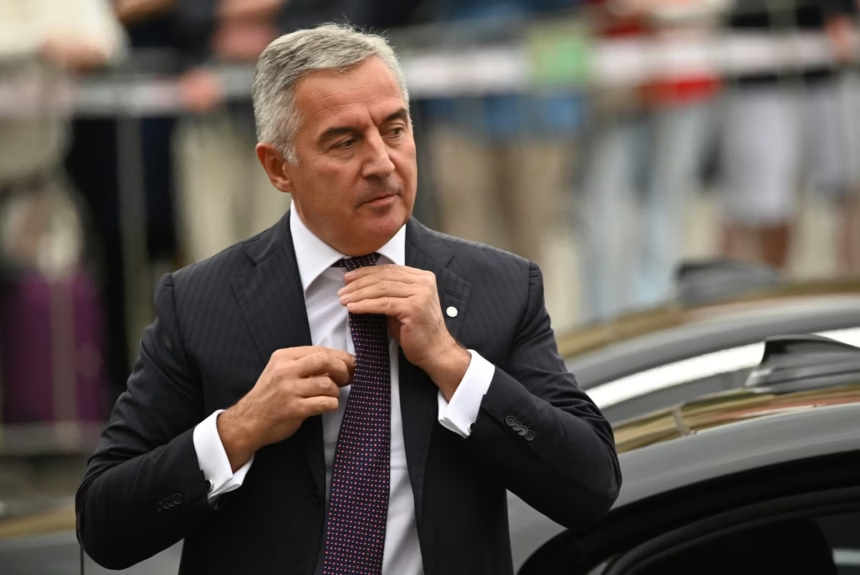
Former Montenegrin President Milo Đukanović has questioned whether the political changes in Serbia following Aleksandar Vučić’s defeat will lead to a genuine shift in the country’s policies or simply a change of government.
Speaking on Wednesday evening in Cetinje at a ceremonial plenary marking the 20th anniversary of Montenegro’s restoration of independence, Đukanović said Serbia’s future political direction would have major implications for the entire Western Balkans.
He argued that Montenegro should pay particular attention to its relations with Serbia, describing them as being at their lowest point. He also warned that the political structures and policies responsible for damaging those relations remained deeply rooted.
“With a few brief interruptions involving Serbian liberals and Zoran Đinđić, this policy has largely remained unchanged. That is why these developments are not generating euphoria among serious observers. We must learn to distinguish between the achievements of these changes. Are we witnessing only a change of regime, or are we seeing the beginning of a change in policy?” Đukanović said.
He stressed that replacing the government would have little significance if Serbia continued pursuing the same regional policies.
“The first question is whether Serbia will now have a Government of Serbia or continue to have a Government of Serbs in the region,” he stated.
According to Đukanović, if the priority remains the creation of a political structure representing Serbs across neighbouring countries, Vučić’s policies would effectively continue despite the change in leadership.
He accused the previous Serbian leadership of using nationalist narratives about the alleged endangerment of Serbs, including in Montenegro, to justify interference in the internal affairs of neighbouring countries.
“This attempts to legitimise Serbia’s state policy of regulating relations in neighbouring countries, undermining their sovereignty and dangerously threatening regional stability,” Đukanović said.
Serbia’s foreign policy remains another major question
The former Montenegrin president also questioned whether the political changes following the Student List’s victory would bring a fundamental shift in Serbia’s foreign policy.
He pointed to Belgrade’s longstanding strategy of maintaining relations with four major centres of power: the European Union, Russia, the United States and China.
Đukanović questioned whether Serbia would continue balancing between these powers or finally commit itself to becoming a European state.
“If the answer is positive, that entails certain obligations, beginning with taking a position on the aggressor, Russia, and its war against Ukraine,” he said.
He added that it remained uncertain whether Serbia’s new political leadership had the willingness and capacity to make such a strategic shift.
“Everyone who is reasonable should welcome Serbia standing firmly on the European track. But so far, it has not done so. That is the reality,” Đukanović concluded.
Meanwhile, representatives of Vučić’s outgoing government have repeatedly attempted to link Đukanović to the Student List’s electoral victory in Serbia and its leading candidate, Ilija Srdanović. Those allegations have been publicly denied and dismissed as inaccurate.