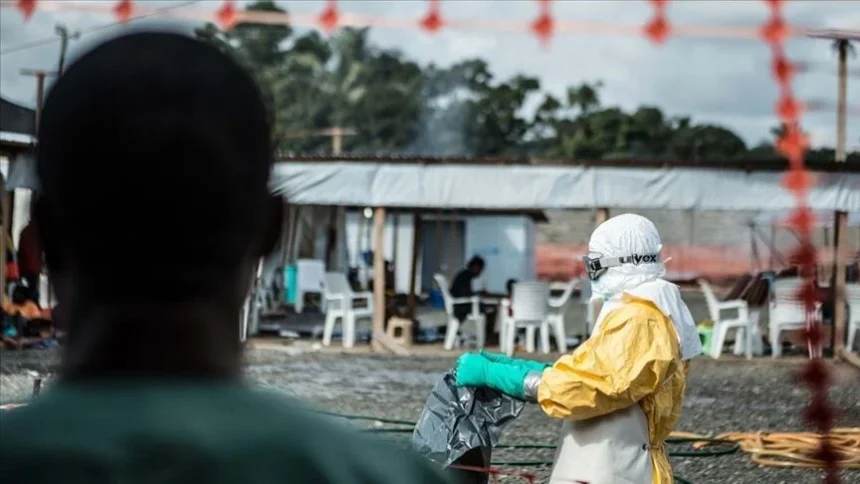
Africa’s top health agency has officially declared a new outbreak of the deadly Ebola virus in the eastern Ituri province of the Democratic Republic of the Congo (DRC).
According to the Africa Centers for Disease Control and Prevention (Africa CDC), 246 cases and 65 deaths have already been documented on May 15, 2026. The outbreak is heavily concentrated around the gold-mining towns of Mongwalu and Rwampara.
Outbreak Hotspots and Historical Context
This mark’s the country’s 17th recorded outbreak of the virus since its initial discovery in 1976 near the Ebola River.
The current epicenter in Ituri province poses a severe challenge for health officials:
Transmission, Symptoms, and Clinical Severity
Ebola is a highly contagious filovirus that causes severe hemorrhagic fever. It does not spread through the air but requires close, physical contact.
How It Spreads:
- Direct contact with the blood, secretions, organs, or other bodily fluids of infected people.
- Contact with surfaces or materials (e.g., bedding, clothing) contaminated with these fluids.
- Exposure through broken skin or mucous membranes (eyes, nose, mouth).
Disease Progression:
The virus attacks the endothelial cells lining the blood vessels, disrupting the body’s clotting mechanism and leading to systemic organ failure.
| Phase | Symptoms |
| Early Stage | Sudden onset of fever, intense fatigue, muscle pain, headache, and sore throat. |
| Advanced Stage | Vomiting, diarrhea, skin rashes, impaired kidney and liver function. |
| Critical Stage | Internal and external bleeding (e.g., oozing from gums, blood in stool), followed by multi-organ failure and hypovolemic shock. |
Treatment Constraints and Global Response
Currently, there is no universally proven cure for Ebola, though advanced supportive care—such as oral or intravenous rehydration—and specific monoclonal antibody treatments developed during recent outbreaks can significantly improve survival rates if administered early.
The World Health Organization (WHO) maintains that the average case fatality rate for Ebola hovers around 50%, though past outbreaks have seen death rates soar as high as 90% depending on the viral strain and local healthcare infrastructure.
Africa CDC, in coordination with the Congolese Ministry of Health and international NGOs, is deploying emergency response teams to Ituri to initiate contact tracing, set up isolation units, and roll out localized ring vaccination campaigns using stockpiled doses.