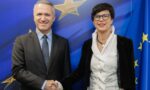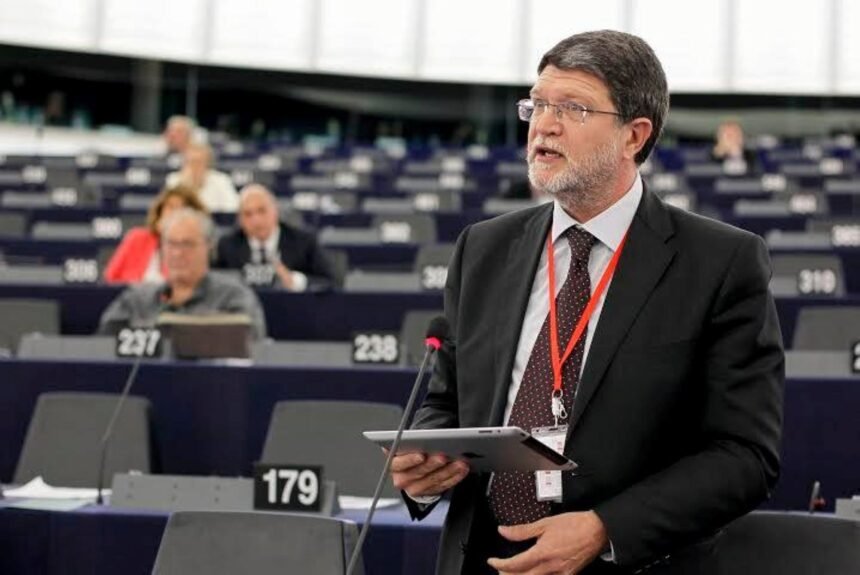
Tonino Picula, the European Parliament’s Rapporteur for Serbia, has issued a stark warning regarding the European Union’s policy toward Belgrade, suggesting that continued leniency toward President Aleksandar Vučić is reaching a breaking point.
In an interview with N1 Croatia, Picula criticized the internal lack of consensus in Brussels, noting that despite Belgrade’s controversial political maneuvers, certain factions within the EU remain willing to overlook significant democratic lapses.
The Economic Lever: “Language of Money”
Picula argued that diplomatic rhetoric has reached its limit and that the EU must now utilize its most potent tool: financial conditionality. He specifically pointed to the EU Growth Plan for the Western Balkans as the primary instrument for sending a “serious message” to the Serbian leadership.
“The language of economics is the one that can and must warn Serbia that this is not just about a relationship with a space based on fundamental values, but about its main economic partner,” Picula stated.
Taxpayer Accountability
A central theme of Picula’s critique was the accountability of European taxpayers. He noted that the current strategy of “turning a blind eye” is unsustainable when it involves the allocation of hundreds of millions of euros in development funds.
According to the Rapporteur, the situation cannot continue indefinitely if Belgrade refuses to align its policies with the core principles of the European Union, particularly regarding the rule of law and foreign policy synchronization.
A Disconnect in Communication
Picula expressed skepticism about whether the current administration in Belgrade is truly receptive to Brussels’ requirements. While the EU insists on a value-based partnership, Picula suggests that the Serbian government may only respond to direct economic consequences rather than political appeals.
The comments come at a time of heightened scrutiny over Serbia’s progress toward EU membership, with many MEPs calling for a more rigorous application of the “more for more, less for less” principle in the enlargement process.