The European Union is preparing a comprehensive new package of sanctions against Russia, targeting its influence in international sports, energy markets, cryptocurrency networks and organisations accused of supporting Moscow’s war against Ukraine.
The proposed measures are part of the EU’s 22nd sanctions package since Russia launched its full-scale invasion of Ukraine in February 2022. The package also envisages adding 82 individuals and entities to the bloc’s sanctions blacklist.
Among the most significant proposals are restrictions on Russian participation in sporting events across the EU. These would prohibit the display of official Russian national symbols at sporting competitions, prevent Russian citizens from holding positions in the governing bodies of sports federations and ban sports clubs and cultural organisations in the EU from receiving funding from the Russian state or its intermediaries.
The proposals come after the International Olympic Committee (IOC) decided earlier this year to temporarily lift the suspension of the Russian Olympic Committee, potentially opening the door for Russian athletes to compete under their national symbols at events hosted in the EU.
Russian sports officials targeted
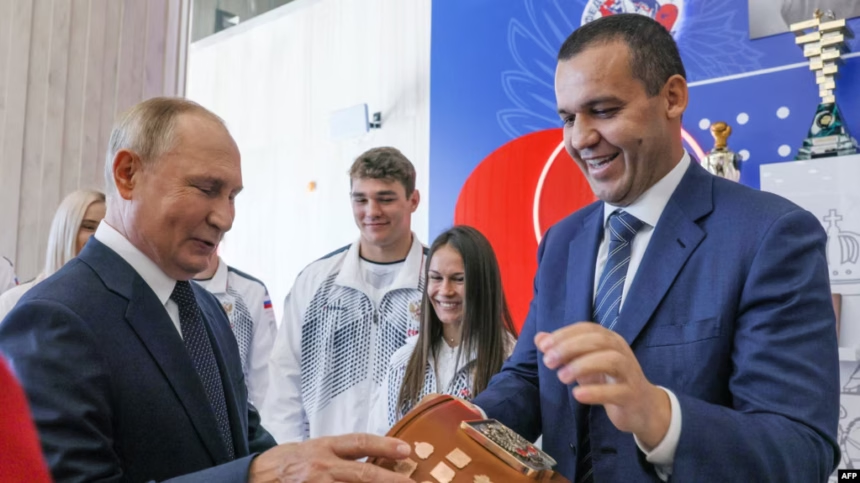
One of the most prominent figures facing sanctions is Umar Kremlev, the Russian businessman and president of the International Boxing Association (IBA).
Under the proposed measures, Kremlev would face an EU travel ban and an asset freeze.
EU documents reportedly link the IBA to a pro-Kremlin youth sports organisation already under EU sanctions. Kremlev’s business interests also include a major sports lottery and JSC Rolf, described in the documents as Russia’s largest car dealership group and a company providing extensive services to the Russian government.
The documents also point out that Kremlev has received a state award from Russian President Vladimir Putin.
“He supports and implements actions and policies that undermine or threaten the territorial integrity, sovereignty and independence of Ukraine. Furthermore, he materially or financially supports the Government of the Russian Federation and benefits from it,” the proposed listing states.
Another sports figure targeted is Artem Gromov, head of the Central Sports Club of the Army (CSKA).
According to EU documents, the organisation has been involved in delivering humanitarian aid and other supplies to Russian forces and occupied Ukrainian territories. It has also organised sporting competitions in territories occupied by Russia.
Although previous attempts to secure unanimous support among EU member states for sports-related sanctions have faced difficulties, most of the proposed measures are expected to be adopted, potentially following negotiations over their final wording.
Russian Orthodox Church-linked company and energy sector
The proposed sanctions also target Sofrino, a manufacturing company controlled by the Moscow Patriarchate of the Russian Orthodox Church.
EU documents accuse the company of producing religious items for Russian military personnel fighting in Ukraine, including specialised field kits for military chaplains.
The energy sector is another major focus of the new package.
The EU proposes extending its existing restrictions on imports of petroleum products derived from Russian crude oil to include fuel oil and vacuum gas oil.
European companies would also be prohibited from constructing or operating liquefied natural gas (LNG) facilities, crude oil refineries and electricity generation plants in Russia.
Brussels is further proposing sanctions against an additional 70 vessels suspected of belonging to Russia’s so-called shadow fleet, which transports Russian oil in an effort to circumvent the G7 price cap.
If adopted, the measures would bring the number of vessels on the EU’s dedicated sanctions list to more than 700.
Travel restrictions for Russian soldiers
The package also proposes a complete ban on entry into EU territory for current and former Russian military personnel who have fought in Ukraine.
Several EU member states have previously raised concerns that Russian soldiers could travel to Europe using short-term tourist visas, often issued by popular Mediterranean destinations, including France, Greece, Italy and Spain.
Under the new proposals, European consulates in Russia would be required to request additional documentation, including military service records, when Russian citizens apply for Schengen visas.
The EU is also considering measures to restrict the movement of Russian diplomats within the bloc, potentially introducing reciprocal restrictions in response to Moscow’s recent decision to impose advance notification requirements on EU diplomatic and consular personnel travelling across Russian borders.
Companies in Serbia and other countries under scrutiny
The proposed sanctions increasingly extend beyond Russia to companies and financial networks in third countries suspected of helping Moscow circumvent international restrictions.
Two major Turkish fuel distribution companies, Opet Petrolcülük and Akpet Akaryakıt, are among the businesses targeted.
The package would also prohibit EU companies from conducting business with several entities in India, Serbia, Thailand, Turkey and the United Arab Emirates that Brussels believes are contributing to Russia’s military-industrial capabilities.
Cryptocurrency services are another major target, with companies and platforms in Serbia, Turkmenistan and Uzbekistan facing scrutiny over their alleged role in facilitating transactions benefiting Moscow.
Kyrgyzstan could face particularly far-reaching restrictions. The proposal suggests a complete ban on EU citizens and companies participating in transactions with cryptocurrency platforms and service providers established in the Central Asian country.
EU documents argue that numerous reports indicate Kyrgyzstan has become an international hub for circumventing European sanctions through cryptocurrency transactions.
The documents further accuse Kyrgyz authorities of repeatedly failing to prevent cryptocurrency-related services and platforms from facilitating transactions despite public reports and warnings from the European Commission.
The proposed package reflects the EU’s expanding efforts to close loopholes in its sanctions regime and prevent Russia from using international business networks, financial services, sporting institutions and third countries to sustain its war against Ukraine.