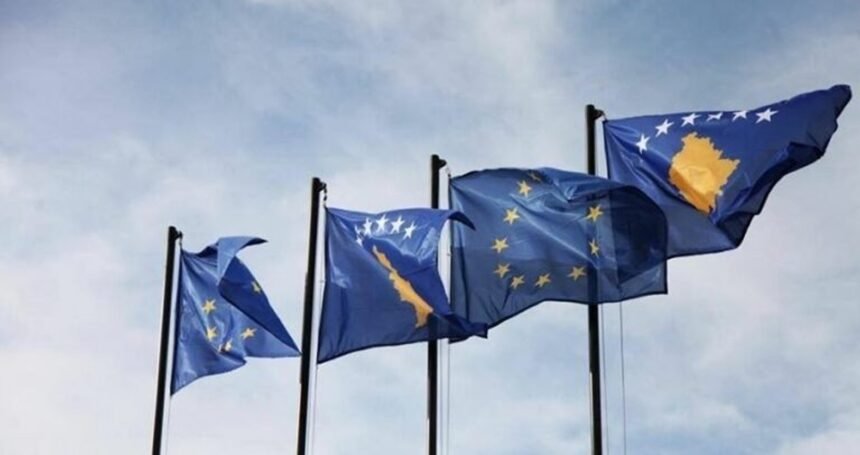
The European Commission has assessed that Kosovo has continued to meet its obligations since the visa liberalization, but it has called for more efforts to inform Kosovar citizens that visa-free travel should not be misused to seek unfounded asylum in European Union countries.
In its annual visa liberalization report for all countries worldwide, the EU noted with concern that misuse of visa liberalization to request asylum has continued, and in some cases, such as Kosovo, has led to an increase in asylum requests. The report used complete data from 2024.
According to the European Commission, in 2024 there was a significant rise in asylum requests from Kosovar citizens, with over 6,700 requests registered. This figure is lower than that of Albanian citizens, for whom the trend is decreasing, while in Kosovo it is rising compared to the previous year.
The European Commission emphasizes that preventing unfounded asylum requests should remain a priority for all partners benefiting from visa-free travel, especially Kosovo, as well as Albania, Moldova, and Georgia.
The EU calls on Kosovar authorities to cooperate more closely with EU member states to better address the problem of unfounded asylum applications.
The Commission acknowledges that Kosovar authorities have conducted awareness campaigns for citizens but urges that these efforts continue, so that citizens better understand their rights and obligations under visa liberalization.
Kosovo, like other visa-liberalized countries, is also expected to better align its visa regime with that of the EU. This relates to the potential for citizens to travel visa-free within the Western Balkans and then enter EU territory illegally. The EU views this, especially in cases like Serbia and Bosnia and Herzegovina, as a potential security risk.
The European Commission has also called on Kosovo to prevent the issuance of false identity and travel documents and to improve capacities for detecting forged documents. Cooperation with Interpol on lost or stolen documents should continue, and the new law and administrative instructions for ID cards should be fully implemented to enhance document security.
The EU has consistently reminded Kosovo and other countries that visa liberalization does not end obligations; they remain ongoing.