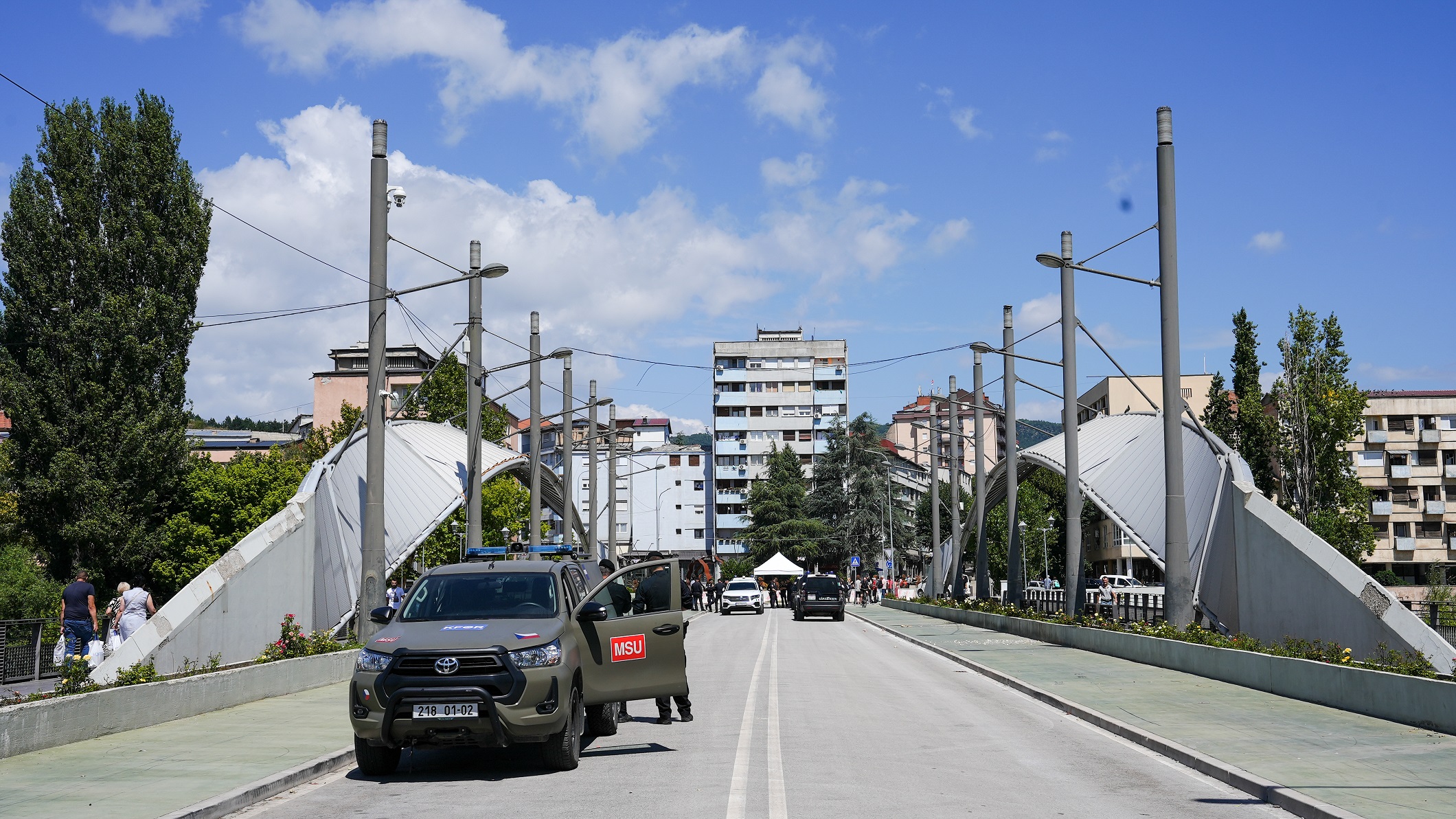
The Brussels-based portal EUalive has described the latest developments surrounding the possible reopening of the main bridge over the Ibër River in Mitrovica as a setback for Belgrade, arguing that the development represents part of the price Serbia is paying for the normalization process with Kosovo.
For nearly three decades, the bridge has remained one of the most sensitive symbols of Kosovo’s ethnic and political divisions. It separates predominantly Albanian southern Mitrovica from the predominantly Serb northern part of the city and has been under a significant international security presence since the end of the 1998–99 war.
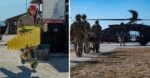
KFOR has recently begun a gradual transfer of security responsibilities at the bridge to the Kosovo Police, as part of what the NATO-led mission describes as the optimization of its deployment in response to improvements in the security environment.
According to reports cited by EUalive, the permanent tent and static position operated by Italian Carabinieri on the northern side of the bridge have been removed, while the unit remains present on the southern side.
The European Union has meanwhile signaled stronger support for the bridge’s eventual reopening to vehicle traffic, while stressing the need for coordination and meaningful consultations among Kosovo institutions and the affected communities.
European Commission spokesperson Anitta Hipper said on August 18 that the bridge “should serve all communities” and “should connect” people. She said the EU expects effective coordination and meaningful consultations between the relevant municipalities and Kosovo’s central institutions.
Hipper also stressed that the Kosovo Police must ensure the security of all communities in accordance with democratic principles, human rights and the rule of law.
The EU has said that the necessary technical and security conditions for reopening the bridge have been met, although additional coordination and consultations are still required. The bridge remains open to pedestrians but has not yet been reopened to vehicle traffic.
Vučić challenges KFOR and EU position
Serbian President Aleksandar Vučić has strongly opposed the developments, saying he would write to NATO Secretary General Mark Rutte to ask that Kosovo institutions be prevented from taking greater control of security at the bridge or reopening it fully.
Vučić described the process as a “great shame and disappointment,” arguing that international actors were attempting to pressure Serbia into accepting Kosovo’s independence.
He also sharply criticized KFOR commander Major General Özkan Ulutaş, whom he accused of pursuing an approach that was detrimental to the interests of Kosovo Serbs.
The Serbian president has argued that the bridge should not be reopened without the consent of representatives of the Serb community and has questioned whether the current security situation in northern Kosovo allows for such a move.
The Serb List has likewise challenged the EU’s assessment, asking what specific security analysis led Brussels to conclude that the conditions for reopening had been met, who prepared the analysis and which security parameters were taken into account.
The party also questioned whether the Kosovo Police could guarantee the security of Kosovo Serbs, citing allegations of mistreatment, excessive use of force and procedural violations.
Petar Petković, director of Serbia’s Office for Kosovo and Metohija, separately raised concerns with EU Special Representative for the Belgrade-Prishtina Dialogue Peter Sørensen.
Petković argued that the EU’s assessment did not reflect the situation on the ground and that key commitments linked to the 2015 bridge agreement had yet to be fulfilled.
EUalive: A test of normalization
EUalive argues that the developments should be viewed in the broader context of the EU-mediated normalization process between Belgrade and Prishtina.
The portal notes that Serbia has consistently opposed moves that would strengthen Kosovo’s control over the north, while the EU and NATO have increasingly emphasized the transfer of responsibilities to Kosovo’s institutions as part of a gradual normalization of the security environment.
Some Serb analysts and civil society representatives have questioned whether the EU is placing too much emphasis on technical and security requirements while insufficiently addressing political and community concerns.
Political scientist Ivan Tomić from Gračanica argued that earlier EU assessments had linked the bridge’s reopening to a political agreement, the security situation and consultations with those responsible for security, while later assessments placed greater emphasis on the fulfillment of technical conditions.
Milica Andrić Rakić, executive director of the New Social Initiative, acknowledged that the EU now considers the security requirement fulfilled and noted that North Mitrovica has a legitimate mayor following local elections.
However, she argued that political conditions remain, including consultations with the local community and implementation of commitments arising from the Brussels dialogue.
The EU maintains that any decision on the bridge must take into account the interests and concerns of all communities and contribute to cooperation and good-neighborly relations.
KFOR’s gradual reduction of its permanent presence at the bridge does not mean an end to its security role in northern Kosovo. The mission has stressed that further changes will depend on conditions on the ground and close coordination with the Kosovo Police, EULEX, Kosovo institutions and representatives of the Serbian Orthodox Church.
For now, the bridge remains open to pedestrians but closed to vehicles. Its eventual reopening is therefore emerging as both a practical infrastructure issue and a politically sensitive test of the EU-led normalization process between Kosovo and Serbia.