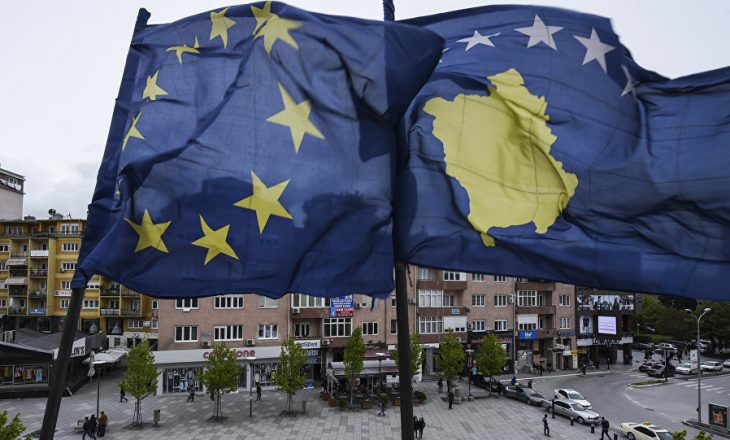
The European Commission has found that Kosovo has made no progress in the functioning of its judiciary, warning that political and economic interests continue to pose a serious obstacle to judicial independence and impartiality.
In its 2026 Kosovo Report, published on Wednesday, the Commission assessed the country as being between an early stage and having some level of preparation in implementing EU legislation and European standards in the areas of the judiciary and fundamental rights.
According to the report, undue influence from within the justice system and from external actors, including political and economic interests, remains a significant obstacle to judicial independence and has intensified in certain areas.
The Commission also noted that a package of draft laws concerning the justice system has yet to be adopted, delaying necessary reforms and negatively affecting efforts to strengthen accountability and efficiency in the judiciary and prosecution service.
Concerns over amendments to the Specialist Chambers law
The report specifically addresses developments concerning the Kosovo Specialist Chambers and the Specialist Prosecutor’s Office.
On October 6, 2026, the Kosovo Assembly adopted amendments to the law governing these institutions. However, on October 22, President Justina Shiroka Pula returned the legislation to the Assembly for reconsideration.
The European Commission expressed serious concerns about the amendments, warning that they could conflict with Kosovo’s international commitments and fundamental rule-of-law principles.
In particular, the report highlights potential implications for judicial independence, the protection of victims and witnesses, continuity of procedural rights and effective accountability for war crimes.
The Commission also raised questions about the constitutionality of the amendments.
Implementation of the Prosecutorial Council law
Another issue highlighted in the report concerns the implementation of amendments to the Law on the Kosovo Prosecutorial Council (KPC).
The Commission said difficulties in implementing the changes point to limited perceptions of accountability and commitment to reform, as well as the continued influence of certain interests.
It also raised specific concerns over arrest warrants issued retroactively and the application of relevant procedures and safeguards.
Nevertheless, the report acknowledged some positive developments, including the selection of the State Chief Prosecutor and changes to the composition of the KPC in accordance with the revised legal framework.
The Commission further warned that the insufficient representation of Kosovo Serbs in the judiciary remains a serious concern, affecting the multiethnic character of the justice system and undermining the 2015 Justice Agreement reached through the Kosovo-Serbia dialogue.
European Commission’s recommendations for Kosovo
Among its recommendations for the coming year, the Commission called on Kosovo to adopt legislation stemming from the Joint Commitment Declaration, in line with the recommendations of the Venice Commission, and to conduct further consultations on revised draft laws.
It also urged Kosovo to strengthen existing mechanisms for integrity, accountability and efficiency in the judiciary and prosecution service, particularly within the responsibilities of the Kosovo Judicial Council and the Kosovo Prosecutorial Council.
The report additionally recommends establishing a clear framework defining management responsibilities within the two councils, courts and prosecution offices.
Finally, the Commission called for stronger accountability and greater efficiency among judges and prosecutors in handling high-level corruption cases, other high-profile cases and cases of gender-based violence.
The assessment places judicial independence, institutional accountability and the implementation of justice reforms among the key challenges Kosovo must address as it pursues closer integration with the European Union.