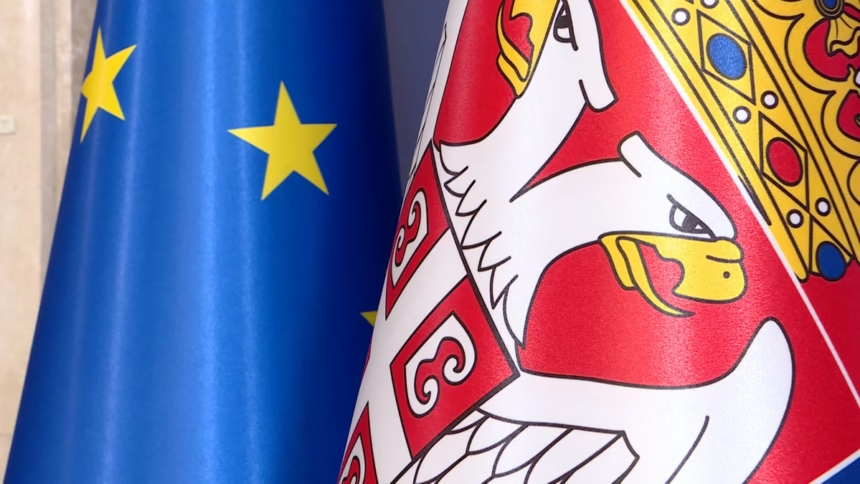
The European Commission has confirmed that there is no formal decision to freeze financial assistance for Serbia under the EU’s Growth Plan.
“There is no decision to freeze funds or anything similar,” said Commission spokesperson Markus Lammers, emphasizing that the Commission continuously evaluates whether conditions for financial support are being met.
He explained that such assessments are part of the normal implementation of EU financial instruments, including the EU Growth Plan for the Western Balkans, and are conducted during each payment request.
At the same time, the Commission reiterated concerns over Serbia’s recently adopted judicial laws, stating that Belgrade is expected to fully implement the recommendations of the Venice Commission.
The clarification follows earlier remarks by EU Enlargement Commissioner Marta Kos, who said that payments had been temporarily suspended due to what she described as backsliding in the rule of law.
The controversial judicial reforms—often referred to as the “Mrdić laws”—have been criticized by EU institutions as a step backward in Serbia’s EU integration process, particularly regarding judicial independence.
On April 24, the Venice Commission concluded that recent amendments had weakened safeguards protecting the autonomy of the prosecution, issuing several recommendations for improvement.
Under the Growth Plan, Serbia is eligible for approximately €1.588 billion in grants and loans for the 2024–2027 period, aimed at supporting reforms and economic convergence with the EU. Funds are disbursed twice a year, depending on progress in implementing agreed reforms.
So far, Serbia has received €167.59 million, including pre-financing and part of the first installment, after meeting only three of the seven planned reform conditions.
The Growth Plan for the Western Balkans, adopted in late 2023, allocates a total of €6 billion to support the region’s economic integration with the EU and gradual access to parts of the single market ahead of full membership.