In a profound twist of historical irony, a state-sponsored television documentary originally produced to glorify Serbian security forces has become the cornerstone of a major war crimes prosecution.
According to investigative case files secured by Kosovar media outlet KOHA, the Special Prosecution Office of Kosovo is utilizing video footage and on-camera interviews from a Radio Television of Serbia (RTS) documentary to secure the detention of five individuals recently arrested for their alleged roles in the infamous Reçak massacre.
The documentary, produced with the explicit backing of the Serbian Ministry of Internal Affairs (MUP) to frame the operation as a heroic anti-terrorist action, instead provided prosecutors with high-definition visual evidence and command-level confirmations of the units operating on the ground during the January 15, 1999 slaughter of 45 Albanian civilians.
1. The Video Evidence: Shicking Footsteps Caught on Camera
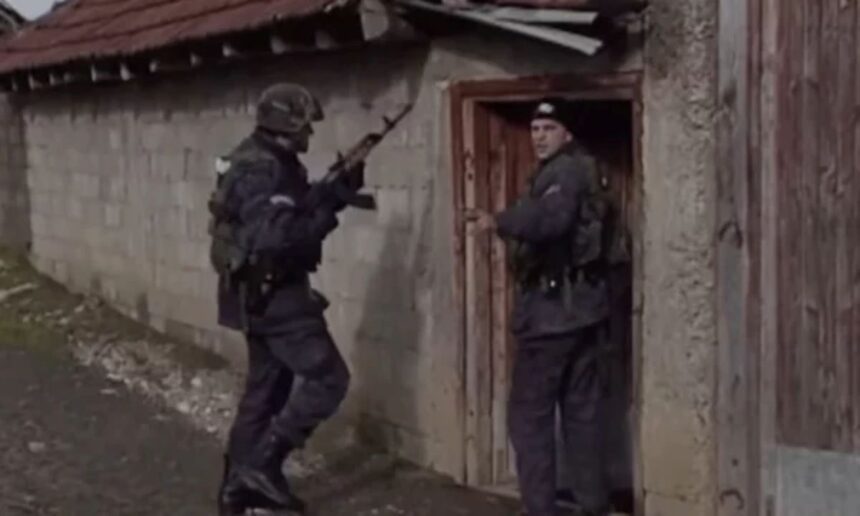
The central breakthrough in the prosecution’s detention request involves specific cinematic footage from the state documentary showing tactical units assaulting private residences in Reçak.
The Visual Blueprint of the Special Prosecution's Case

 [ THE IDENTIFICATION ] ──► STANOJE JANIQEVIQ FILMED ON SCENE
 • Prosecutors contend that Janiqeviq is the exact individual caught on film
   violently kicking down the front door of a civilian home during the assault.

 [ THE DEFENSE REBUTTAL ] ──► "KICKING A DOOR IS NOT A WAR CRIME"
 • Janiqeviq's defense attorney, Ljubomir Pantović, did not deny his client's
   presence in the film but argued that kicking a door is not a statutory war crime.

 [ THE MACABRE TRADITION ] ──► STATE-BACKED PROPAGANDA BACKFIRES
 • The documentary sought to canonize the police actions, but unwittingly archived
   the exact identities and physical movements of the paramilitary forces involved.
2. Command Declarations Seal the Unit Alignment
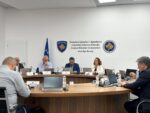
During the high-stakes detention hearing, Special Prosecutor Ilir Morina systematically weaponized the on-camera admissions of Serbian commanders against the defendants.
Chief among these was the documentary interview given by Goran “Guri” Radosavljević, the notorious commander of the Special Police Units (PJP). On camera, Radosavljević explicitly detailed that PJP detachments pulled from various sectors across Kosovo were concentrated in Reçak for the offensive.
The Chain of Command and Institutional Allegations
┌────────────────────────────────────────────────────────────────────────┐
│                                                                        │
│  [ THE PJP PARAMILITARY APPARATUS ] ───────────────────────────────┐   │
│  • The Prosecution maintains that Novica Peqinoviq, Stanoje Janiqeviq, │   │
│    Borko Paliq, and Sllagjan Millisavleviq were active field operators │   │
│    within the PJP during the massacre.                                 │   │
│                                                                        │   │
│  [ LOCAL STATION COORDINATION ] ───────────────────────────────────┤   │
│  • The fifth suspect, Stanko Saviq, is accused of serving as a local   │   │
│    police officer operating directly under the jurisdiction of the     │   │
│    Ferizaj regional police station.                                    │   │
│                                                                        │   │
│  [ THE DEFENSE COUNTER-STRATEGY ] ─────────────────────────────────┘   │
│  • Defense lawyers uniformly argue that simply wearing a uniform or    │
│    belonging to an active military unit does not equal individual guilt.│
└────────────────────────────────────────────────────────────────────────┘
“If there is a grounded suspicion that Stanoje Janiqeviq committed a specific war crime, it should have been explicitly detailed in this petition, rather than relying on an isolated image of him kicking a door.”
— Lubomir Pantović, Defense Counsel
3. Divided Defense Shields and Structural Statuses
The defense attorneys representing the five accused men took vastly different approaches during the initial judicial review, ranging from structural technicalities to outright denial of service.
| Suspect Name | Alleged Institutional Role | Specific Defense Arguments Advanced in Court |
| Stanoje Janiqeviq | Special Police Unit (PJP) Operative | Contends that objective video analysis of door-kicking and tactical gear does not constitute direct evidence of mass murder. |
| Novica Peqinoviq | Special Police Unit (PJP) Operative | Argues that historical membership within a recognized state security apparatus cannot be legally conflated with a war crime. |
| Sllagjan Millisavleviq | Alleged Tactical Officer | Defense claims Millisavleviq was merely a localized traffic police officer with no involvement in combat or tactical deployments. |
| Stanko Saviq | Alleged Ferizaj Police Officer | Defense takes a total denial stance, flatly asserting that Saviq was never a member of the police force in any capacity. |
The Reçak massacre remains one of the most defining atrocities of the Kosovo War, acting as the immediate catalyst for the 1999 NATO humanitarian intervention. Decades later, the case demonstrates a profound shift in war crimes investigations: the digital footprint left behind by state media machines, originally designed to project nationalistic triumphalism, has been repurposed by international and domestic judicial bodies into an irrefutable roadmap for criminal accountability.