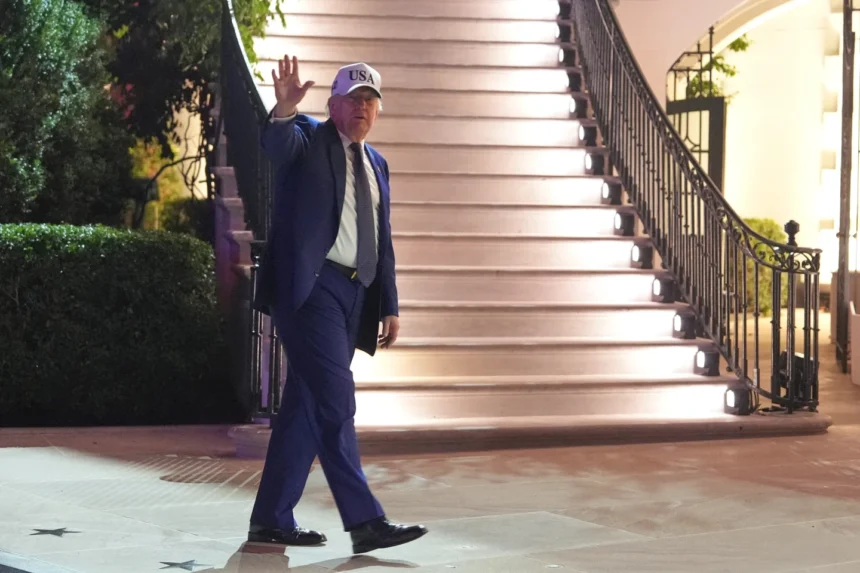
U.S. President Donald Trump is arriving in the French Alps on Monday with significant political momentum, following the announcement of a breakthrough agreement aimed at ending the 15-week U.S. war with Iran.
The unexpected diplomatic breakthrough dramatically shifts the dynamics of the Group of Seven (G7) summit. Trump will face fellow world leaders who have been highly critical of his administration’s handling of a conflict that triggered a massive surge in global energy prices and caused deep friction within the NATO alliance.
1. The Terms and Immediate Fallout of the Accord
While the complete text of the accord remains classified, the primary objective is stabilizing global energy markets and stopping the active hostilities that have locked down the Middle East.
The U.S.-Iran Framework Logistics

 [ NAVIGATIONAL BLOCKADE ] ──► STRAIT OF HORMUZ STATUS
 • Trump announced the U.S. will end its blockade of the Strait of Hormuz, where
   20% of global crude flows. However, Iranian Deputy Foreign Minister Kazem Gharibabadi
   stated their closure remains until the official signing.

 [ THE MEDIATION PIPELINE ] ──► PAKISTANI-LED PROTOCOLS
 • Pakistani Prime Minister Shehbaz Sharif, acting as chief mediator, confirmed
   "pre-implementation discussions" will begin immediately this week.

 [ THE 60-DAY CLOCK ] ──► TECHNICAL NUCLEAR TALKS
 • The framework triggers a strict 60-day window of technical negotiations
   focusing on Iran's damaged nuclear sites and ballistic missile capabilities.
“Ships of the World, start your engines. Let the oil flow!”
— President Donald Trump, celebrating the deal on social media
2. G7 Friction: Confronting Criticisms and the Demining Crisis
Despite the ceasefire, Trump faces a frosty reception from key European allies—French President Emmanuel Macron, British Prime Minister Keir Starmer, German Chancellor Friedrich Merz, and Italian Prime Minister Giorgia Meloni—who were frozen out of the initial decision to go to war.
A primary focus of the closed-door G7 sessions will be the immediate demining of the Strait of Hormuz. Commercial shipping lines completely halted transit due to the threat of naval mines, and both Britain and France have conditioned their naval assistance on a verified pause in hostilities.
The G7 Middle East Enlargement Strategy
┌────────────────────────────────────────────────────────────────────────┐
│                                                                        │
│  [ EXPANDED SUMMIT INVITES ] ──────────────────────────────────────┐   │
│  • Host President Macron has expanded Tuesday's Middle East panel  │   │
│    by inviting non-G7 leaders from Egypt, Qatar, and the UAE.          │
│                                                                        │   │
│  [ REVENUE AND RE-OPENING SCOPE ] ─────────────────────────────────┤   │
│  • The expanded panel will evaluate long-term maritime safety, regional│   │
│    stabilization funds for Lebanon, and strict ballistic boundaries.   │
│                                                                        │   │
│  [ THE NUCLEAR DISPOSAL PROBLEM ] ─────────────────────────────────┘   │
│  • Leaders must determine how to secure and extract an estimated       │
│    972 pounds (441 kg) of highly enriched uranium buried under Iranian │
│    facilities heavily damaged by U.S. airstrikes last summer.          │
└────────────────────────────────────────────────────────────────────────┘
3. Domestic Backlash: The Question of Sanctions Relief
Back in Washington, the administration is facing intense bipartisan skepticism regarding the economic incentives and sanctions relief offered to Tehran to secure the deal. Critics note the irony given Trump’s 2018 withdrawal from Barack Obama’s Joint Comprehensive Plan of Action (JCPOA).
| Political Faction | Core Criticism / Position | Strategic Demands |
| Democratic Opposition (Sen. Mark Warner) | Isolationist Failure. Critics argue the original JCPOA had verified international observers and a unified global alliance. This unilateral approach leaves America isolated with only Israel. | Verification Logs. Demanding full oversight detailing who will inspect compliance given that European allies, Russia, and China are not co-signatories. |
| Hawkish Republicans (Sen. Lindsey Graham) | Skepticism Over Intent. Concerns that Iran’s interpretation of the financial relief benchmarks differs fundamentally from the White House’s public narrative. | Congressional Review. Asserting that Congress must review and hold an explicit vote, calling on Vice President JD Vance—the “architect of the deal”—to testify. |
4. The Shadow of Ukraine: Bilateral Diplomatic Maneuvers
The rapid escalation of the Iran conflict has significantly overshadowed the ongoing Russia-Ukraine war, pulling Western resources and diplomatic focus away from Europe.
On the eve of the summit, Trump held pivotal, consecutive phone calls with Russian President Vladimir Putin and Ukrainian President Volodymyr Zelenskyy. Putin’s aide, Yuri Ushakov, revealed that Trump expressed a strong readiness to push European allies and Kyiv toward ending hostilities, adding that U.S. envoy Steve Witkoff and Jared Kushner are scheduled to travel to Moscow shortly.
While Zelenskyy stated on Telegram that he and Trump agreed to hold deeper discussions during a G7 working session on Tuesday, the shifting priorities of the Trump administration remain a critical concern for the Ukrainian delegation.