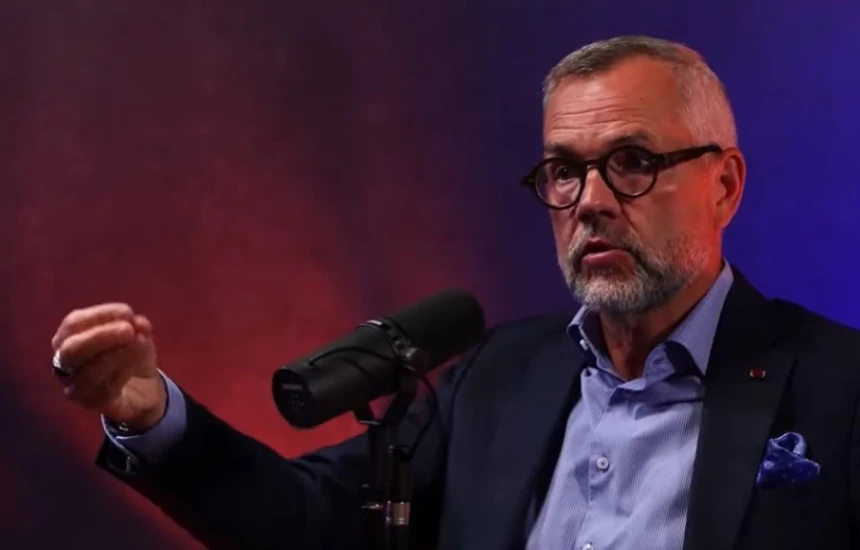
In a striking moment of diplomatic introspection, former German Minister for Europe Michael Roth has publicly admitted to major strategic miscalculations in his long-standing approach to Kosovo’s path toward European integration.
Speaking on the PIKË podcast hosted by publicist Veton Surroi, the veteran German statesman explicitly stated that conditioning Kosovo’s European Union accession strictly on progress within the Belgrade-Pristina normalization process was “a mistake.”
Roth argued that this dynamic inadvertently handed Serbian President Aleksandar Vučić a permanent, asymmetric tool to derail Pristina’s sovereign development.
1. The Flawed Premises of the Normalization Dialogue
Roth’s candid reflection marks one of the most direct acknowledgments by a senior Western political figure that the architectural blueprint of the EU-facilitated dialogue has fundamentally backfired.
The Strategic Asymmetry of the EU Dialogue

 [ THE ORIGINAL FORMULA ] ──► ACCESSION VIA NORMALIZATION
 • For years, Western leaders assumed that progress in Brussels-led normalization
   was the absolute prerequisite for Kosovo to move closer to EU integration.

 [ THE ARCHITECTURAL FLAW ] ──► THE ASYMMETRIC WEIGHT
 • Progress in the dialogue was structurally vital for Kosovo's survival, but remained
   largely secondary to Serbia's core geopolitical and domestic priorities.

 [ THE SYSTEMIC OUTCOME ] ──► THE BELGRADE VETO
 • This fundamental imbalance allowed Aleksandar Vučić to easily stall negotiations,
   transforming a tool for peace into an efficient weapon to block Kosovo.
“I thought for a very long time that only significant progress in the normalization dialogue brings Kosovo closer to the EU. And that was a mistake… It was too simple for Belgrade and for Aleksandar Vučić to block Kosovo.”
— Michael Roth, Former German Minister for Europe
2. Western Appeasement of Balkan Autocrats Under Fire
Beyond his self-criticism, Roth launched a fierce critique against the European Union’s broader foreign policy framework in the Western Balkans. He targeted the bloc’s chronic willingness to overlook democratic backsliding and clear violations of geopolitical alignment.
The Mechanics of European Appeasement
┌────────────────────────────────────────────────────────────────────────┐
│                                                                        │
│  [ THE APPETITE FOR AUTHORITARIAN TOLERANCE ] ─────────────────────┐   │
│  • The European Union has continuously failed to send firm, unambiguous│   │
│    messages regarding necessary democratic standards and alignment.    │
│                                                                        │   │
│  [ SUBSIDIZING ANTI-WESTERN POSTURING ] ───────────────────────────┤   │
│  • Regional autocrats successfully extract massive EU funding and economic│   │
│    subsidies while simultaneously strengthening ties with Moscow.      │
│                                                                        │   │
│  [ THE ORBAN-VUČIĆ PLAYBOOK ] ─────────────────────────────────────┘   │
│  • European democracies systematically underestimate the capacity of leaders│
│    like Aleksandar Vučić and Viktor Orbán to exploit institutional fissures.│
│                                                                        │
└────────────────────────────────────────────────────────────────────────┘
3. Shift in the European Foreign Policy Matrix
Roth’s statements reinforce an accelerating ideological shift inside Germany’s political establishment. Many lawmakers increasingly view the traditional Brussels approach to the Western Balkans as outdated and counterproductive to regional security.
| Traditional EU Consensus | The Realignment Perspective | Strategic Consequence |
| Dialogue-First Conditioning | Direct Track Integration. Kosovo should be evaluated based on its own rule-of-law and democratic metrics, rather than having its European future bound to Belgrade’s approval. | Dismantling the Stalemate. Shifting away from strict conditioning prevents third-party actors from holding regional security hostage, neutralising Serbia’s leverage over Pristina’s Western integration. |
| Pragmatic Appeasement | Geopolitical Accountability. The EU must attach strict democratic and foreign policy compliance strings to all financial distributions to stop the double-dealing with Moscow. | Clearer Boundaries. Forces illiberal leaders in the region to make a definitive geopolitical choice between European integration and autocratic alignments. |