With hostile powers circling and candidate countries warning of destabilization, Western leaders accelerate the enlargement process—testing new “guardrails” in Montenegro’s upcoming accession treaty.
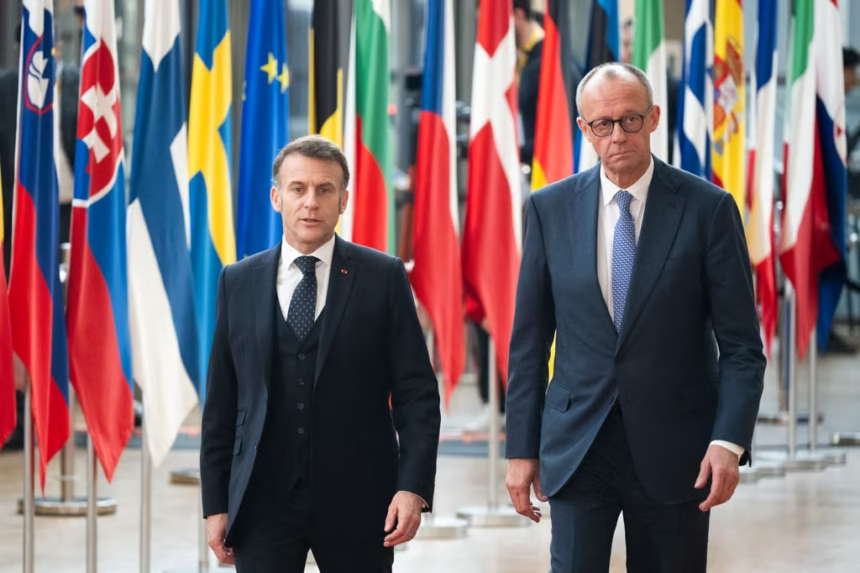
French President Emmanuel Macron and German Chancellor Friedrich Merz are arriving in the small coastal town of Tivat on Friday, June 5, 2026, joining a high-stakes EU-Western Balkans summit. The emergency gathering comes as European capitals scramble to find a rapid consensus on how far, and how fast, to expand the bloc’s borders before foreign adversaries exploit security vacuums across the region.
The sense of geopolitical urgency is palpable. No country has been admitted to the European Union since Croatia joined in 2013. However, a backdrop of armed conflicts, regional gray-zone operations, and trade wars has pushed Brussels to abandon its previous foot-dragging approach.
European Council President António Costa, who spent the past week visiting regional candidate capitals, confirmed that a major institutional bottleneck has broken.
“There is clear momentum on enlargement,” Costa told POLITICO. “Montenegro is now drafting its EU treaty, Albania is moving ahead in the process, and both Moldova and Ukraine have unlocked the first round of negotiations. This is proof that reforms by candidates pay off and that the EU is committed to the enlargement process… recent proposals show that there is a new willingness to simplify and accelerate the process.”
The Fear of “Hostile Islands”
The rapid change of heart in Brussels is driven primarily by defensive anxieties. European intelligence officials have repeatedly warned that prolonged delays in admitting the Western Balkans create soft targets for hostile foreign influence directly inside the continent’s perimeter.
┌────────────────────────────────────────────────────────────────────────┐
│             The Core Geopolitical Reality in the Western Balkans       │
├────────────────────────────────────────────────────────────────────────┤
│ "Anyone can see the Western Balkans is an island surrounded by EU     │
│ member states. So the consequences of hostile states gaining influence │
│ there would be high."                                                 │
│                                                                        │
│ — Anonymous EU Official, Tivat Summit                                  │
└────────────────────────────────────────────────────────────────────────┘
The frontline of this renewed push is Montenegro. With a small population of 600,000, the country is already a NATO member and uses the euro, making it the clear frontrunner to become the EU’s 28th member state by 2028.
Montenegrin Prime Minister Milojko Spajić expressed confidence that his country enjoys full backing: “We have reached a position where we enjoy the full support of the member states and… are on track to join the European family within the planned timeframe.”
The New Post-Orbán Era: Testing the “Guardrails”
While European leaders want a faster accession path, they are equally terrified of importing internal political instability. The EU is determined to avoid a repeat of the structural paralysis seen during Viktor Orbán’s rule in Hungary, where a single member state routinely hijacked common foreign policy and vetoed crucial financial aid.
The diplomatic landscape shifted drastically after Péter Magyar’s landslide election victory, which successfully ended the 16-year Orbán era. In a major breakthrough, Prime Minister Magyar dropped Budapest’s long-standing veto on Eastern European integration, allowing formal negotiating “clusters” to open for Ukraine and Moldova on June 15.
┌────────────────────────────────────────────────────────────────────────┐
│              The Anatomy of Montenegro's New Accession Treaty          │
├───────────────────────────────────────┬────────────────────────────────┤
│ TRADITIONAL EU CLAUSES (2/3)          │ NEW GUARDRAIL MECHANISMS (1/3) │
├───────────────────────────────────────┼────────────────────────────────┤
│ • Standard Single Market integration. │ • Streamlined legal measures   │
│                                       │   to counter democratic retreat.│
├───────────────────────────────────────┼────────────────────────────────┤
│ • Aligning custom protocols and      │ • Swift financial clawbacks if │
│   monetary policy rules.              │   the rule of law is breached. │
├───────────────────────────────────────┼────────────────────────────────┤
│ • Adhering to baseline European       │ • Curtailed voting rights if a │
│   environmental standards.            │   state mimics autocracy.      │
└───────────────────────────────────────┴────────────────────────────────┘
To preserve the credibility of the enlargement process, officials revealed that one-third of Montenegro’s treaty will feature entirely new, aggressive legal safeguards. PM Spajić stated that Montenegro does not shy away from these mechanisms: “It is important that such mechanisms be clearly rule-based and activated exclusively in cases of non-compliance.”
Bridging the Gap: Pre-Accession Perquisites
Because full membership requires deep economic overhaul, France and Germany jointly presented options on Thursday to provide immediate, tangible benefits to candidate nations that cannot join immediately. These proposals include giving candidate states observer status in high-level EU meetings and early entry into the single market.
As an immediate gesture of good faith, European Commission President Ursula von der Leyen is slated to announce on Friday that all Western Balkan nations will receive immediate access to free data roaming across the entire European Union.
While Chancellor Merz plans to force a larger debate on streamlining the system at the next internal EU summit in Brussels on June 18, experts agree that the structural status quo is effectively dead. As Nina Vujanović, a Montenegrin expert at the Bruegel think tank, observed: “After the Russian aggression in Ukraine, the European Commission can present enlargement in that context. Knowing that these countries are strong has benefits to the EU too.”