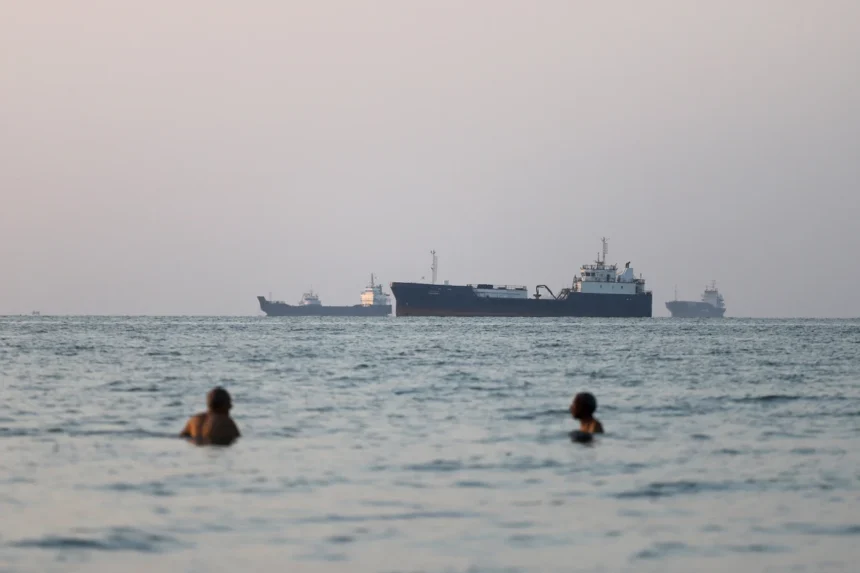
Iran has officially declared the Strait of Hormuz closed, threatening to open fire on any international oil tankers or commercial shipping vessels that attempt to navigate the vital chokepoint without explicit authorization.
The drastic move marks an unprecedented escalation following a second consecutive night of heavy conventional US military bombardments on Wednesday, June 10, 2026, which targeted anti-air defense installations and key military infrastructure across mainland Iran.
The Closure Mandate and Commercial Threats
The directive was issued by the newly formed Iranian Straits Authority, an agency established just last month to enforce a highly controversial and restrictive transit protocol over the waterway.
Strait of Hormuz Conflict Paradigm (June 11, 2026)
[ US Air/Naval Forces ] ──► (Sustained Airstrikes on Anti-Air Systems) ──► [ Mainland Iran ]
                                                                                   │
                                                                                   ▼
[ US Navy Central Command ] ◄── (Contradicts Claim: "Ships Still Moving") ─── [ Strait of Hormuz ]
                                                                                   │
                                                                                   ▼ (Iranian Blockade)
                                                                       Targeting ALL Unauthorized
                                                                      Commercial & Oil Tankers
According to a state communique carried by CNN and international wires, the closure is directly linked to ongoing American military operations in the region:
“Due to the intense tensions generated by aggressive US forces in the region… the Strait of Hormuz will remain completely closed until further notice,” the Iranian authority announced. “All international maritime parties holding previous transit permits are strictly required to exercise patience and await further navigational instructions.”
Compounding the bureaucratic freeze, Iran’s Islamic Revolutionary Guard Corps (IRGC) issued an explicit military warning, stating its naval and coastal missile batteries are fully prepared to target and sink any commercial cargo ships or oil tankers defying the blockade.
The Pentagon Fires Back: A Tactical Disagreement
The United States military has aggressively downplayed and contradicted Tehran’s sweeping claims of a successful maritime blockade. In an official briefing broadcasted via social media platform X, US Naval Forces Central Command stated that global trade networks remain operational.
According to Washington’s tracking data, international commercial ships are continuing to enter and exit the Persian Gulf through the tight strait, insulated by a massive, integrated Western naval escort grid.
The Escalation Matrix: Two Nights of Heavy Warfare
The blockade announcement follows a highly structured, two-day campaign of kinetic engagement between the two superpowers:
| Combat Scenario | US Military Action | Iranian Military Response |
| Night 1 (June 9–10) | Retaliatory precision bombings against Qeshm Island and Iranian ports after an American Apache helicopter was shot down over the Gulf. | Intermittent maritime harassment and mobilization of coastal defense networks. |
| Night 2 (June 10–11) | Expansive conventional airstrikes targeting anti-aircraft radar installations, missile batteries, and command centers across mainland Iran. | Coordinated drone and ballistic missile strikes against US bases in Bahrain, Kuwait, and Jordan, followed immediately by the formal closure of the Strait of Hormuz. |
With nearly 20% of the world’s total petroleum consumption passing through this narrow maritime corridor daily, international energy markets are preparing for unprecedented disruption. The immediate future of the global economy now hinges on whether the US Navy can successfully guarantee the safety of commercial shipping in the face of targeted IRGC anti-ship missile systems.